
How to Buy Thymosin Alpha-1 in Kuwait Safely and Securely
When looking to buy Thymosin Alpha-1 in Kuwait, research procurement managers face strict Ministry of Health (MOH) guidelines and intense GCC summer heat. Sourcing premium, intact research materials requires precise logistical and regulatory navigation.
Quick answer: To buy Thymosin Alpha-1 in Kuwait successfully, select a supplier that labels products exclusively for Research Use Only (RUO) to clear customs without an MOH Health Release. Ensure the vendor provides third-party Certificates of Analysis (COA) showing ≥98% purity, utilizes temperature-controlled cold-chain shipping, and supports regional KNET payments.
This guide outlines the critical steps for evaluating a Thymosin Alpha-1 supplier in Kuwait, ensuring your lab receives pristine, verifiable compounds without logistical friction.
The Legal Landscape: Customs and Ministry of Health Guidelines
Peptide regulations in Kuwait are rigorously enforced. When imported goods are declared for human or therapeutic use, Kuwait Customs and the Ministry of Health immediately require a formal Health Release (الافراج الصحي). Because this documentation only applies to registered pharmaceuticals, securing it for independent research compounds is virtually impossible.
Therefore, successfully sourcing the Thymosin Alpha-1 peptide requires strict adherence to scientific labeling. Reliable suppliers understand this compliance mandate and label all vials strictly as ‘Research Use Only’ (RUO). This legal distinction clarifies that the compound is intended for in vitro study, mass spectrometry calibration, or laboratory analysis, not human consumption. When evaluating a supplier, verify their shipping documentation protocols. A vendor familiar with GCC borders will ensure the commercial invoice accurately reflects the RUO nature of the product, preventing unnecessary seizures at the border.
Validating the Science: COA and Chemical Integrity
Thymosin Alpha-1 is a 28-amino-acid peptide with a specific molecular weight and sequence. In research settings, even minor impurities or degraded fragments can skew analytical data. You cannot rely on a supplier’s marketing claims; you must verify their documentation.
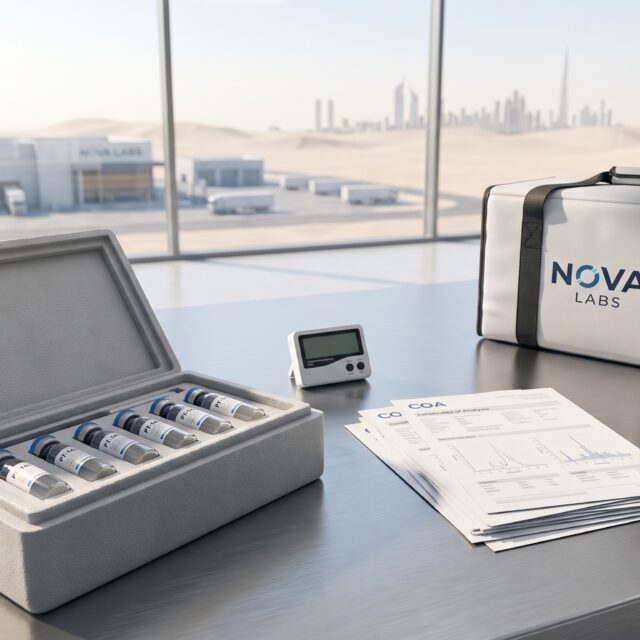
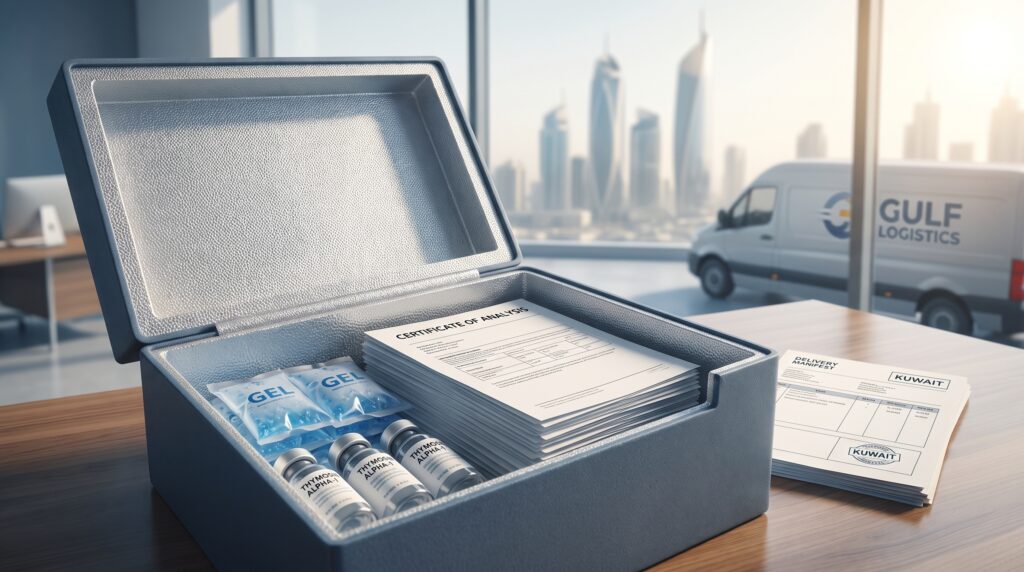
A high-quality supplier will provide a comprehensive Certificate of Analysis (COA) from an independent, third-party laboratory. When reviewing the COA, look for the following benchmarks:
- HPLC (High-Performance Liquid Chromatography): This test separates the components in a mixture. The report should show a sharp, distinct peak indicating that the Thymosin Alpha-1 compound constitutes at least 98% of the vial’s contents.
- Mass Spectrometry (MS): This verifies the precise molecular weight of the peptide, confirming that the amino acid sequence is exact and hasn’t been altered or substituted.
- Batch Matching: Ensure that the batch or lot number on the physical vial corresponds directly to the provided COA. Generic, undated, or unnumbered testing reports are a major red flag.
Defeating the Heat: Climate-Resilient Logistics
Kuwait experiences some of the highest summer temperatures globally, posing a severe threat to the molecular integrity of lyophilized (freeze-dried) peptides. Prolonged exposure to heat during transit causes peptide bonds to degrade, rendering the compound useless for precise laboratory research.
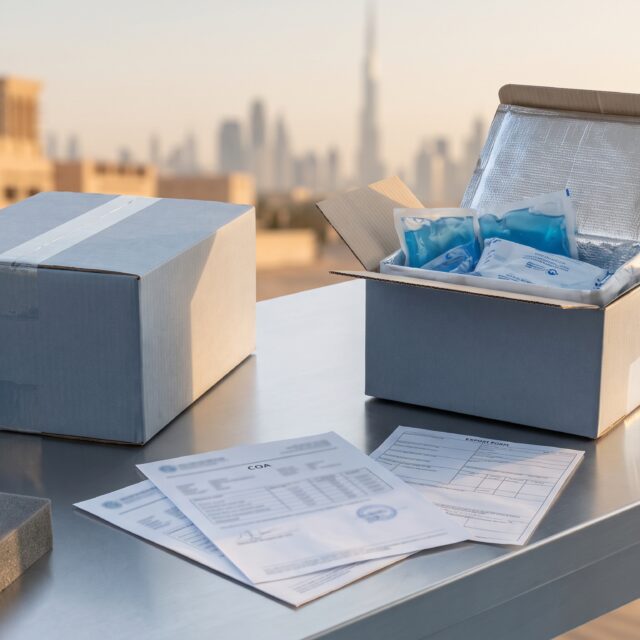
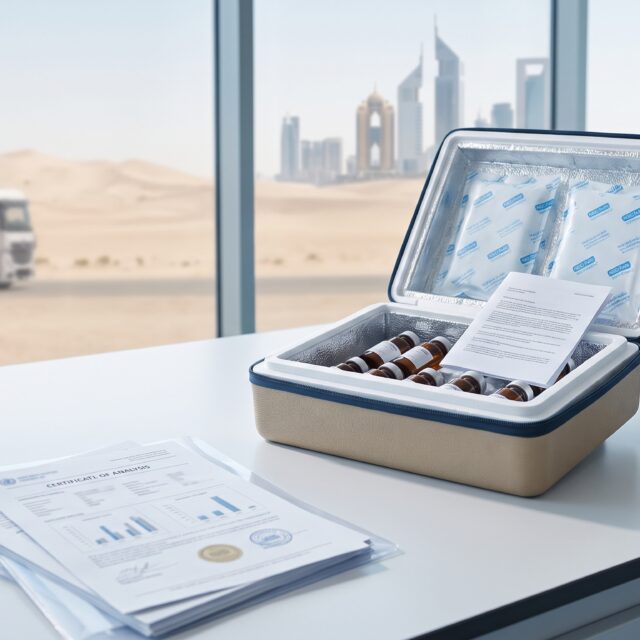
If you plan to order Thymosin Alpha-1, standard parcel post is insufficient. Look for suppliers that utilize temperature-controlled cold-chain packaging. This typically includes vacuum-sealed containers, insulated thermal mailers, and strategically placed cooling agents designed to maintain stable temperatures throughout the delivery window.
By sourcing from regional hubs, researchers can drastically cut transit times. Exploring specialized fast GCC shipping options ensures that your research compounds spend minimal time in transit, bypassing the prolonged exposure risks associated with overseas shipping from the US or Asia.
Proper Laboratory Storage Guidelines
Once your order arrives safely, maintaining the chemical stability of Thymosin Alpha-1 becomes the responsibility of your laboratory. Proper storage protocols are non-negotiable.
- Long-Term Storage (Lyophilized): In its freeze-dried state, store Thymosin Alpha-1 at -20°C in a laboratory freezer. Under these conditions, the peptide can remain stable for up to 24 months.
- Short-Term Storage (Lyophilized): If you plan to reconstitute the peptide within a few weeks, storing the dry vial in a standard refrigerator (2°C to 8°C) is acceptable, provided it is kept away from direct light and moisture.
- Post-Reconstitution: Once the peptide is mixed with bacteriostatic water for research use, the solution becomes fragile. It must be kept refrigerated at 2°C to 8°C at all times and utilized within 14 to 20 days to ensure maximum efficacy in your research protocols.
Frictionless Transactions: KNET and Regional Support
High-intent scientific buyers in Kuwait expect a secure, localized checkout experience. International wire transfers can be slow, incur high fees, and delay the shipment of time-sensitive compounds.
KNET is the primary card-based payment network in Kuwait. When evaluating a supplier, look for platforms that integrate KNET or cross-border GCCNET capabilities. This ensures a frictionless transaction that clears immediately, allowing the supplier to dispatch your research materials without delay.
Localized customer support is also a strong indicator of reliability. The ability to verify stock levels, request specific batch COAs, or coordinate delivery times via direct channels like WhatsApp provides an essential layer of trust that anonymous, overseas vendors cannot match.
Choosing Your Sourcing Partner with Confidence
Procuring high-quality research materials in the GCC does not have to be a gamble. By prioritizing suppliers that understand Kuwaiti customs requirements, provide third-party HPLC and MS testing, and utilize robust cold-chain logistics, your lab can secure the compounds necessary for accurate, reproducible data.
At NOVA Labs, we understand the specific logistical and regulatory demands of the Middle Eastern market. Our commitment to transparent documentation and regional logistics ensures that researchers across the GCC have access to premium materials without the traditional friction of international importing.
Ready to secure verifiable, research-grade compounds for your next project? Browse our full catalog of premium research peptides to review our latest batch analytics and explore secure GCC logistics solutions tailored to your laboratory’s needs.
*
References:
- Kuwait Ministry of Health (MOH) Guidelines on Chemical Importation and Health Release.
- Checkout.com Regional Data on KNET and GCCNET Digital Transaction Dominance.
- Standard Laboratory Storage Protocols for Lyophilized Amino Acid Sequences.
Disclaimer: The products mentioned in this article are strictly for research and laboratory purposes only and are not intended for human consumption or therapeutic use.
Disclaimer: The products mentioned in this article are for research purposes only and are not intended for human consumption.
References
- Peptide Laws in Kuwait — Can You Buy, Travel & Import? (2026)
- Best Peptide Shop Kuwait: Supplier Guide & Customs Tips – NOVA Labs
- Accept KNET – Kuwait’s leading payment method – Checkout.com
- Immune Peptides for Sale — Research Grade | UK & UAE | PepcoLab
- Thymosin Alpha-1 Research Supplier — UAE | Aarise Healthcare – aarisehealthcare.com
Frequently asked questions
Can I legally import Thymosin Alpha-1 into Kuwait?
Yes, provided it is imported strictly for laboratory research. It must be declared as 'Research Use Only' (RUO). Declaring it for human use will trigger customs to demand a Ministry of Health Release (الافراج الصحي), which cannot be provided for research peptides.
How does Kuwait's summer heat affect lyophilized peptides?
Extreme heat breaks down peptide bonds. When ordering in the GCC, use suppliers equipped with vacuum-sealed, temperature-controlled cold-chain packaging to prevent degradation during transit.
What purity should I look for when buying Thymosin Alpha-1?
Always verify third-party Certificates of Analysis (COA). Look for High-Performance Liquid Chromatography (HPLC) and Mass Spectrometry (MS) results demonstrating a minimum purity of 98%.
How long does Thymosin Alpha-1 last in a laboratory fridge?
Unmixed, lyophilized vials last several months at 2-8°C, though -20°C is best for long-term storage (up to 24 months). Once reconstituted with bacteriostatic water, keep refrigerated and use within 14 to 20 days.
Do regional peptide suppliers accept KNET payments?
Yes, premium suppliers operating within the GCC typically support KNET or GCCNET cross-border payment gateways, enabling secure, immediate transactions without international wire delays.
Nova Labs buyer tools
Ready to verify stock, testing and delivery?
Use the product page and lab report section to check availability, documentation, delivery timing and support before placing an order.
- COA / test-report checks
- Kuwait delivery context
- Cold-chain handling
- COD and card payment options
- WhatsApp support