
What to Know Before You Buy Kisspeptin Saudi Arabia
Quick Answer: Sourcing Kisspeptin-10 in Saudi Arabia
When you buy Kisspeptin Saudi Arabia, researchers must prioritize suppliers offering third-party HPLC and MS testing to guarantee ≥99% purity. Due to the extreme Gulf climate, strict 2-8°C cold-chain logistics are non-negotiable to prevent peptide degradation during transit to your laboratory facility. Institutional buyers must also ensure vendors comply with “research-use only” regulations.
Procuring high-quality research compounds in the Kingdom of Saudi Arabia requires a highly analytical approach. The regulatory landscape, overseen by the Saudi Food and Drug Authority (SFDA) and the Ministry of Health (MoH), is exceptionally strict regarding compound classification, importation, and handling. For laboratory teams, institutional procurement staff, and informed researchers, sourcing Kisspeptin-10 goes far beyond simply locating a vendor with stock. It demands meticulous verification of molecular purity, secure payment gateways, and resilient logistics frameworks capable of surviving the local climate.
This comprehensive guide breaks down the critical components of evaluating a Kisspeptin supplier in Saudi Arabia, from accurately interpreting a Certificate of Analysis (COA) to ensuring that the product clears customs and arrives structurally intact for your in-vitro studies.
Search Intent Decoded: The Fragrance vs. The Molecule
One of the unique challenges when looking to order Kisspeptin Saudi Arabia online is navigating a highly diluted search environment. A significant volume of local search queries is intercepted by popular retail platforms selling a commercial product called “Kisspeptin Hormone Paris.”
To be clear, this is a 100ml Oriental Fougere commercial perfume, not a laboratory compound. While the fragrance leverages scientific nomenclature for marketing purposes, it has absolutely no connection to the actual peptide molecule. Researchers must ensure they are interacting with dedicated biotechnology or life-science suppliers rather than cosmetic retailers.
In a laboratory context, Kisspeptin refers to a family of peptides encoded by the KISS1 gene, which bind to the G-protein coupled receptor GPR54 (KISS1R). The true research compound typically utilized in studies is Kisspeptin-10, a truncated 10-amino acid peptide sequence derived from the larger Kisspeptin-54 protein. It carries the specific molecular formula C63H83N17O14 and a molecular weight of 1302.4 g/mol.
In-vitro research surrounding Kisspeptin-10 frequently focuses on its role as a potent neuromodulator in the hypothalamic-pituitary-gonadal (HPG) axis. Legitimate scientific suppliers will always list these molecular identifiers clearly alongside batch testing documentation. If a website lacks these basic molecular facts and instead focuses on consumer lifestyle benefits, it is not a credible source for laboratory procurement.
COA and Purity Verification for Kisspeptin-10
The most important document in any peptide procurement process is the Certificate of Analysis (COA). Because peptides are synthesized in complex laboratory environments through Solid-Phase Peptide Synthesis (SPPS), impurities, truncated sequences, or residual solvents can remain if the manufacturing process is not rigorously controlled and purified.
A valid COA for Kisspeptin peptide Saudi Arabia must include two critical analytical methodologies, and researchers must know how to read them:
High-Performance Liquid Chromatography (HPLC)
HPLC separates the components in a mixture, determining the overall purity of the peptide. For research-grade Kisspeptin-10, the HPLC chart should demonstrate a purity level of 99 percent or higher. When reviewing the chromatogram, look for a single, sharp peak with a high “Area %” rather than a broad baseline with multiple smaller peaks, which indicates contamination or truncated peptide sequences.
Mass Spectrometry (MS)
While HPLC confirms purity, Mass Spectrometry verifies identity. MS measures the mass-to-charge ratio of ions to confirm that the synthesized compound is exactly what it claims to be. For Kisspeptin-10, the MS data must align perfectly with the standard molecular weight of 1302.4 g/mol. If the primary ion peak does not match this molecular weight, the compound has either been synthesized incorrectly or degraded prior to testing.
Salt Content (TFA vs. Acetate)
Advanced researchers should also inquire about the counter-ion present in the lyophilized powder. During standard synthesis, Trifluoroacetic acid (TFA) is often used, leaving residual TFA salts. While acceptable for some basic assays, TFA can be cytotoxic in certain cellular studies. High-tier suppliers often provide the option for Acetate or HCl salt conversions for sensitive cell-culture work.
It is not enough for a supplier to broadly claim “99% purity” in their product description. They must provide batch-specific, verifiable documentation from an independent third-party laboratory. If a vendor obscures their COA, relies on outdated testing from several years ago, or provides documents lacking laboratory credentials, researchers should immediately look elsewhere.
Preserving Peptide Potency: The Physics of Cold-Chain Logistics
The most significant operational hurdle when sourcing peptides in the Gulf is the physical climate. Saudi Arabia’s extreme heat poses a direct threat to the structural integrity of fragile amino acid sequences. Peptides like Kisspeptin-10 are highly sensitive to temperature fluctuations; exposure to high heat during domestic transit can cause the peptide bonds to denature, aggregate, or undergo hydrolysis, rendering the compound completely useless for precise laboratory applications.
While peptides are shipped in a lyophilized (freeze-dried) state—which provides significantly more thermal stability than reconstituted liquid—they still require protection from the 40°C+ temperatures common in Riyadh or Jeddah.
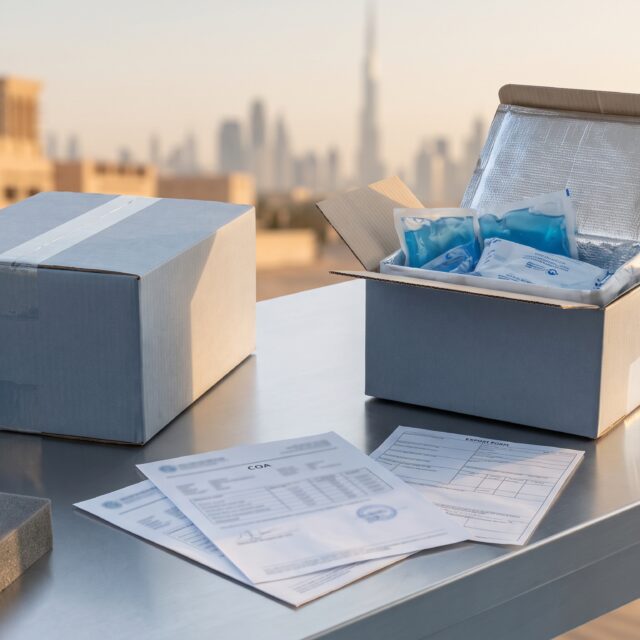
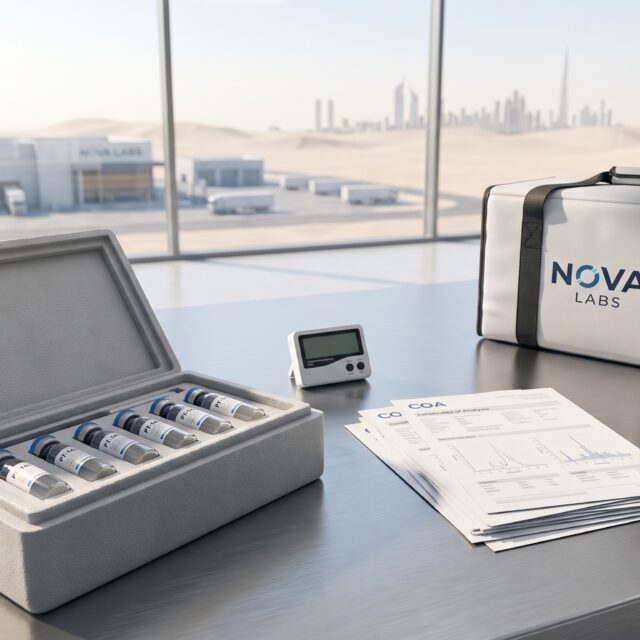
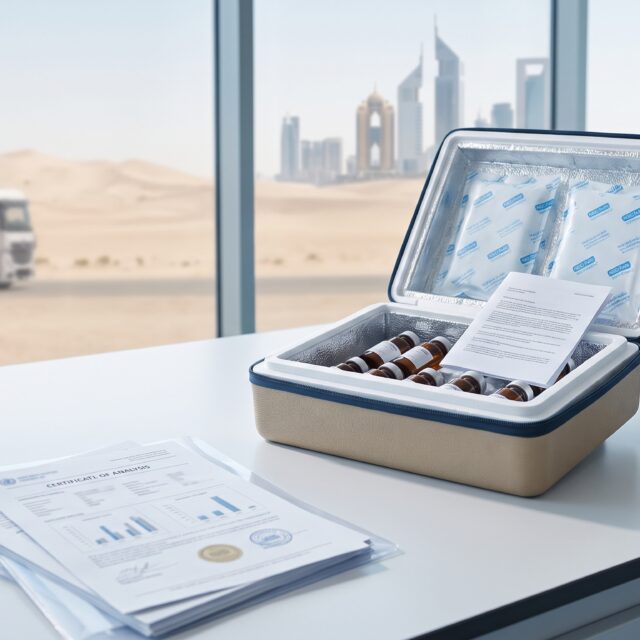
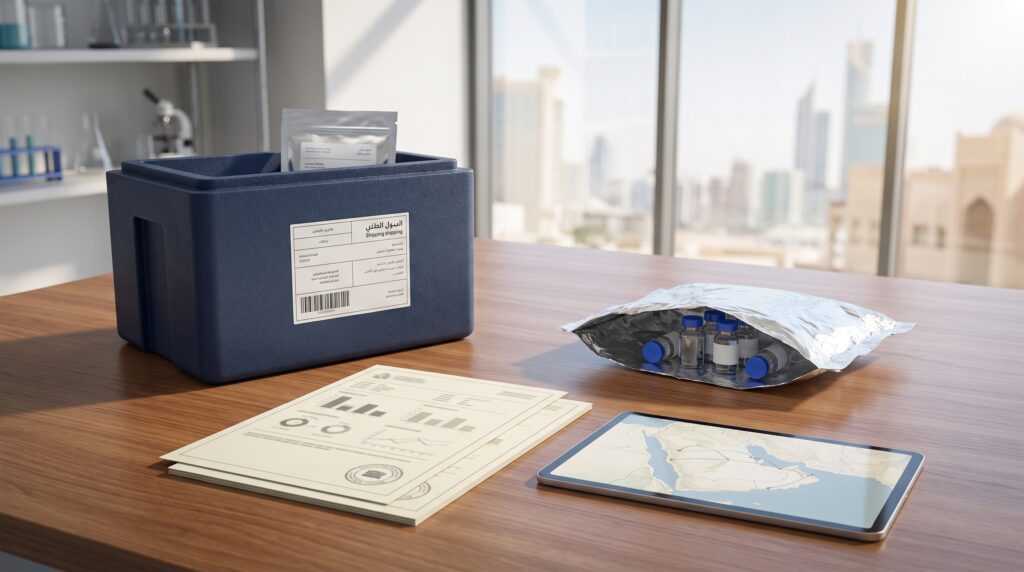
Securing cold-chain logistics is non-negotiable for high-value research compounds. Leading suppliers utilize active cooling packaging, such as insulated EPS (expanded polystyrene) coolers packed with phase-change materials (PCMs) or dry ice, designed to maintain an internal temperature of 2-8°C throughout the transit window. Advanced transit protocols often include calibrated temperature data loggers inside the parcel, allowing the receiving laboratory to verify that no thermal breaches occurred during the journey from the warehouse to the facility.
When considering regional partners, cross-border procurement requires meticulous planning. Many researchers rely on robust Gulf logistics networks rather than ordering from overseas suppliers with unpredictable shipping times. Evaluating regional hubs, such as those offering peptides UAE next-day delivery, can provide insight into how effectively a supplier manages GCC transit windows, cold-chain packaging, and regional customs friction before the package makes its way into Saudi Arabia.
Navigating MoH and SFDA Research Compliance
Saudi Arabia maintains intense regulatory oversight of unclassified, imported, or misbranded compounds. Recently, the Saudi Ministry of Health (MoH), alongside the SFDA, has executed strict enforcement campaigns targeting entities that promoted unregistered peptides or made false therapeutic claims online.
For institutional researchers and B2B buyers, this reinforces the absolute necessity of strict “research-use only” compliance. Some international vendors attempting to capture the Saudi market make aggressive, clinically unverified marketing claims about Kisspeptin—often linking it to fertility interventions, oncology applications, or human performance. While these subjects represent active areas of academic and clinical study worldwide, making definitive medical claims on a retail platform is a major regulatory red flag and grounds for customs seizure.
When evaluating a supplier, look for conservative, fact-based communication. Legitimate vendors frame their compounds strictly within an in-vitro or laboratory context. Furthermore, for institutional buyers, a credible supplier should be equipped to assist with official customs tracking channels, providing the correct HS codes and material safety data sheets (MSDS) required for clearance through the SABER and FASAH regulatory systems. This ensures seamless importation and border clearance without compliance delays.
Evaluating the Right Supplier for the GCC
Beyond analytical purity and resilient logistics, the overall buyer experience dictates the reliability of a supplier. Researchers require operational transparency, secure payment infrastructure, and responsive technical support.
When comparing vendors for your laboratory’s needs, assess the following operational signals:
- Live Stock Availability vs. Dropshipping: Does the supplier maintain local or regional inventory, or are they drop-shipping from overseas factories in China or Eastern Europe? Drop-shipping extends transit times by weeks and dramatically increases the risk of thermal degradation and customs seizure. True regional suppliers hold stock locally.
- Customer Support and Communication: Reputable suppliers offer direct lines of communication, such as dedicated WhatsApp business lines or technical email support. The presence of responsive support indicates a business invested in long-term buyer relationships rather than anonymous, single transactions.
- Secure Payment Options: Legitimate scientific vendors offer secure, encrypted payment gateways processing major credit cards. The availability of varied payment structures adds a layer of buyer security, whereas suppliers demanding untraceable cryptocurrency for all transactions should be approached with caution.
Conclusion: A Methodical Approach to Procurement
Securing research-grade compounds in the Kingdom demands diligence. When you set out to buy Kisspeptin Saudi Arabia, success hinges on ignoring marketing hype and focusing entirely on verifiable data. By distinguishing between commercial fragrances and legitimate molecules, demanding batch-specific HPLC/MS documentation, and insisting on strict 2-8°C cold-chain logistics, institutional buyers and researchers can confidently navigate the market.
Always prioritize suppliers who align with MoH and SFDA compliance standards by maintaining strict “research-use only” protocols. Reliable procurement is ultimately about partnering with vendors who respect the science, invest in independent testing, and understand the logistical realities of the Middle East.
If you are a researcher looking for a reliable, compliant source of laboratory peptides in the GCC, explore the inventory at our research supply shop. NOVA Labs emphasizes analytical transparency, batch-specific testing, and Gulf-optimized logistics to ensure your compounds arrive ready for study.
*
Disclaimer: The products mentioned in this article are for in-vitro research and laboratory purposes only and are not intended for human consumption, diagnostic, or therapeutic use. Always consult local Saudi regulations and institutional guidelines before procuring research materials.
References
- Saudi Food and Drug Authority (SFDA). “Guidelines for the Importation of Chemicals and Biological Materials for Research Purposes.”
- Saudi Ministry of Health (MoH). “Regulations on Unregistered Compounds and Medical Claims.”
- National Center for Biotechnology Information (NCBI). “Kisspeptin and GPR54: Discovery and Role in Reproductive Biology.”
- European Medicines Agency (EMA) / ICH Guidelines for Peptide Purity and Characterization.
Disclaimer: The products mentioned in this article are for research purposes only and are not intended for human consumption.
- MoH Warns Against Using Unregistered Drugs and Seizes Violators
- Wholesale Peptides Saudi Arabia: B2B Supplier & Procurement – NOVA Labs
- Peptide Laws in Saudi Arabia — Can You Buy, Travel & Import? (2026)
- Kisspeptin Hormone Paris 100 ML – Ressan
- Buy Kisspeptin Saudi Arabia 99% Purity – Direct Sarms
Frequently asked questions
What is the required storage temperature for Kisspeptin-10 deliveries in Saudi Arabia?
Kisspeptin-10 should ideally be maintained at a temperature of 2-8°C during transit to prevent structural degradation. Reliable suppliers use active cold-chain packaging, such as insulated EPS coolers with phase-change materials, to protect the compound from the harsh Saudi climate.
How can I verify the purity of Kisspeptin from a supplier?
Always request a batch-specific Certificate of Analysis (COA) from an independent laboratory. This document must include High-Performance Liquid Chromatography (HPLC) to verify a minimum purity of 99 percent, and Mass Spectrometry (MS) to confirm the correct molecular weight of 1302.4 g/mol.
Why do search results for Kisspeptin in Saudi Arabia show perfume?
A local commercial fragrance brand sells a product called 'Kisspeptin Hormone Paris', which shares the scientific name but has absolutely no relation to the actual peptide molecule. Researchers must ensure they purchase exclusively from dedicated life-science suppliers.
Are there customs regulations for importing research peptides into Saudi Arabia?
Yes, the Saudi Food and Drug Authority (SFDA) maintains strict oversight over imported compounds. Institutional buyers often need to clear research products through official regulatory systems like SABER and FASAH, ensuring they are strictly labeled for laboratory use only.
What should I look for in a legitimate GCC peptide supplier?
A credible regional supplier will offer transparent batch-specific HPLC/MS testing, secure 2-8°C cold-chain packaging, and verifiable regional stock. They will also strictly adhere to research-only compliance, provide secure payment gateways, and refrain from making unverified medical claims.
Nova Labs buyer tools
Ready to verify stock, testing and delivery?
Use the product page and lab report section to check availability, documentation, delivery timing and support before placing an order.
- COA / test-report checks
- Saudi Arabia delivery context
- Cold-chain handling
- COD and card payment options
- WhatsApp support