




Procuring high-quality research compounds in the Emirates requires a careful balance of analytical verification, logistical awareness, and regulatory compliance. For laboratories and independent researchers evaluating TB-500 UAE stock, the regional market has matured significantly, separating legitimate scientific suppliers from low-tier grey-market operations. Navigating intense local climates, customs friction, and updated institutional guidelines means buyers can no longer rely on simple web searches without conducting thorough supplier due diligence.
Whether you are managing institutional procurement for a university in Abu Dhabi or conducting independent in vitro research in Dubai, evaluating a synthetic peptide supplier requires knowing exactly what documentation to demand and how the compound is handled before it ever reaches your laboratory bench.
How to Buy TB-500 in the UAE: A Buyer Checklist
When evaluating where to buy TB-500 in the UAE, researchers must systematically verify three critical factors: third-party HPLC purity testing exceeding 99%, active cold-chain logistics to prevent regional heat degradation, and strict adherence to Emirates Drug Establishment (EDE) regulations regarding in vitro laboratory reagents.
Securing research materials domestically rather than importing them internationally offers distinct advantages. International shipments often face prolonged customs clearances, increasing the risk that sensitive amino acid chains will sit in unconditioned warehouses. By choosing a domestic source, researchers bypass unpredictable import delays, ensuring that the integrity of their materials remains intact from the supplier’s climate-controlled facility to their own.
Navigating the EDE Regulatory Framework
The regulatory landscape for laboratory supplies in the Gulf region has grown notably stricter. Following recent enforcement actions, the Emirates Drug Establishment (EDE) and regional health authorities launched comprehensive crackdowns on the unauthorized distribution of clinical peptides. These actions specifically targeted unauthorized sources selling unapproved compounds directly to consumers and penalized entities for promoting illegal online medicine claims.
For the informed buyer, this regulatory shift underscores a vital reality: compliant, legitimate suppliers must operate strictly within the bounds of laboratory supply. When evaluating a TB-500 supplier UAE, verify that the company positions its products exclusively as laboratory reagents meant for in vitro research use only.
Reputable suppliers will never provide dosing protocols, injection guidelines, or human health claims. Any vendor guaranteeing physical outcomes, discussing dosages, or promoting therapeutic benefits is operating outside of the legal EDE framework. This poses severe compliance risks for your procurement process and questions the legitimacy of the vendor’s operational standards. Sticking to suppliers who adhere strictly to research-only terminology protects your institution and ensures you are working with professionals who understand local laws.
Why Analytical Testing Drives Confident Procurement
The foundation of any synthetic peptide research relies on the exact molecular identity and purity of the reagent. Without rigorous analytical testing, researchers risk compromised experimental data, wasted funding, and exposure to counterfeit materials prevalent in unregulated markets. Evaluating a supplier’s Certificate of Analysis (COA) is the most effective way to validate your procurement choice.
When you order TB-500 UAE supplies, the accompanying COA should demonstrate comprehensive dual analytical validation:
High-Performance Liquid Chromatography (HPLC)
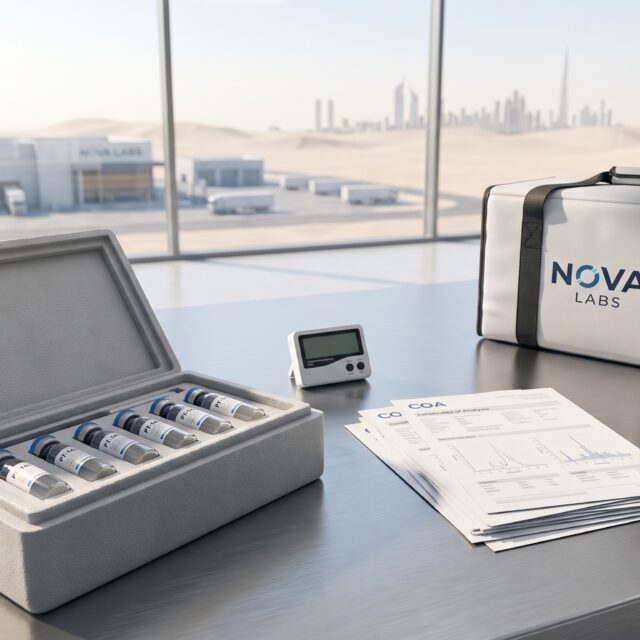
HPLC measures the purity of the compound by separating its components. Researchers should request to see the actual chromatogram, looking for a single, distinct, and sharp peak. For sophisticated in vitro research, buyers should demand an HPLC purity rating of ≥99%. Anything lower introduces unknown variables, synthesis byproducts, or truncated sequences that could drastically skew experimental outcomes.
Mass Spectrometry (MS)
While HPLC shows purity, Mass Spectrometry confirms the exact molecular weight and structural identity of the peptide. This ensures that the compound in the vial is genuinely the specific sequence under study (such as the LKKTETQ fragment commonly researched as TB-500) and not a cheaper substitute, mislabeled compound, or degraded byproduct. The m/z (mass-to-charge ratio) values on the MS report must align with the theoretical molecular weight of the peptide.
Crucially, the batch number on the physical vial must perfectly match the batch number on the analytical testing documentation. Transparency in this process is a hallmark of a reliable supplier. If a vendor obscures their testing facility, refuses to provide batch-specific reports, or uses outdated, generic COAs from years past, researchers should immediately seek alternative procurement channels.
Combating GCC Heat: The Cold-Chain Imperative
One of the most unique challenges facing researchers in the Gulf region is the extreme climate. The UAE regularly experiences summer temperatures exceeding 45°C. Lyophilized (freeze-dried) peptides, while somewhat stable at room temperature for short periods, are highly susceptible to rapid degradation when exposed to extreme, sustained heat inside courier vehicles or non-air-conditioned sorting facilities.
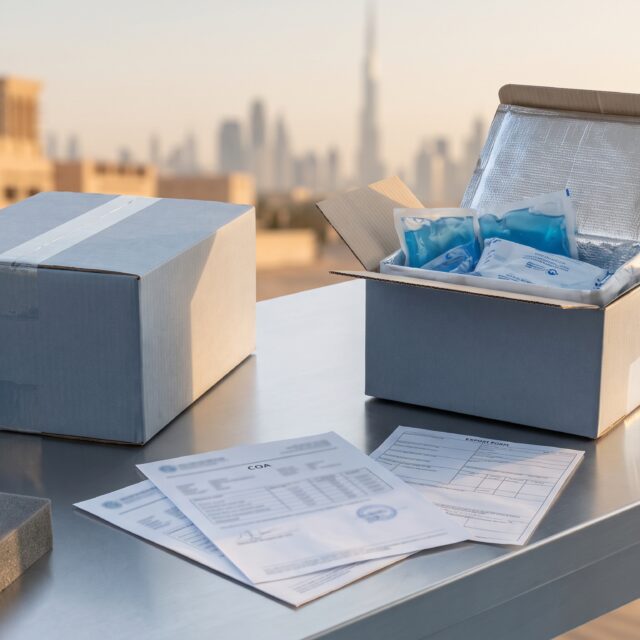
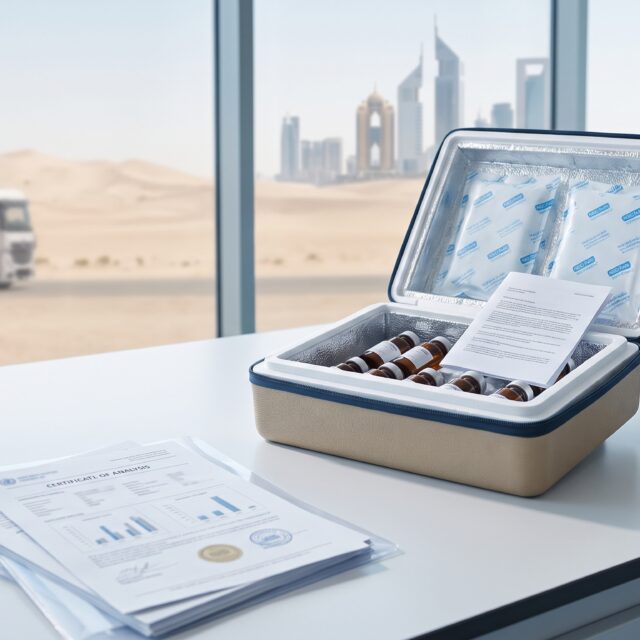
When searching for a TB-500 peptide UAE provider, inquiring about their specific packaging protocol is non-negotiable. Legitimate local suppliers employ active cold-chain shipping methodologies. This typically involves dispatching vials in insulated thermal packaging equipped with medical-grade gel ice packs.
This climate-controlled approach is necessary to maintain a stable, cool temperature during transit. If a supplier simply drops a fragile lyophilized vial into a standard courier envelope, the compound will likely arrive degraded, compromising its delicate molecular structure before the research even begins. Vendors offering next-day delivery in the UAE utilize these insulated packing standards to ensure the time spent in transit is minimized, further safeguarding the compound’s viability across all emirates.
Local Logistics, Payment, and Support Expectations
Beyond product purity and climate management, operational friction can significantly hinder laboratory timelines. Modern research supply networks in Dubai and the wider Emirates have adapted to offer streamlined, highly localized solutions for procurement teams.
Swift Domestic Dispatch
Because shipments are dispatched locally from fulfillment centers in Dubai or Abu Dhabi, institutional buyers can expect their materials to reach all seven emirates—Abu Dhabi, Dubai, Sharjah, Ajman, Umm Al Quwain, Ras Al Khaimah, and Fujairah—within 1 to 2 business days. By eliminating international customs holds and border inspections, researchers maintain strict control over their project timelines and ensure they receive fresh, properly stored batches.
Localized Payment Flexibility
Financial transaction flexibility is another critical pillar of modern regional procurement. Leading UAE suppliers have integrated local payment preferences to accommodate different buying structures and cash flow requirements. Alongside traditional secure Credit Card processing, top-tier vendors offer Cash on Delivery (COD), allowing buyers to physically receive their materials before releasing funds.
Furthermore, Sharia-compliant Buy Now, Pay Later (BNPL) platforms like Tamara are increasingly utilized across the GCC. Tamara allows laboratories and independent researchers to securely split payments for orders up to 5,000 AED, easing monthly cash flow constraints without compromising on the quality or purity of their analytical materials.
Direct Support Channels
When dealing with high-value research chemicals, responsive support is a necessity. Professional suppliers provide direct, localized support—often via WhatsApp or dedicated regional phone lines. This ensures that inquiries regarding batch documentation, bulk stock availability, or specific courier schedules are answered promptly by staff who understand the local landscape, rather than outsourced international help desks reading from generic scripts.
Securing Verified TB-500 Research Reagents
Ultimately, deciding where to source your research compounds comes down to mitigating scientific and operational risk. By prioritizing suppliers who adhere strictly to regional EDE guidelines, offer transparent HPLC and MS documentation, and utilize climate-controlled domestic logistics, researchers can focus entirely on their core scientific work rather than supply chain anxieties.
NOVA Labs specializes in providing high-purity laboratory reagents specifically adapted for the GCC market. We ensure that every batch is supported by rigorous analytical testing and dispatched via insulated cold-chain logistics to maintain absolute molecular integrity upon arrival at your facility.
If you are evaluating compliant suppliers for your next project, you can order verified TB-500 directly through our secure platform, supported by local payment options like COD and Tamara, and backed by comprehensive, batch-specific analytical testing.
Disclaimer: The products mentioned in this article are strictly for in vitro research purposes only and are not intended for human or animal consumption, diagnostic, or therapeutic use.
*
References
- Gulf News (2024). “UAE Cracks Down on Unapproved Peptide Weight-Loss Drugs: 71 Sources and 14 Influencers Face Action.”
- Peak Labs. “Cold-Chain Shipping and Import Documentation for Research Peptides in the GCC.”
- NOVA Labs Educational Resource. “How To Spot Fake Peptides Bahrain & UAE: Practical Buyer Guide.”
- PayTabs Support Portal. “Tamara Activation and Workflow – BNPL for UAE Merchants.”
- UAE Cracks Down on Unapproved Peptide Weight-Loss Drugs: 71 Sources and 14 Influencers Face Action – Gulf News
- Cold-Chain Shipping and Import Documentation for Research Peptides in – Peak Labs
- Where to buy research peptides in Dubai: a UAE buyer’s guide – UAEPEP
- How To Spot Fake Peptides Bahrain & UAE: Practical Buyer Guide – NOVA Labs
- Tamara Activation and Workflow – PayTabs Support Portal
Frequently asked questions
How can I verify the purity of TB-500 in the UAE?
Purity should be verified by requesting a batch-specific Certificate of Analysis (COA) from your domestic supplier. Look for High-Performance Liquid Chromatography (HPLC) chromatograms showing ≥99% purity and Mass Spectrometry (MS) data confirming the precise molecular weight of the peptide.
Does UAE summer heat damage research peptides during shipping?
Yes, sustained exposure to extreme heat, particularly temperatures above 45°C in the UAE, can rapidly degrade fragile lyophilized peptides. It is critical to select domestic suppliers who utilize active cold-chain shipping, deploying insulated thermal packaging and medical-grade gel ice packs.
Are there local payment options available for laboratory procurement in Dubai?
Leading UAE laboratory suppliers offer localized payment flexibility to streamline procurement. Common supported methods include Cash on Delivery (COD) and Sharia-compliant Buy Now, Pay Later (BNPL) platforms like Tamara, which allow buyers to split payments for orders up to 5,000 AED.
How long does domestic peptide delivery take in the Emirates?
When ordering from a supplier with local fulfillment facilities in Dubai or Abu Dhabi, shipments typically reach any of the seven emirates within 1 to 2 business days via next-day delivery protocols, completely avoiding lengthy international customs holds.
Nova Labs buyer tools
Ready to verify stock, testing and delivery?
Use the product page and lab report section to check availability, documentation, delivery timing and support before placing an order.
- COA / test-report checks
- UAE delivery context
- Cold-chain handling
- COD and card payment options
- WhatsApp support