



Procuring high-quality research materials in the Middle East requires rigorous vetting and a keen understanding of local supply chain dynamics. For laboratories, procurement staff, and independent researchers in Dubai, Abu Dhabi, and the wider GCC, knowing how to spot fake peptides is the single most critical step in protecting experimental integrity and financial resources.
With an influx of unregulated overseas suppliers marketing to the GCC, the risks of receiving degraded, under-dosed, or entirely counterfeit compounds have never been higher. Procuring compromised materials not only wastes grant money and laboratory budgets but can also completely invalidate months of sensitive experimental data. Recent regulatory sweeps in the UAE highlight the necessity of partnering with transparent, locally stocked suppliers who provide verifiable documentation.
This comprehensive guide will walk you through the exact signals to look for, from decoding complex laboratory test reports to navigating the specific logistical challenges of the extreme Middle Eastern climate. By the end of this checklist, you will have a clear, actionable framework for auditing any prospective supplier.
How to Spot Fake Peptides Before You Order
Quick Answer: To spot fake peptides, buyers must verify interactive third-party Certificates of Analysis (COAs), confirm chemical identity via LC-MS rather than relying solely on HPLC purity, match batch numbers to physical vials, and demand local cold-chain logistics. Avoid vendors utilizing unverified social media payment channels or untraceable shipping.
Taking the time to investigate a supplier’s operational footprint and testing transparency is non-negotiable. Legitimate vendors will never hide their testing methodologies, business registration, or contact details. When evaluating a new source, procurement managers and lead researchers should follow a strict pre-purchase audit.
First, assess their digital footprint. Does the vendor operate a professional, secured website, or are they relying entirely on ephemeral social media platforms like Telegram or Instagram? Second, review their testing claims. Claiming “99% purity” is meaningless without the underlying analytical data to prove it. Finally, assess their logistical capabilities. A vendor shipping sensitive biological compounds via standard, uninsulated international post is demonstrating a fundamental misunderstanding of peptide stability.
Below, we break down the most critical evaluation metrics every UAE researcher should use before placing an order.
The UAE Regulatory Landscape and Sourcing Risks
The local market context is crucial for understanding why counterfeit compounds proliferate through unverified channels. Recent actions by the Emirates Drug Establishment (EDE), the Ministry of Health and Prevention (MoHAP), and UAE customs authorities have heavily targeted the illegal distribution of unapproved synthetic research compounds marketed online.
These decisive actions have resulted in strict penalties against unapproved online sources bypassing laboratory and pharmaceutical protocols. Many international “grey market” vendors attempt to ship mislabeled white powders into the GCC, only to have them intercepted and destroyed by customs, leaving the buyer out of pocket.
Crucially, officially licensed warehouses and regulated local supply chains in the UAE remain clear of counterfeit or unapproved circulation. This stark contrast proves the integrity of official local hubs. For researchers, this underscores a vital point: sourcing from unlicensed social media vendors or obscure overseas websites presents a significant scientific and financial risk.
Legitimate research-grade suppliers enforce strict compliance, labelling products clearly as ‘Research Use Only’ and distinguishing them entirely from unregistered consumer products. When evaluating a supplier, checking their compliance with regional standards and their presence as an established UAE entity is your first line of defence against fraudulent operations.
Decoding the COA: HPLC Purity vs. Mass Spectrometry (LC-MS)
A Certificate of Analysis (COA) is the gold standard for verifying product quality, but it is also the most frequently manipulated document in the industry. Independent laboratory audits consistently reveal that a significant portion of unregulated research vendors fail basic purity and dosage checks.
Knowing how to spot fake peptides requires looking beyond a simple “99% Purity” stamp. You must understand the difference between the testing methodologies presented on the COA:
- High-Performance Liquid Chromatography (HPLC): This test measures the purity and homogeneity of a sample. It confirms that the substance in the vial is uniform by separating the components based on how they interact with a stationary phase. However, HPLC cannot definitively tell you what that substance actually is. A fraudulent vendor could theoretically provide a vial of 99% pure mannitol (a common lyophilisation filler) and generate a flawless HPLC report.
- Liquid Chromatography-Mass Spectrometry (LC-MS): This is the definitive test. Mass spectrometry measures the exact molecular weight and mass-to-charge ratio of the compound. Because every peptide has a specific, immutable molecular mass, LC-MS verifies the true chemical identity of the contents.
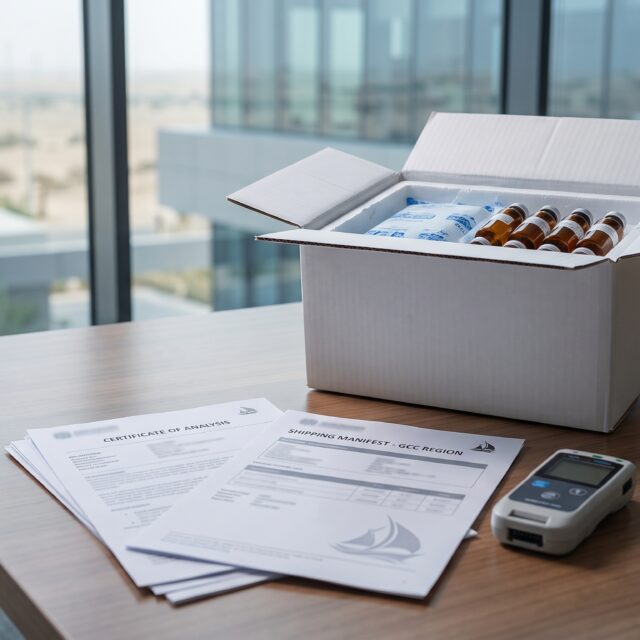
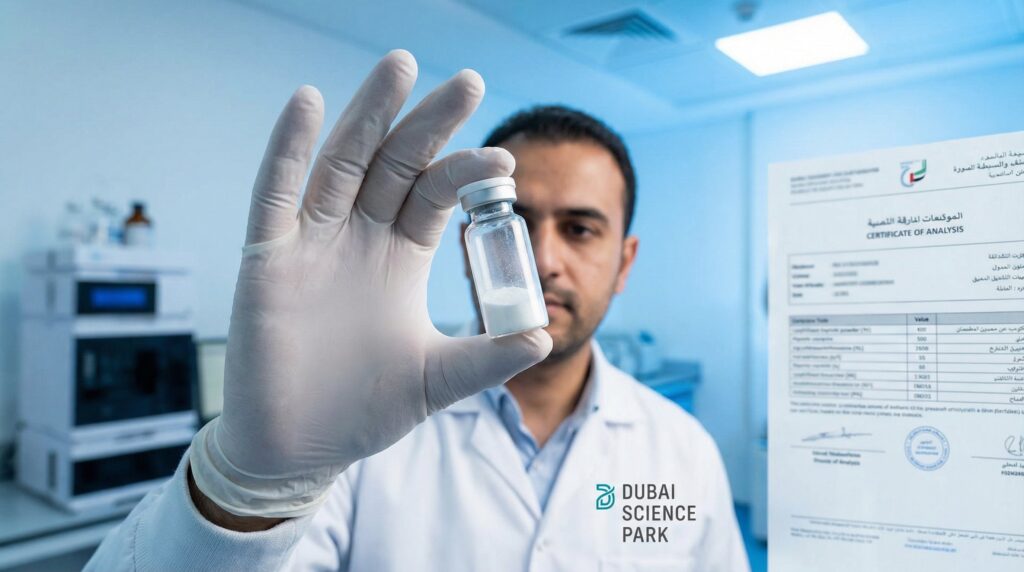
When evaluating a supplier, you must demand to see both HPLC and LC-MS results. Legitimate analytical laboratories, such as Janoshik Analytical, issue COAs that feature an interactive online verification code or a secure QR link. This allows the buyer to view the original report directly on the testing facility’s portal, preventing vendors from manipulating a downloaded PDF using photo editing software. If a supplier’s COA is a low-resolution image without an interactive verification link or a task ID, it should be treated as fraudulent.
The Raw Powder Scam and Batch Verification
Even if a vendor displays a genuine, verifiable COA, researchers must be wary of the “golden batch” or “raw powder” scam. This fraudulent tactic is incredibly common among low-tier suppliers.
The scam involves a vendor purchasing or manufacturing a single, high-quality batch of raw peptide powder and sending a sample to a third-party testing facility. Once they receive a flawless COA, they attach that single report to their website. However, they then proceed to sell thousands of unverified, poorly homogenised, and under-dosed vials produced in unsanitary conditions, completely bypassing the expensive compounding and lyophilisation quality checks.
To protect your research, you must insist on finished vial testing:
- Check the Batch Number: The batch or lot number printed on your physical vial must exactly match the batch number listed on the third-party COA.
- Look for Finished Product Analysis: Reputable suppliers do not just test raw powder; they test the finished, lyophilised vials after the compounding process. This guarantees that the specific dosage in the vial (e.g., 5mg, 10mg) is accurate and that no degradation occurred during the manufacturing and freeze-drying phases.
If a supplier has been selling the same high-volume product for two years but only displays a single COA dated 24 months ago, you are almost certainly not receiving the product depicted in that report.
Recognizing Common GCC Shipping & Payment Scams
For researchers in Dubai, Abu Dhabi, and the wider GCC, logistical and payment vulnerabilities are common entry points for fraud. Because international shipping of research chemicals often involves complex customs clearance, scammers routinely exploit this process through extortion schemes.
A frequent post-purchase scam involves researchers ordering from an overseas vendor and receiving a seemingly valid tracking number. A few days later, they receive an urgent email from a fake shipping or customs agency demanding an untraceable “customs release fee” or “insurance bond” to prevent the package from being seized or destroyed. These demands are almost always fraudulent. The original package either never existed, or it contained empty vials designed to trigger a customs hold.
Furthermore, illegitimate suppliers often restrict payment methods to untraceable offshore gateways, cryptocurrency, or Telegram-only arrangements. These methods offer zero buyer protection. High-quality regional suppliers operate transparently, offering secure, traceable checkout options. Look for vendors that support local UAE cards, Buy Now Pay Later facilities like Tamara, or Cash on Delivery (COD) models. A supplier willing to accept local, traceable payments demonstrates immense confidence in their product and logistical network.
Climate-Insulated Logistics: Why Cold-Chain Matters in Dubai
Even a genuine, 99% pure peptide verified by LC-MS can become effectively useless if subjected to thermal degradation. The Middle Eastern climate is uniquely hostile to delicate molecular structures. Summer temperatures in the UAE routinely exceed 45°C, and tarmac temperatures at regional cargo hubs can soar much higher, sometimes exceeding 60°C.
Technical data on the thermal stability of lyophilised peptides indicates rapid chemical degradation, deamidation, and loss of structural integrity when exposed to extreme heat for prolonged periods. When you order from overseas vendors using standard international parcel networks, your research materials may sit in unairconditioned sorting facilities or on airport tarmacs for days. By the time they arrive in your laboratory, the peptide bonds may have degraded, rendering the compound inert and ruining your experimental data.
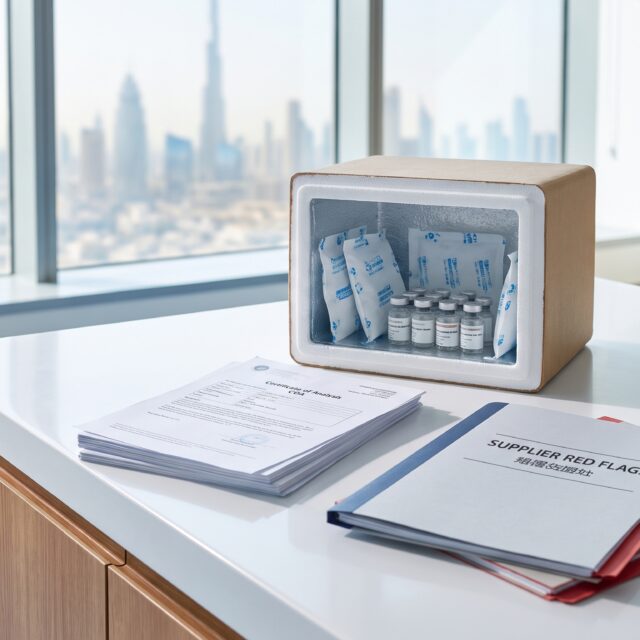
This is why localized cold-chain logistics are an absolute necessity in this region. To ensure the integrity of your compounds, you must source from suppliers who maintain stock in climate-controlled UAE facilities and utilize insulated transport for the final mile. For researchers needing immediate, secure access to verified materials without the risk of thermal damage, leveraging https://www.nova-biolabs.ae/peptides-uae-next-day-delivery ensures that your compounds bypass international transit risks entirely, arriving thermally protected and ready for successful reconstitution.
Bottom Line: Sourcing Safely for Your Lab
Learning how to spot fake peptides ultimately comes down to verifying testing transparency, understanding the vital importance of molecular identity via LC-MS, and prioritizing local logistical integrity. The financial and scientific costs of utilizing compromised materials are simply too high for modern laboratories to ignore. Recent regulatory crackdowns in the region clearly illustrate the risks associated with unapproved overseas sources and unregulated social media vendors.
By demanding interactive, batch-specific COAs, utilizing secure local payment gateways, and insisting on climate-controlled delivery, you can safeguard your research funding and ensure the absolute accuracy of your experimental outcomes. Don’t compromise your lab’s data with unverified compounds.
If you are looking for transparently tested, locally stocked materials backed by independent analytics, you can explore our fully verified catalogue at https://www.nova-biolabs.ae/shop.
Disclaimer: The products mentioned in this article are strictly for research purposes only and are not intended for human or animal consumption, diagnostic, or therapeutic use. Always adhere to strict laboratory safety guidelines and regional regulations when handling research chemicals.
References
- United Arab Emirates Ministry of Health and Prevention (MoHAP). Guidelines on the Importation of Medical and Research Supplies.
- Janoshik Analytical. “Understanding Certificate of Analysis: HPLC and LC-MS Verification Standards.”
- Almeida, J. et al. (2019). “Thermal Stability and Degradation Pathways of Lyophilized Peptides.” Journal of Pharmaceutical Sciences.
- Gulf News. “UAE Authorities Crack Down on Unlicensed Medical and Research Compounds.”
- UAE Cracks Down on Unapproved Peptide Weight-Loss Drugs: 71 Sources and 14 Influencers Face Action – Gulf News
- Thermal Stability of Lyophilized Peptides in the Gulf Climate | VaultLabs Technical Whitepaper
- How To Spot Fake Peptides Bahrain & UAE: Practical Buyer Guide – NOVA Labs
- How To Read Peptide COA Kuwait: Practical Buyer Guide – NOVA Labs
- How to Read a Peptide COA (Real vs Fake)
- 40% of Peptides Fail Purity Tests: How to Verify (2026)
Frequently asked questions
How can I tell if a peptide COA is fake?
A fake COA often lacks an interactive verification code, relies on low-resolution PDF images, or shows testing dates that are years old. Always ensure the COA features a QR code or task ID link that directs you to the independent testing facility's official website (such as Janoshik) to view the original, unaltered report.
What is the difference between HPLC and LC-MS in peptide testing?
HPLC (High-Performance Liquid Chromatography) only measures the purity and homogeneity of a sample, meaning it shows how uniform the powder is. LC-MS (Liquid Chromatography-Mass Spectrometry) is required to verify the true chemical identity of the peptide by measuring its specific molecular mass.
Why is cold-chain shipping important for peptides in the UAE?
Peptides are sensitive to thermal degradation. In the extreme heat of the UAE and GCC, standard international shipments sitting on airport tarmacs can quickly degrade the delicate peptide bonds, rendering the research material inert. Cold-chain shipping protects the compound's structural integrity.
What is the 'customs release fee' shipping scam?
This is a common fraud where international vendors provide a fake tracking number, followed by an urgent email demanding an untraceable fee (often in cryptocurrency) to 'release' the package from GCC customs. Legitimate local vendors manage clearance internally and offer transparent local payment methods like COD or Tamara.
Nova Labs buyer tools
Ready to verify stock, testing and delivery?
Use the product page and lab report section to check availability, documentation, delivery timing and support before placing an order.
- COA / test-report checks
- UAE delivery context
- Cold-chain handling
- COD and card payment options
- WhatsApp support