




Where and How to Buy Tesamorelin Qatar
Quick Answer: For laboratories looking to buy tesamorelin qatar, sourcing from specialized GCC regional suppliers with third-party analytical testing is mandatory. Local pharmacies do not stock research-grade synthetic peptides. Researchers must rely on dedicated vendors providing batch-specific COAs, strict cold-chain logistics, and accurate customs documentation for unhindered import.
For research laboratories, academic institutions, and independent life science investigators in the Middle East, procuring sensitive analytical compounds requires navigating strict regional regulations and extreme environmental conditions. When looking to acquire specialized synthetic compounds, understanding the landscape of supplier documentation, local customs enforcement, and precise logistical handling is critical for ensuring experimental integrity.
Procurement in Doha and the wider Qatari market involves unique hurdles. Unlike general consumer goods, research peptides demand rigorous thermal protection and exact regulatory declarations to pass borders smoothly. This guide explores the foundational science behind this specific GHRH analog, the necessity of rigorous analytical testing, and the logistical frameworks required to safely deliver these materials into Qatar.
Understanding the Tesamorelin Peptide in Research
Before evaluating a supplier, it is vital to understand the structural properties of the compound itself. Tesamorelin is a synthetic 44-amino acid analog of Growth Hormone-Releasing Hormone (GHRH). In endogenous biological systems, GHRH is responsible for signaling the anterior pituitary gland in a pulsatile manner.
What makes the synthetic compound distinct from natural GHRH is its precise structural modification. The synthetic chain is modified with a trans-3-hexenoic acid group attached to its N-terminus. This specific chemical alteration is designed to shield the peptide from rapid enzymatic degradation by dipeptidyl peptidase-4 (DPP-4), dramatically increasing its biological half-life and stability in laboratory models.
In controlled research settings, investigators study these properties to evaluate receptor binding affinities and the upregulation of specific cellular pathways. Because these in vitro studies rely on highly controlled pulsatile signaling models, the structural integrity of the peptide cannot be compromised by degradation, cross-contamination, or thermal damage prior to reconstitution.
The Critical Role of HPLC and Mass Spectrometry
Any investigator looking to procure peptides must prioritize analytical purity above all other procurement factors. The presence of unbound amino acids, heavy metals, synthesis byproducts, or truncated peptide sequences can completely invalidate research data, trigger unintended binding cascades in vitro, or compromise delicate cell cultures.
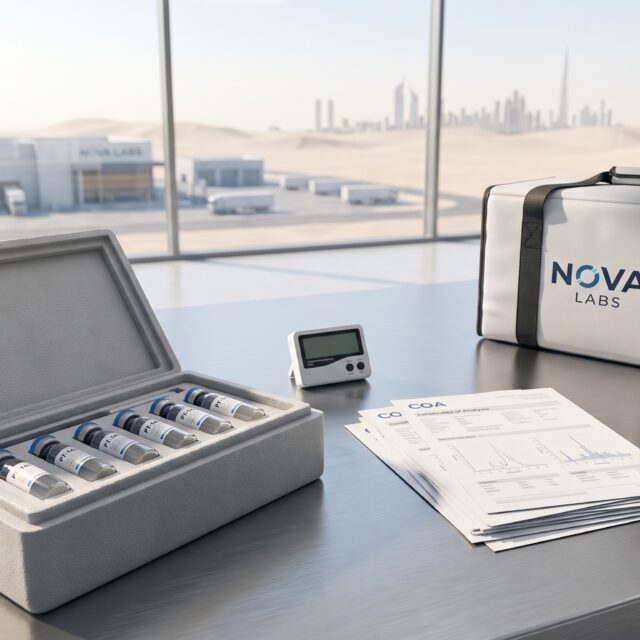
Reputable suppliers verify their product quality through a Certificate of Analysis (COA) conducted by an independent third-party laboratory. When reviewing a COA, researchers should check for two specific analytical methods:
1. High-Performance Liquid Chromatography (HPLC)
This analytical technique separates the components of the synthetic batch. A proper HPLC report will display a distinct, sharp primary peak, ensuring that the target compound makes up the vast majority of the vial’s contents. For research purposes, a minimum purity threshold of 98% to 99% is required. Anything less indicates the presence of impurities like trifluoroacetic acid (TFA) salts or residual solvents from the synthesis process.
2. Mass Spectrometry (MS)
While HPLC confirms purity, Mass Spectrometry verifies the exact molecular weight of the compound. This confirms that the structural sequence—including the critical trans-3-hexenoic acid modification—is intact and perfectly matches the expected theoretical molecular mass of Tesamorelin.
If a supplier cannot produce recent, batch-specific COAs displaying both HPLC and MS results, the integrity of their inventory is highly questionable, and researchers should immediately look elsewhere.
Navigating MoPH and GCC Customs Regulations
Importing synthetic chemicals into Qatar requires strict adherence to the Common Customs Law for the GCC States and the specific guidelines enforced by Qatar’s Ministry of Public Health (MoPH). Standard domestic Qatari pharmacies provide robust networks for general public health goods and consumer supplies. However, they strictly stock approved retail and pharmaceutical goods; they do not inventory specialized, research-use-only chemicals.
Consequently, Qatari researchers must source internationally or from specialized regional hubs. When chemical compounds cross the Qatari border, customs officials heavily scrutinize the documentation. If a chemical is imported under a personal name without proper research-use declarations or accurate Harmonized System (HS) codes, it is highly susceptible to border delays, inspection, and ultimate seizure.
Compliant suppliers prevent this friction by properly categorizing and declaring their shipments. The materials must be explicitly documented as research-use-only chemicals, strictly not intended for human consumption, medical diagnosis, or therapeutic use. Proper commercial invoices and accurate labeling ensure that analytical researchers can secure their materials legally without violating MoPH frameworks.
Beating the Heat: Cold-Chain Logistics in Qatar
One of the most significant threats to peptide integrity in the Middle East is the extreme climate. Synthetic peptides are highly sensitive to thermal fluctuations. While lyophilized (freeze-dried) powders are significantly more stable than liquid solutions, they still require carefully controlled environments to prevent the degradation of their complex amino acid chains.
For optimal long-term stability, lyophilized compounds should be stored and transported at temperatures between 2°C and 8°C. If a parcel sits in an unconditioned warehouse or tarmac in Doha during the summer months—where temperatures can easily exceed 45°C—the heat can cause the peptide bonds to denature, rendering the compound completely useless for scientific study before it even reaches the laboratory.
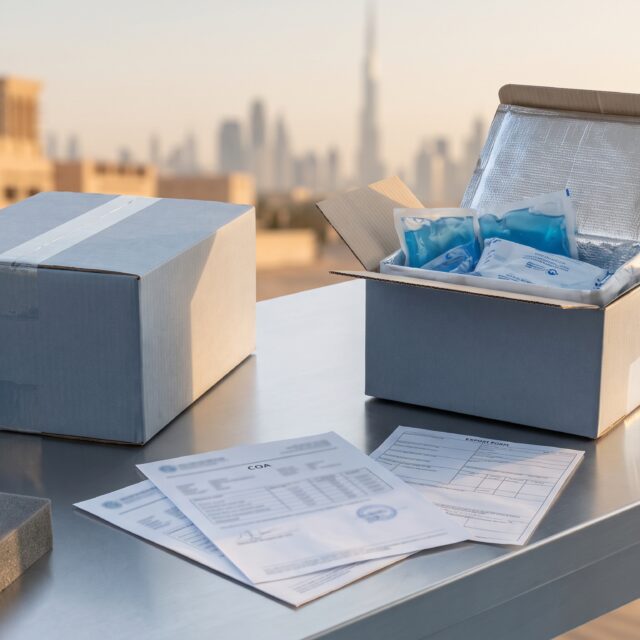
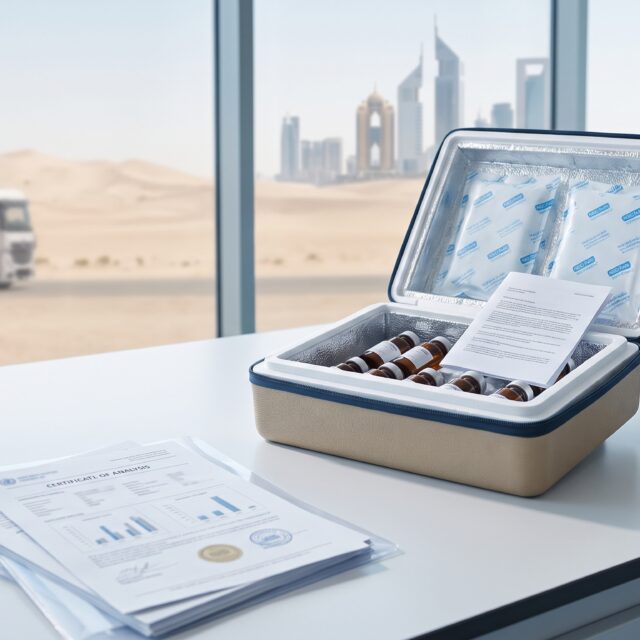
This makes standard international mail highly risky. A reliable supplier must utilize insulated cold-chain shipping solutions. This involves utilizing EPS (expanded polystyrene) thermal packaging, phase change materials (specialized ice packs), and expedited courier networks to minimize transit time.
Partnering with vendors that offer expedited regional shipping options allows Qatari researchers to bypass lengthy international transit times, ensuring the cold chain is maintained from the warehouse to the laboratory bench.
Once the delivery arrives, laboratory protocols dictate that the vials must be immediately refrigerated. When the peptide is eventually reconstituted using bacteriostatic or sterile water for experimental use, it becomes exponentially more fragile and must remain strictly refrigerated and utilized within the appropriate scientific window.
Buyer Checklist: How to Evaluate a GCC Supplier
For high-intent researchers and procurement officers, selecting the right partner involves balancing product quality, logistical reliability, and transparent support. When evaluating vendors, consider the following operational signals:
- Transparency of Testing: Do they openly display third-party HPLC and Mass Spectrometry test reports? Is the purity consistently above 99% for every batch?
- Regional Logistics: Do they have a proven track record of clearing GCC customs? Shipping from regional hubs within the Middle East can significantly reduce transit times to Doha compared to overseas shipments from North America or Asia.
- Payment and Support: Does the supplier offer secure, encrypted payment gateways, clear communication channels (such as dedicated WhatsApp support), and realistic delivery estimates tailored to the Middle East?
- Handling Practices: Do they explicitly confirm the use of thermal packaging for peptide shipments to ensure the product survives the regional climate?
By prioritizing vendors that integrate rigorous chemical testing with specialized Middle Eastern logistics, Qatari researchers can mitigate the risks of customs seizures and degraded materials, ensuring their laboratory remains adequately supplied.
Conclusion
Procuring specialized GHRH analogs in the GCC requires far more than finding the lowest price online. Successfully sourcing these compounds in Qatar demands a comprehensive approach to quality control, regulatory compliance, and environmental protection. By demanding batch-specific COAs, ensuring proper research-only documentation, and mandating cold-chain transit, investigators can secure the high-purity compounds necessary for precise, reproducible laboratory results.
To ensure your laboratory is equipped with the highest quality compounds, you can buy Tesamorelin through NOVA Labs. Our commitment to strict third-party HPLC verification, accurate customs documentation, and specialized thermal packaging guarantees that your research materials arrive in Qatar stable, secure, and ready for study.
Disclaimer: All products mentioned in this article are strictly for laboratory research purposes only and are not intended for human or animal consumption, diagnostic, or therapeutic use.
References
- General Authority of Customs, State of Qatar. “Importing goods under a personal name – GCC Common Customs Law.”
- RapidFulfillment. “Cold Chain Peptide Shipping Services Explained: Mitigating Thermal Degradation in Transit.”
- Journal of Laboratory Supply and Quality Control. “Analytical Chromatography Standards for Synthetic Peptides.”
- Ministry of Public Health (MoPH) Qatar. “Guidelines for the Importation of Chemical and Research Substances.”
- are peptides legal in qatar | The Regulatory Landscape
- Buy Tesamorelin Peptide Vial UAE | PharmaLabGlobal
- For Individuals – Importing goods under a personal name – General Authority of Customs
- Cold Chain Peptide Shipping Services Explained – RapidFulfillment.com
- Premium Tesamorelin Peptide | GHRH Analogue | Over 99% Purity – Onyx Biolabs
- Tesamorelin Dosage: Best FDA Protocol Guide 2026 – PSPeptides
Frequently asked questions
Are research peptides available in local pharmacies in Qatar?
No, standard domestic pharmacies in Qatar strictly supply approved consumer and retail health goods. They do not stock specialized, research-use-only synthetic peptides. Researchers must source these compounds from dedicated scientific suppliers.
What is the optimal storage temperature for Tesamorelin peptide in Qatar?
Lyophilized Tesamorelin should be stored strictly between 2°C and 8°C. Due to the extreme heat in the GCC, it is critical that the peptide is shipped using insulated cold-chain logistics to prevent structural degradation before it reaches the lab.
How can I verify the purity of a Tesamorelin supplier in Qatar?
Buyers should demand a batch-specific Certificate of Analysis (COA) from an independent third-party laboratory. This documentation must include High-Performance Liquid Chromatography (HPLC) and Mass Spectrometry (MS) results proving a minimum purity of 98% to 99%.
What happens if research peptides are imported into Qatar without proper documentation?
Importing chemical compounds without proper research-use declarations or accurate commercial invoices can result in strict border inspections, extensive customs delays, or the seizure of the shipment under Qatar's Ministry of Public Health (MoPH) regulations.
Nova Labs buyer tools
Ready to verify stock, testing and delivery?
Use the product page and lab report section to check availability, documentation, delivery timing and support before placing an order.
- COA / test-report checks
- Qatar delivery context
- Cold-chain handling
- COD and card payment options
- WhatsApp support