
The Essential Guide to Bacteriostatic Water for Peptides in Dubai
Bacteriostatic water for peptides in Dubai is sterile water formulated with exactly 0.9% benzyl alcohol as a preservative. This specific composition inhibits bacterial growth, allowing researchers to safely perform multiple withdrawals from a single vial for up to 28 days without compromising the compound’s integrity.
When preparing lyophilised compounds for laboratory study, the diluent you choose is just as critical as the quality of the research compound itself. For procurement staff and informed buyers, sourcing these materials in the UAE presents unique regional challenges, from extreme summer temperatures to unpredictable customs bottlenecks that can ruin delicate materials.
Failing to understand the difference between standard sterile water and true bacteriostatic water is one of the most common—and costly—errors made in research environments. This guide breaks down exactly what to look for, how to verify supplier documentation, and why local GCC logistics matter heavily when purchasing diluents.
Formulations Compared: What Makes Bacteriostatic Water Different?
A frequent misconception among buyers is that any sterile liquid is suitable for reconstituting multi-use compounds. In reality, the chemical composition of the diluent dictates how the vial must be handled and how long it remains viable after the first puncture.
Sterile Water vs. Bacteriostatic Water
Standard sterile water, often labelled as Water for Injection (WFI) without any additives, contains no preservatives. By industry and USP standards, plain sterile water is strictly for single-use applications. Once the vial’s septum is punctured, the 6-hour ISO 5 discard rule generally applies because the water has no mechanism to fight off microbial or bacterial contamination introduced by the needle or ambient air.
True bacteriostatic water solves this limitation through chemistry. By adding precisely 0.9% (9 mg/mL) benzyl alcohol to pharmaceutical-grade WFI, the diluent becomes hostile to microbial growth. This allows researchers to re-enter the vial multiple times.
The 28-Day Rule
Even with the addition of benzyl alcohol, bacteriostatic water does not last forever once opened. Under standard guidelines, once a multi-dose vial of bacteriostatic water is punctured, it remains safe for repeated withdrawals for a maximum of 28 days.
After this 28-day window, the preservative’s efficacy degrades, and the vial must be discarded to prevent compromised research data. A strict laboratory best practice is to permanently mark the vial with the exact date of its first puncture.
Starting with WFI Purity
Quality bacteriostatic water must begin with pharmaceutical-grade Water for Injection (WFI). This ensures the base liquid is entirely free from pyrogens, particulate matter, and organic contaminants before the benzyl alcohol is introduced. When evaluating suppliers, buyers should look for clear confirmation that the base diluent meets WFI specifications, rather than just being filtered tap or distilled water.
Overcoming UAE Logistics: Why Local Sourcing Matters
Buying research supplies online often looks straightforward until the realities of international shipping intervene. The GCC region presents specific logistical hurdles that make importing liquids and lyophilised compounds directly from overseas highly risky.
The Threat of Thermal Degradation
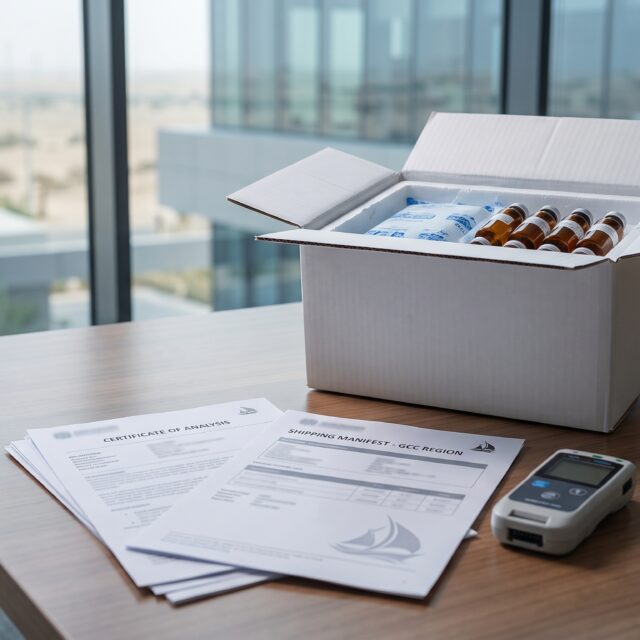
During the UAE summer, ambient temperatures routinely exceed 45°C. When international shipments arrive at ports or airports, uninsulated cargo can sit on the tarmac or in unconditioned customs warehouses for days.
Lyophilised peptides and their associated diluents are sensitive to extreme heat. Prolonged exposure to high temperatures can degrade peptide bonds, rendering expensive research materials useless before they even reach your laboratory. Active cold-chain logistics (maintaining 2-8°C transit temperatures) are often mandatory for delicate compounds, and rapid transit with minimal dwell time is strictly required.
Bypassing Customs Friction
International imports frequently face stringent customs bottlenecks. Delays not only increase the risk of thermal degradation but also introduce administrative headaches for procurement staff.
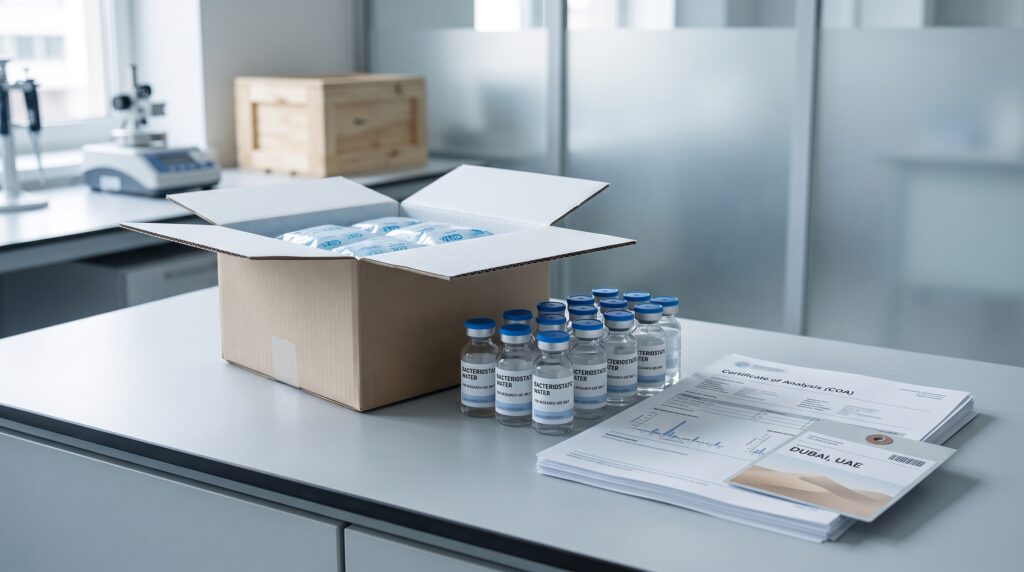
Sourcing from regional GCC warehousing avoids international customs friction entirely. When you work with a supplier holding inventory within the Emirates, you eliminate border delays. For researchers needing immediate supplies, finding a partner who offers peptides in Dubai with same-day delivery ensures that temperature-sensitive packages move directly from climate-controlled storage to your facility in hours, rather than weeks.
Quality Control: Verifying Your Research Diluents
Procurement officers and dedicated researchers should rarely take marketing claims at face value. Evaluating a supplier requires looking at their documentation, transparency, and operational footprint.
Certificate of Analysis (COA) Visibility
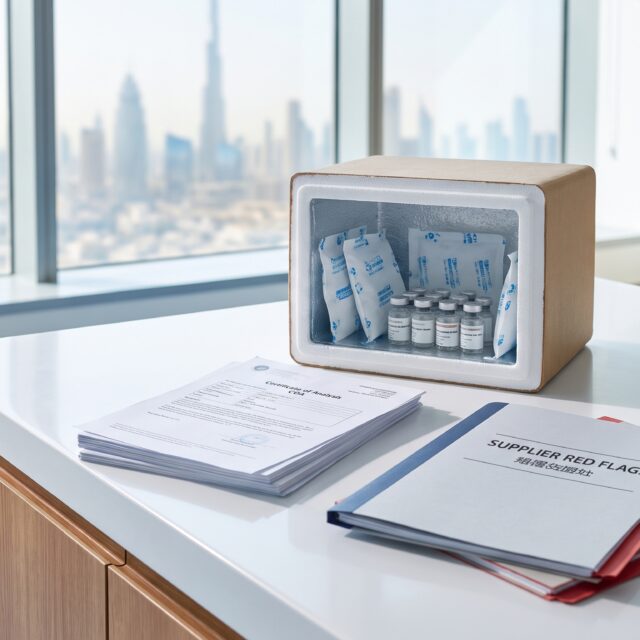
While COAs are primarily associated with the purity of the peptides themselves (often requiring HPLC and Mass Spectrometry reports), the overall transparency of a supplier speaks volumes about their diluents. A reputable supplier will track batch lots and be willing to provide documentation proving the purity and exact composition of their bacteriostatic water.
If a vendor obscures their testing data or refuses to answer specific questions about the origin of their WFI, it is a strong signal to look elsewhere.
Real-Time Support and Verification
Top UAE suppliers understand that research timelines are tight. They provide direct, real-time support channels—such as dedicated WhatsApp hotlines—to facilitate rapid stock verification, batch lot tracking, and COA checks. Being able to message a supplier directly to confirm that a specific lot of bacteriostatic water is in stock locally is a major advantage over waiting 48 hours for an email reply from an overseas vendor.
Procurement Checklist for UAE Buyers
To streamline the purchasing process and protect your research investments, use this buyer checklist when evaluating suppliers for bacteriostatic water:
- Verify the Composition: Ensure the product explicitly states it is made with 0.9% benzyl alcohol and a Water for Injection (WFI) base.
- Confirm Local Stock: Ask if the product is currently warehoused in the UAE to avoid customs delays and heat exposure.
- Check Payment Flexibility: GCC buyers strongly prefer localized payment methods. Top suppliers lower buying friction by supporting Cash on Delivery (COD), Apple Pay, Google Pay, credit cards, and local Buy Now Pay Later options like Tamara.
- Evaluate Support Channels: Ensure the supplier has an active WhatsApp or local phone line for immediate inquiries regarding batch documentation and delivery timing.
- Assess Cold-Chain Capability: If you are ordering lyophilised compounds alongside your diluent, verify that the supplier utilizes proper temperature-controlled packaging.
Securing Reliable Research Supplies in the UAE
Procuring bacteriostatic water for peptides in Dubai requires more than just finding the lowest price online. It demands an understanding of WFI purity, the critical 28-day multi-use rule, and the severe impact of UAE summer temperatures on international shipments.
By prioritizing local UAE warehousing, verifying the 0.9% benzyl alcohol formulation, and utilizing vendors with transparent COA practices and flexible payment options like COD or Tamara, researchers can secure their materials safely and efficiently.
Explore the NOVA Labs research catalog to find verifiable compounds and diluents supported by local logistics and dedicated customer service.
Disclaimer: The products mentioned in this article are for research purposes only and are not intended for human consumption.
References
- DailyMed. (n.d.). Bacteriostatic Water for Injection. U.S. National Library of Medicine.
- United States Pharmacopeia (USP). Guidelines on multi-dose vials and Water for Injection standards.
- Ministry of Health and Prevention (MOHAP) UAE. Guidelines on the importation and storage of laboratory and research materials.
- Peptides Compounding Pharmacy Dubai – CureCell
- Bacteriostatic Water UAE | 3ml & 10ml – VaultLabs
- Nova Biolabs vs Propeptide Dubai: 2026 Sourcing Comparison
- Bacteriostatic water: how much to use – Peptides – Rite Aid
- BACTERIOSTATIC WATER – DailyMed
Frequently asked questions
What is the difference between sterile water and bacteriostatic water?
Sterile water contains no preservatives and is strictly for single-use applications. Bacteriostatic water contains 0.9% benzyl alcohol, which inhibits microbial growth and allows for multiple withdrawals from the same vial.
How long does bacteriostatic water last once opened?
Once the vial is punctured, bacteriostatic water remains viable for safe laboratory use for up to 28 days. After 28 days, the preservative degrades and the vial should be discarded.
Why is local UAE delivery important for peptide diluents?
Local delivery avoids international customs delays and prevents prolonged exposure to the extreme UAE summer heat, which can cause thermal degradation to uninsulated research compounds.
What does WFI mean on a diluent label?
WFI stands for Water for Injection. It is a highly purified, pharmaceutical-grade water free from pyrogens and contaminants, used as the base liquid before benzyl alcohol is added to make bacteriostatic water.
Nova Labs buyer tools
Ready to verify stock, testing and delivery?
Use the product page and lab report section to check availability, documentation, delivery timing and support before placing an order.
- COA / test-report checks
- Dubai delivery context
- Cold-chain handling
- COD and card payment options
- WhatsApp support