
Procuring specialised chemical compounds for scientific investigation requires navigating a complex web of logistics, quality verification, and regional compliance. For procurement officers and laboratory professionals looking to buy Kisspeptin in Qatar, the landscape has fundamentally shifted. Following strict new directives regarding the import of unlicensed compounds, researchers must ensure their procurement strategies are fully compliant, transparent, and focused exclusively on professional in-vitro study.
Whether you are evaluating the structural stability of the Kisspeptin-10 decapeptide or setting up an independent assay, locating a dependable Kisspeptin supplier in Qatar means scrutinising more than just a price tag. It requires a rigorous assessment of independent testing documentation, cold-chain handling protocols capable of surviving the intense GCC climate, and a deep understanding of the local regulatory environment.
How to Buy Kisspeptin in Qatar for Laboratory Research
Quick answer: To buy Kisspeptin in Qatar for laboratory research, professionals must procure 10mg lyophilised Kisspeptin-10 vials through strictly compliant, registered channels. Buyers must verify HPLC/MS testing for >99% purity, ensure insulated cold-chain shipping to counter Gulf heat, and strictly adhere to Ministry of Public Health (MoPH) import regulations for unlicensed chemical compounds.
Securing high-quality research materials requires partnering with suppliers who understand the intricate balance of analytical chemistry and regional logistics. Kisspeptin, specifically the biologically active C-terminal decapeptide fragment known as Kisspeptin-10, is highly sought after for its role in cellular signalling studies. However, the integrity of these studies depends entirely on the absolute purity of the lyophilised powder delivered to the laboratory bench.
In the current regulatory climate, sourcing the Kisspeptin peptide in Qatar demands meticulous attention to detail. Procurement professionals must shift their focus toward verifiable batch data and robust supply chain integrity.
Understanding Qatar’s MoPH Compliance (Circular PDC/2023/31)
The most critical factor for any facility looking to order Kisspeptin in Qatar is absolute adherence to local laws. In late 2023, Qatar’s Ministry of Public Health (MoPH) issued Circular No. PDC/2023/31. This landmark directive strictly prohibits the import, manufacture, distribution, use, and promotion of unlicensed peptide preparations within the country.
Crucially, the MoPH directive explicitly closed a common loophole: labelling peptide products as “for research purposes” or “not for human use” does not exempt them if the seller promotes, implies, or facilitates their use for human consumption. This means that international suppliers offering casual consumer retail or ambiguous usage guidelines are heavily restricted and likely to face customs seizure at the border.
For legitimate scientific institutions and professional procurement teams, this means that importing chemical and pharmaceutical compounds into Qatar requires careful navigation. The importation process generally necessitates a registered import licence—typically issued to Qatari nationals or established local corporate partners—and pre-import clearance via the MoPH Pharmacy and Drug Control Department electronic system (PDCD E-system). Your supplier must be capable of providing the exact molecular documentation, Safety Data Sheets (SDS), and analytical reports required to facilitate this professional, in-vitro-only clearance process.
Evaluating Kisspeptin-10 Quality: The COA Verification Protocol
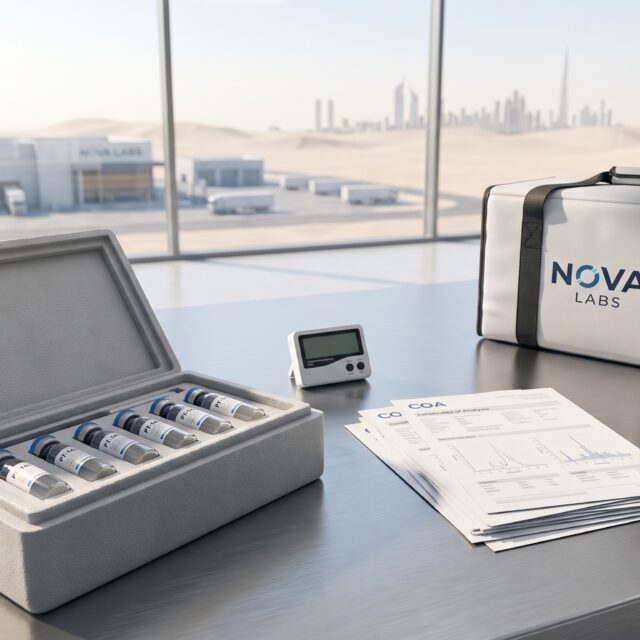
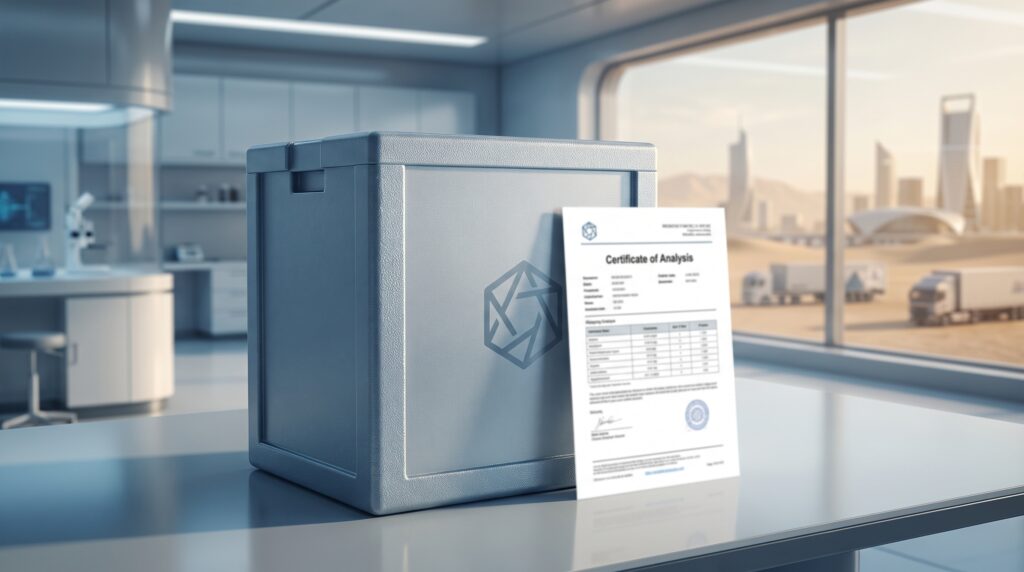
When evaluating any Kisspeptin supplier in Qatar, the foundational proof of quality is the Certificate of Analysis (COA). Because Kisspeptin-10 is typically synthesised as a 10mg lyophilised white powder, visual inspection is impossible. Contaminants, residual solvents, or underdosed vials can completely invalidate expensive laboratory assays.
To guarantee reproducibility in your research, institute a strict COA verification protocol prior to purchase. A reliable analytical report should include:
- High-Performance Liquid Chromatography (HPLC): This test separates the components of a mixture. You should look for a singular, sharp peak indicating a chemical purity level exceeding 99 percent.
- Mass Spectrometry (MS): This confirms the exact molecular weight of the Kisspeptin-10 fragment, ensuring that the synthesised peptide matches the intended amino acid sequence.
- Batch-Specific Traceability: Never accept a generic or outdated COA. The document must correspond directly to the lot number printed on the vials you receive.
By insisting on third-party analytical testing, laboratories safeguard their resources and ensure that their in-vitro models are interacting with the precise molecular structure they intended to study.
The Chemical Properties of Kisspeptin-10: Reconstitution and Storage
Understanding the distinct chemical profile of Kisspeptin-10 is essential for both procurement and active laboratory handling. Unlike more robust or highly soluble compounds, Kisspeptin-10 is noted for being highly hydrophobic.
This hydrophobic nature presents unique challenges during the reconstitution phase of your research. Standard plain sterile water or bacteriostatic water is often insufficient to achieve complete solubility. In professional laboratory settings, researchers typically require a specialised solvent—most commonly 0.6 percent acetic acid in water—to properly dissolve the lyophilised powder without damaging the delicate peptide bonds.
Furthermore, long-term structural stability hinges on strict temperature control. Lyophilised Kisspeptin-10 must be stored at -20 degrees Celsius to prevent degradation. Once the peptide is reconstituted with the appropriate acetic acid solvent, it requires immediate refrigeration at 2 to 8 degrees Celsius and should be utilised within the timeframe dictated by your specific experimental protocol.
Cold-Chain Logistics: Overcoming the GCC Climate
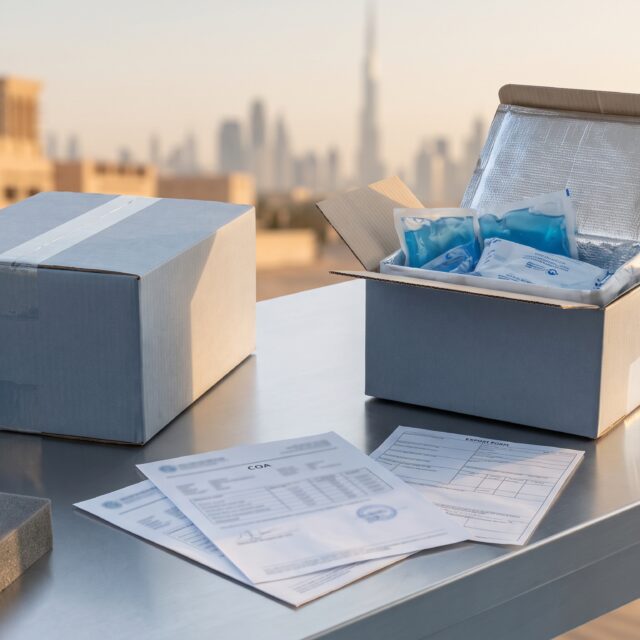
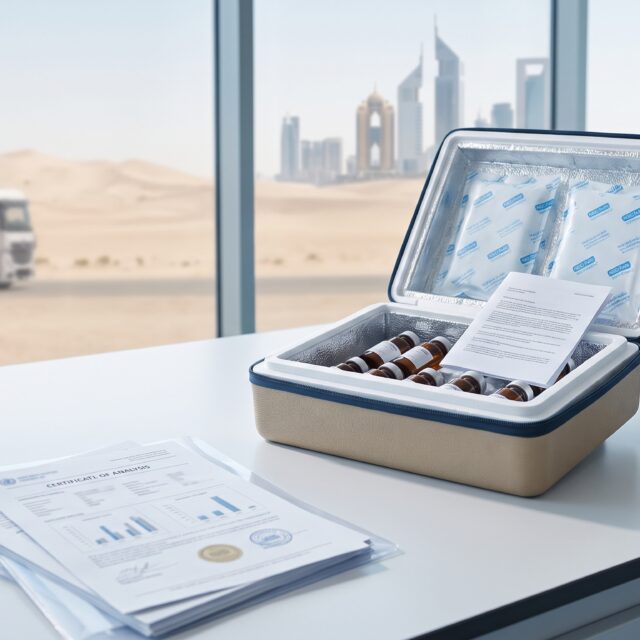
The necessity for strict temperature control makes logistics one of the highest hurdles when you buy Kisspeptin in Qatar. The intense heat of the Gulf climate can rapidly degrade uninsulated peptides, destroying their molecular integrity before they ever reach the laboratory bench.
International suppliers routing packages through multiple global transit hubs run a high risk of temperature excursions. If a package sits on a sun-drenched tarmac in Doha without adequate thermal protection, the peptide’s viability is severely compromised.
This is where leveraging regional supply networks becomes invaluable. Facilities purchasing research materials often find that sourcing from an established Middle Eastern hub reduces transit times and minimises environmental exposure. Dedicated regional peptide logistics and delivery strategies—incorporating insulated packaging, temperature trackers, and rapid customs routing—are critical for ensuring that the -20 degrees Celsius threshold is respected as closely as possible during transit.
Procuring Your Research Materials with NOVA Labs
For facilities navigating the complexities of regional procurement, choosing a supplier that understands both the analytical requirements and the logistical challenges of the GCC is paramount. NOVA Labs operates with a strict commitment to verifiable quality, serving the needs of the professional scientific community across the region.
When evaluating materials for your next in-vitro study, access to transparent data is non-negotiable. We ensure that our batches undergo stringent independent testing, providing researchers with the necessary HPLC and MS documentation required for stringent internal audits and seamless facility integration.
By prioritising secure, temperature-aware handling and streamlined regional distribution, we help researchers mitigate the risks of chemical degradation. If your laboratory is preparing for its next phase of assays and requires highly pure, verifiable Kisspeptin-10, ensuring you have a partner capable of supplying full batch documentation and robust GCC support is the first step toward reproducible results.
Conclusion
The landscape to buy Kisspeptin in Qatar has evolved, demanding a higher standard of regulatory awareness, logistical planning, and analytical verification. Following the MoPH directives, researchers must operate with absolute precision, procuring compounds strictly for professional in-vitro study. By understanding the chemical intricacies of Kisspeptin-10, demanding batch-specific COAs, and partnering with suppliers capable of navigating the harsh GCC climate through secure cold-chain handling, laboratories can protect their investments and ensure the integrity of their research.
Focus on verifiable purity, regional logistical strength, and comprehensive documentation to elevate the standard of your scientific procurement.
Disclaimer: The products mentioned in this article are for research purposes only and are not intended for human consumption.
References
- Qatar Ministry of Public Health (MoPH). (2023). Circular No. PDC/2023/31: Prohibition of Handling Unlicensed Peptide Preparations. Pharmacy and Drug Control Department.
- Gulf Times. (2023). “Qatar bans unlicensed peptide products”.
- Analytical protocols for hydrophobic decapeptides and in-vitro reconstitution standards.
- Qatar: MOPH Prohibits Handling of Unlicensed Peptides (PDC/2026/31)
- Qatar bans unlicensed peptide products – Gulf Times
- Peptide Laws in Qatar — Can You Buy, Travel & Import? (2026)
- Kisspeptin 10mg: High-Purity Research Peptide for In-Vitro Use – Onyx Biolabs
- Buy Kisspeptin | 99% Purity, Lab-Tested – Crystal Peptides
Frequently asked questions
Is it legal to buy Kisspeptin in Qatar?
Under Qatar's MoPH Circular PDC/2023/31, unlicensed peptides like Kisspeptin are strictly prohibited for human use, distribution, or promotion. They may only be imported for legitimate, professional in-vitro laboratory research through approved PDCD E-system customs channels.
How should Kisspeptin-10 be stored in Gulf climates?
To maintain structural integrity, lyophilised Kisspeptin-10 requires deep-freeze storage at -20 degrees Celsius. Once reconstituted in the laboratory, the solution must be kept refrigerated at 2 to 8 degrees Celsius.
What is the best way to reconstitute Kisspeptin?
Because Kisspeptin-10 is highly hydrophobic, researchers typically require a solvent of 0.6 percent acetic acid in water to achieve complete solubility, as standard sterile water is often insufficient.
How can I verify the purity of my Kisspeptin peptide in Qatar?
Professional buyers should demand a batch-specific Certificate of Analysis (COA) from their supplier. This document must feature independent High-Performance Liquid Chromatography (HPLC) and Mass Spectrometry (MS) reports confirming a purity level above 99 percent.
Why is cold-chain shipping important for peptides in the GCC?
The extreme heat of the Gulf region can rapidly degrade the delicate molecular bonds of lyophilised peptides. Insulated cold-chain shipping is necessary to minimise temperature fluctuations during international and regional transit.
Nova Labs buyer tools
Ready to verify stock, testing and delivery?
Use the product page and lab report section to check availability, documentation, delivery timing and support before placing an order.
- COA / test-report checks
- Qatar delivery context
- Cold-chain handling
- COD and card payment options
- WhatsApp support