
Setting up a reliable research environment in the UAE requires strict attention to logistics and quality control. For procurement teams and independent researchers across the region, sourcing high-purity lyophilized compounds is only half the equation. The other critical component is securing the correct diluent to ensure compound stability over time. Sourcing bacteriostatic water for peptides in the UAE is a common hurdle that frequently catches new laboratory personnel off guard.
Because many high-value research proteins degrade quickly if improperly dissolved or contaminated, understanding the chemical differences between various solvents is essential. This guide breaks down the operational realities of sourcing, verifying, and storing bacteriostatic water in the Middle East, ensuring your research materials remain stable, sterile, and fully viable throughout their lifespan.
Sourcing Bacteriostatic Water For Peptides UAE: Key Checks
Bacteriostatic water for peptides UAE sourcing requires navigating the local pharmacy gap, as walk-in pharmacies typically only stock preservative-free sterile water. True bacteriostatic water contains 0.9% benzyl alcohol, which inhibits bacterial growth, allowing researchers to safely utilize multi-dose peptide vials over a standard 28-day lifespan.
For those evaluating regional suppliers, it is crucial to understand why this specific diluent is strictly necessary for multi-dose laboratory protocols, and why transcontinental shipping of liquid solvents often compromises the integrity of the diluent.
Understanding the UAE Pharmacy Gap
Many researchers operating in Dubai, Abu Dhabi, or Riyadh assume they can procure liquid research solvents at local retail pharmacies. However, due to regional regulatory frameworks and commercial demand, physical pharmacies in the GCC generally only carry preservative-free sterile water or saline solutions. These products are manufactured strictly for immediate, single-use clinical applications.
When a single-use sterile water vial is punctured and introduced into a lyophilized peptide vial, the resulting solution has zero antimicrobial protection. The vial can only be utilized for a single immediate application before it must be discarded to avoid bacterial contamination. For research protocols that require sampling from the same vial over several weeks, this single-use limitation is both scientifically unviable and financially prohibitive. Overcoming this pharmacy gap requires sourcing from specialized research suppliers who stock verifiable, lab-grade bacteriostatic diluents.
Sterile Water vs. Bacteriostatic Water: The Scientific Difference
To maintain the integrity of delicate research compounds, the distinction between sterile water and bacteriostatic water must be clearly understood.
Sterile Water for Injection is simply water that has been sterilized and packaged without any additives or preservatives. Its sole purpose is to dilute or dissolve compounds for a single, immediate use. Once the seal is broken, any remaining water is susceptible to environmental contamination and microbial growth.
Bacteriostatic water is formulated with a precise addition of 0.9% benzyl alcohol. This exact concentration acts as an antimicrobial preservative. The term bacteriostatic means that while it does not necessarily kill all existing bacteria, it effectively stops bacteria from reproducing. This specific chemical environment allows a multi-dose peptide vial to be punctured repeatedly over a 28-day window without becoming contaminated, assuming strict sterile laboratory techniques are observed.
Navigating GCC Heat: Storage, Transit, and Logistics
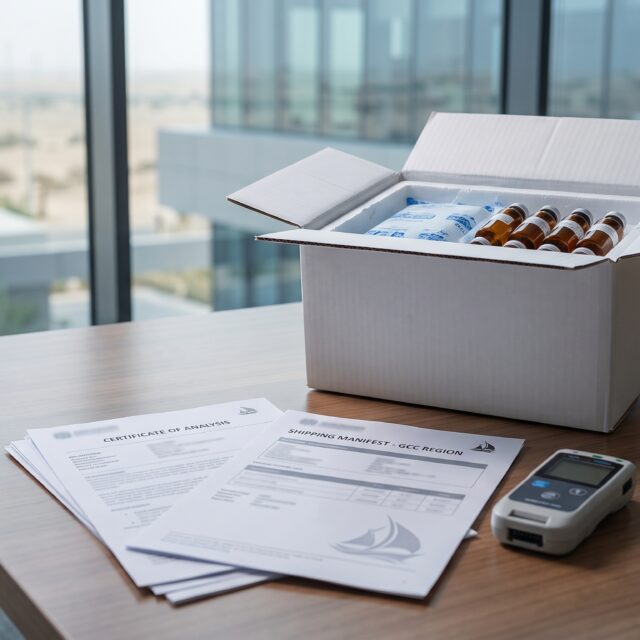
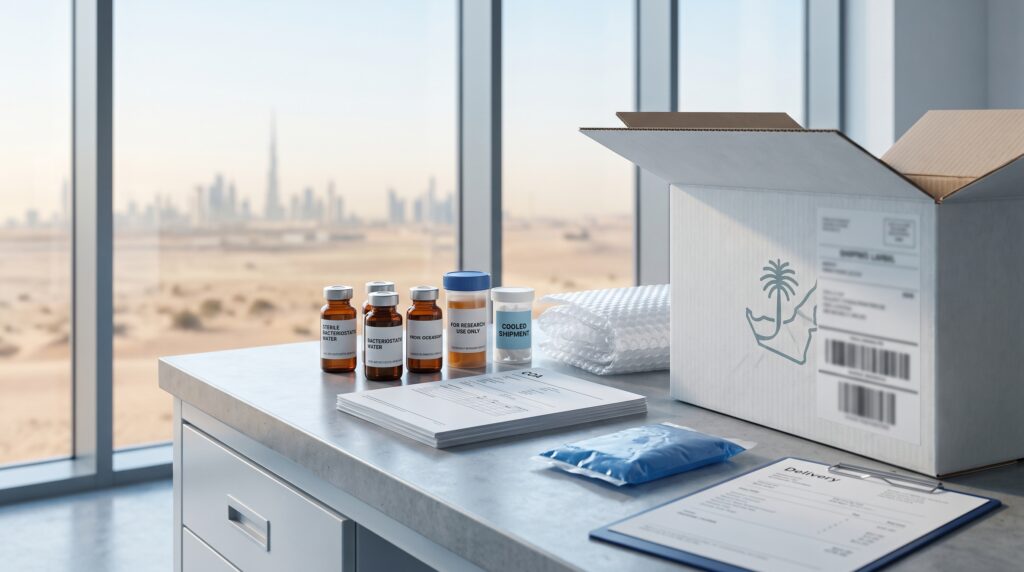
The climate in the United Arab Emirates introduces a significant variable into biological research: extreme thermal stress. Transcontinental shipping of liquid research solvents from North America or East Asia exposes packages to intense GCC heat during transit, customs clearance, and final-mile delivery.
Thermal degradation is a primary threat to compound integrity. Extended exposure to high temperatures can cause liquid solvents to undergo subtle chemical changes that may impact their efficacy when mixed with sensitive research chemicals.
Sourcing from regional UAE hubs mitigates this risk entirely. By localizing procurement, transit times are reduced from weeks to mere days, ensuring that temperature-sensitive packages spend minimal time in uncontrolled environments. For buyers looking to maintain strict quality control, utilizing next-day delivery options across the UAE is a critical operational safeguard.
Mandatory Storage Parameters
Maintaining the viability of bacteriostatic water requires adherence to strict storage parameters:
- Unopened Vials: Prior to use, bacteriostatic water should be stored at a controlled room temperature (20 to 25 degrees Celsius). It must be protected from direct sunlight and should never be frozen.
- Post-Reconstitution Storage: Once the bacteriostatic water is introduced into a lyophilized peptide vial, the resulting solution is highly susceptible to hydrolysis, a process where water molecules begin to break down the peptide bonds. To slow this process, all reconstituted vials must be immediately transferred to a sterile, refrigerated environment maintained between 2 to 8 degrees Celsius.
- The 28-Day Rule: Regardless of refrigeration, the benzyl alcohol preservative in bacteriostatic water is generally considered effective for 28 days after the initial puncture. After this period, any remaining reconstituted solution should be safely discarded according to standard laboratory waste protocols.
Reconstitution Protocol: Lab-Safe Preparation
Proper reconstitution technique is just as important as the quality of the diluent itself. Many delicate proteins can be easily damaged by aggressive handling or rapid changes in pressure. Researchers should observe the following best practices when mixing bacteriostatic water with lyophilized compounds:
- Sterilization: Always begin by thoroughly cleaning the laboratory bench. Swab the rubber stoppers of both the bacteriostatic water vial and the lyophilized peptide vial with an isopropyl alcohol wipe. Allow the stoppers to air dry completely to ensure the alcohol does not mix with the solvent.
- Equalizing Pressure: Lyophilized vials are often vacuum-sealed. When introducing the syringe, allow the vacuum to naturally draw the bacteriostatic water from the syringe into the vial. If there is no vacuum, inject the liquid very slowly.
- Gentle Introduction: Never spray the bacteriostatic water directly onto the lyophilized powder block. Instead, angle the needle so that the liquid flows gently down the inner glass wall of the vial. This prevents shearing forces from denaturing the delicate protein structures.
- Dissolution: Do not vigorously shake the vial to speed up dissolution. Gently swirl the vial in a continuous, smooth motion until the powder is fully dissolved and the liquid is entirely clear. If the solution remains cloudy or shows floating particulates after several minutes of gentle swirling, it may indicate a compromised batch.
Evaluating UAE Suppliers: Quality, Documentation, and Support
As the GCC research market matures, buyers are increasingly scrutinizing the operational standards of their suppliers. Procurement staff and independent researchers should evaluate vendors based on compliance, transparency, and regional support infrastructure.
The Importance of Certificates of Analysis (COA)
All regional transactions for research peptides and diluents are legally framed under In-Vitro Research Use Only (RUO) parameters. To verify that a product meets lab-grade specifications, a supplier must provide a batch-specific Certificate of Analysis (COA).
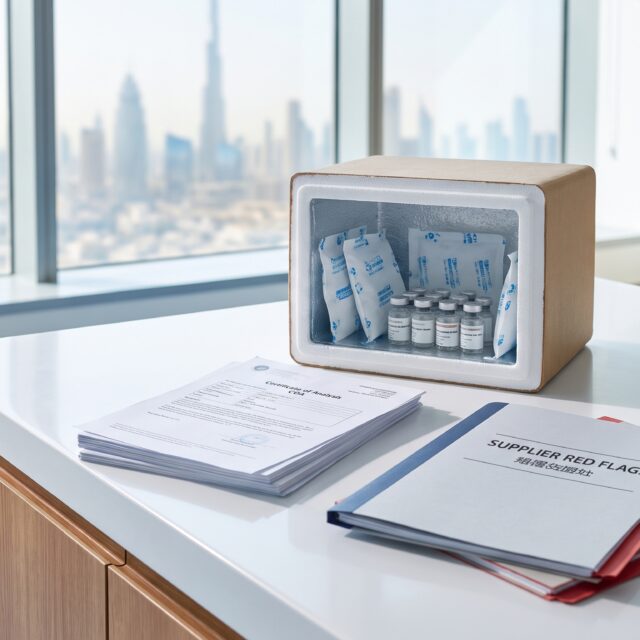
When evaluating a COA, verify that it was conducted by a reputable third-party testing facility. The document should clearly display the batch or lot number, the purity percentage, and verify the sterility of the compound. Transparency in testing is a non-negotiable benchmark for any credible supplier operating in the UAE.
Local Infrastructure and Buyer Confidence
Beyond chemical purity, successful procurement relies on smooth logistics and customer support. The most reliable suppliers in the region offer specific operational advantages that align with UAE buyer preferences:
- Responsive Communication: Suppliers utilizing direct channels like WhatsApp offer faster resolution for stock inquiries and batch verification compared to traditional email ticketing systems.
- Flexible Payment Options: Cash on Delivery (COD) remains a highly trusted payment method in the GCC, allowing buyers to verify the physical arrival of sensitive packages before finalizing transactions.
- Thermal Packaging: Ensure the supplier utilizes secure, liquid-safe packaging that protects against the region’s ambient heat during transit.
Conclusion
Securing high-quality diluents is a foundational step in rigorous scientific inquiry. Successfully sourcing bacteriostatic water for peptides in the UAE requires bypassing the standard retail pharmacy gap and partnering with specialized research suppliers who understand the distinct challenges of the local market. By prioritizing vendors who offer transparent COA documentation, secure thermal logistics, and rapid local fulfillment, researchers can protect their budgets and ensure the long-term viability of their lyophilized compounds.
To ensure your laboratory is stocked with fully verified, high-purity compounds and the appropriate research solvents, browse our complete peptide catalogue for reliable, locally supported sourcing.
Disclaimer: The products mentioned in this article are for in-vitro research purposes only and are strictly not intended for human consumption or therapeutic use.
*
References
- United States Pharmacopeia (USP). Guidelines for Bacteriostatic Water for Injection and multi-dose vial stability.
- World Health Organization (WHO). Guidelines on the Storage and Transport of Time- and Temperature-Sensitive Pharmaceutical Products.
- General Laboratory Protocols for Aseptic Technique and Reconstitution of Lyophilized Proteins.
- Bacteriostatic Water For Peptides GCC | Storage & Buyer – NOVA Labs
- Bacteriostatic Water For Peptides Qatar: Practical Buyer Guide – NOVA Labs
- Bacteriostatic Water For Peptides Saudi Arabia: Practical Buyer Guide – NOVA Labs
- Bacteriostatic Water UAE | 3ml & 10ml – VaultLabs
- Bacteriostatic Water – DXB Supps
- Peptide Reconstitution & Storage Guide 2026 – Nexyra Lab
Frequently asked questions
Why can't I buy bacteriostatic water at a Dubai pharmacy?
Most local UAE retail pharmacies only stock preservative-free sterile water intended for single-use clinical applications. They do not carry bacteriostatic water, which contains the 0.9% benzyl alcohol required to preserve multi-dose research vials over time.
What is the difference between sterile water and bacteriostatic water?
Sterile water is plain, preservative-free sterilized water meant for a single use. Bacteriostatic water contains 0.9% benzyl alcohol, an antimicrobial agent that stops bacterial growth and allows for multiple vial punctures over a standard 28-day period.
How long does bacteriostatic water last after opening?
Once a vial of bacteriostatic water is punctured, the benzyl alcohol preservative remains effective for 28 days under standard laboratory conditions. Unopened vials can be safely stored at controlled room temperature until their printed expiration date.
What temperature should reconstituted peptides be stored at?
After reconstitution with bacteriostatic water, peptide vials must be immediately stored in sterile refrigerated conditions between 2 to 8 degrees Celsius to slow down hydrolysis and prevent rapid degradation.
Can I freeze bacteriostatic water?
No, bacteriostatic water should never be frozen. It must be kept at a controlled room temperature of 20 to 25 degrees Celsius and protected from direct sunlight prior to being used for laboratory reconstitution.
Nova Labs buyer tools
Ready to verify stock, testing and delivery?
Use the product page and lab report section to check availability, documentation, delivery timing and support before placing an order.
- COA / test-report checks
- UAE delivery context
- Cold-chain handling
- COD and card payment options
- WhatsApp support