




Sourcing high-quality investigational compounds in the Middle East involves unique logistical considerations. When researchers and procurement staff prepare to procure experimental reagents, their evaluation process must extend far beyond simple stock availability. The regional challenges are distinct: intense summer heat that threatens molecular stability, specific national customs protocols, and an influx of international vendors lacking verifiable quality controls.
Retatrutide, an investigational triple-agonist targeting GIP, GLP-1, and glucagon receptors, is currently the subject of rigorous global research. Because this compound is highly sensitive to environmental factors and manufacturing variances, acquiring it requires a strict vetting process. This guide details exactly what to look for—from cold-chain logistics and National Health Regulatory Authority (NHRA) compliance to interpreting third-party purity documentation—so you can source this compound confidently.
What to Verify Before You Buy Retatrutide in Bahrain
Quick Answer: To safely buy retatrutide in Bahrain, researchers must verify supplier COAs showing >99% HPLC purity and independent Mass Spectrometry. Procurement requires ensuring the vendor uses temperature-controlled cold-chain shipping from regional GCC hubs and declares shipments accurately as Research Use Only (RUO) to comply with NHRA guidelines.
Evaluating a supplier requires separating marketing claims from verifiable analytical data. Because retatrutide is an unapproved, investigational compound, it is strictly designated for Research Use Only (RUO). When executing a procurement order or searching to buy retatrutide bahrain, buyers must exercise rigorous due diligence to ensure the reagent they receive is chemically identical to the compound documented in their experimental protocols. In vitro assays examining retatrutide’s binding affinity to GIP, GLP-1, and glucagon receptors demand reagents free from synthesis impurities. Even minor degradation from heat exposure can skew binding kinetics, making proper procurement a scientific necessity.
Before initiating any purchase, laboratories and independent researchers must demand transparency regarding where the compound was synthesised, how it was tested, and the exact logistical methods used to protect it during transit.
Navigating Bahrain’s Regulatory Landscape for Research Peptides
Understanding the local regulatory environment is a foundational step before you attempt to import experimental reagents into the country. Under Bahraini Law No. 39 of 2015 and the directives of the National Health Regulatory Authority (NHRA), the importation of pharmaceutical compounds and active ingredients is heavily monitored.
Retatrutide is not an FDA-approved medication, nor is it approved by the NHRA for clinical, therapeutic, or human use. As a result, it cannot be imported or sold as a medicine or a treatment. Instead, legitimate procurement occurs exclusively within the context of scientific investigation. Suppliers and buyers must ensure that the shipment is accurately declared as an RUO reagent, often using precise Harmonized System (HS) codes designated for laboratory chemicals.
Misrepresenting the compound or attempting to import it under therapeutic pretences often results in customs friction, shipment seizure, or regulatory penalties. Working with vendors who understand Middle Eastern customs documentation ensures that investigational reagents clear borders without unnecessary delays.
The GCC Cold-Chain Protocol: Protecting Peptide Integrity
The single greatest threat to peptide integrity during regional transit is temperature fluctuation. Bahrain’s extreme summer climate routinely sees temperatures exceeding 40 degrees Celsius. Exposure to these conditions for even a few hours can cause rapid thermal degradation of lyophilised powders, rendering the reagent useless for precise assays.
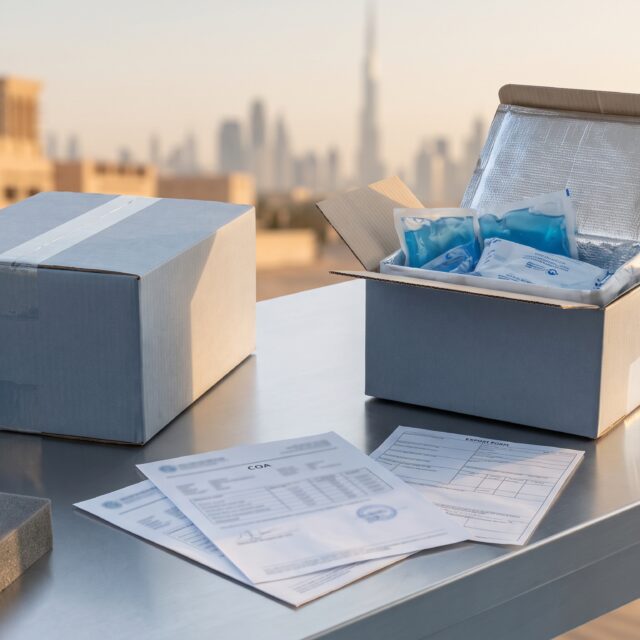
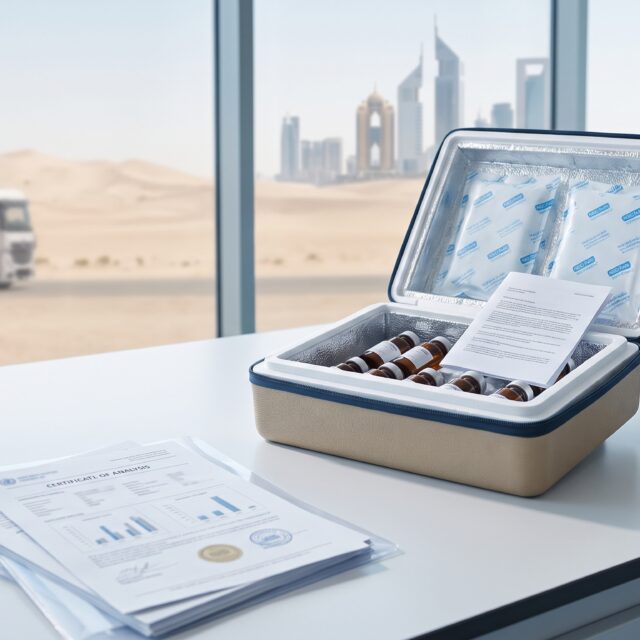
When sourcing a retatrutide peptide in Bahrain, buyers must confirm that the vendor employs strict cold-chain logistics. Premium suppliers utilise insulated thermal packaging paired with advanced gel ice packs or dry ice to maintain a stable microclimate throughout the delivery window. Shipping delays are an unfortunate reality of global logistics; when a package sits in a non-climate-controlled customs warehouse in Manama, the internal temperature can spike rapidly. Top regional vendors deploy EPS (Expanded Polystyrene) foam coolers and phase-change materials designed to hold temperatures steady for 48 to 72 hours.
While local distribution hubs are growing, many research facilities rely on established regional centres. For instance, evaluating regional hubs that offer secure logistics—such as reliable dispatch of research peptides with UAE next-day delivery serving the wider GCC—can provide a strategic advantage. By sourcing from a GCC-based distributor, researchers minimise the transit time and thermal exposure that typically plague long-haul international shipments from North America or Asia.
Decoding the COA: Purity and Identity Verification
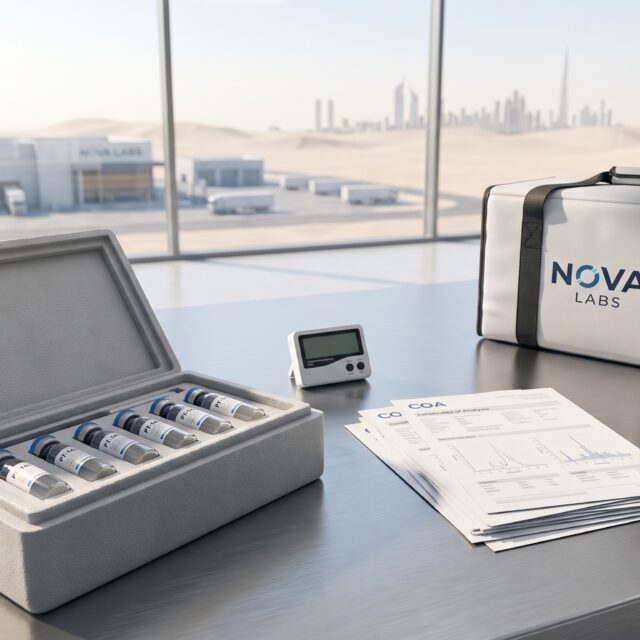
The cornerstone of safe and reliable peptide procurement is the Certificate of Analysis (COA). No laboratory should evaluate a supplier in Bahrain without first reviewing verifiable, third-party testing documentation. Trustworthy vendors partner with independent analytical laboratories, such as Janoshik Analytical or MZ Biolabs, to blind-test their inventory.
A comprehensive COA must confirm two critical metrics:
- High-Performance Liquid Chromatography (HPLC): Used to assess compound purity. For sensitive triple-agonist research, buyers should look for an HPLC purity rating of 99% or higher. This indicates the absence of synthesis byproducts, degraded fragments, or dangerous residual solvents. Researchers should also ensure the laboratory employs TFA (Trifluoroacetic acid) removal processes during synthesis, as excess TFA salts can cause cytotoxicity in cellular assays.
- Mass Spectrometry (MS): Essential to verify the exact molecular weight and identity of the compound, ensuring that the vial contains precisely what is advertised and has not been mislabelled or adulterated.
Counterfeit documentation is a known issue in the unregulated market, making independent verification a mandatory part of the procurement process. Furthermore, the COA must be lot-specific; a generic, outdated report is a major red flag. Reputable suppliers will provide batch numbers on their vials that directly correlate to the published test results.
Supplier Evaluation: Support, Payments, and Stock Confidence
The operational reliability of a vendor is just as important as the chemical quality of their inventory. An optimal supplier will offer seamless commercial operations tailored to the realities of the GCC market.
Communication and support are vital indicators of a supplier’s legitimacy. Top-tier vendors provide direct, accessible customer service—often via dedicated WhatsApp lines or secure email—allowing buyers to verify batch numbers, request current COAs, and coordinate delivery windows before authorising payment. This level of support is crucial when navigating complex regional shipping routes.
Payment security is equally critical. Reputable platforms offer encrypted credit card checkouts and transparent B2B invoicing suitable for institutional procurement. For laboratories ready to secure high-purity investigational compounds, exploring a verified research peptide shop that clearly displays its testing credentials and operational policies is essential.
Handling and Storage Protocols for Long-Term Stability
Procuring high-purity retatrutide is only half the equation; preserving its integrity upon arrival in Bahrain is equally vital. Proper laboratory handling protocols dictate the shelf life and efficacy of the compound.
Upon receipt, unmixed (lyophilised) vials should be immediately transferred to a freezer. For long-term storage, maintaining a temperature of -20 degrees Celsius protects the molecular structure from degradation over several months to a year. Researchers should avoid repeated freeze-thaw cycles, which can shear delicate peptide bonds.
Once the compound is reconstituted with bacteriostatic water or another appropriate solvent for in vitro testing, its stability profile changes dramatically. Reconstituted solutions must be kept refrigerated at 2 to 8 degrees Celsius and should typically be utilised within two to four weeks, depending on the specific research protocol and experimental requirements.
Conclusion
Securing a reliable source for retatrutide in Bahrain requires a methodical approach to supplier evaluation. By prioritising verifiable HPLC and Mass Spectrometry testing, insisting on rigorous cold-chain logistics to combat the GCC climate, and understanding the NHRA’s RUO classifications, researchers can safeguard their studies against subpar reagents. Whether you are conducting preliminary cellular assays or comprehensive receptor binding studies, the quality of your supplier directly influences the validity of your data.
Focus on transparency, proper documentation, and regional logistical expertise to make a confident procurement decision. If your laboratory is preparing for its next phase of testing, trust NOVA Labs for meticulously tested compounds and secure regional logistics. Visit our shop to review our lot-specific testing data and secure your next supply today.
Disclaimer: The products mentioned in this article are for research purposes only and are not intended for human consumption, diagnostic, or therapeutic use. Handle all research compounds in accordance with standard laboratory safety guidelines.
References
- National Health Regulatory Authority Bahrain (NHRA). Official Importation Guidelines for Laboratory Reagents.
- International Trade Administration. Bahrain – Prohibited and Restricted Imports and Customs Regulations.
- Drugs.com. Investigational Peptides and Regulatory Classifications.
- Palmetto Peptides. Storage Guidelines and Shelf Life Analysis for Lyophilised Compounds.
- MZ Biolabs. Mass Spectrometry and HPLC Testing Methodologies for Research Reagents.
- Does anyone sell reta in bahrian : r/Bahrain – Reddit
- What is “retatrutide peptide” being sold online? – Drugs.com
- How to Store Retatrutide: Temperature & Shelf Life Guide | Palmetto Peptides
- How to Check Purity When Buying Retatrutide Research Peptide
- Terms & Conditions | Emirates Peptides UAE
- Importation – National Health Regulatory Authority Bahrain
- Bahrain – Prohibited and Restricted Imports – International Trade Administration
Frequently asked questions
Is Retatrutide approved for human use in Bahrain?
No, retatrutide is an investigational compound and is not approved by the FDA or the Bahrain NHRA for clinical or human use. It is legally imported strictly as a Research Use Only (RUO) reagent for laboratory studies.
What documentation should a reliable Retatrutide supplier in Bahrain provide?
A trustworthy supplier must provide a lot-specific Certificate of Analysis (COA) from an independent testing laboratory. This document should verify both HPLC purity (ideally 99% or higher) and Mass Spectrometry (MS) identity to ensure researchers receive exactly what they ordered.
Why is cold-chain shipping essential for peptides in the GCC?
Bahrain's extreme summer temperatures can exceed 40 degrees Celsius, which rapidly degrades unprotected lyophilised peptides. Cold-chain shipping using thermal insulation and advanced gel packs or dry ice is required to maintain the structural integrity of the compound during regional transit from GCC hubs.
How should Retatrutide peptide be stored upon arrival in the lab?
Lyophilised (powdered) retatrutide should be stored long-term in a freezer at -20 degrees Celsius. Once reconstituted for in vitro research use, the solution must be kept refrigerated at 2 to 8 degrees Celsius and utilised within two to four weeks depending on the protocol.
Nova Labs buyer tools
Ready to verify stock, testing and delivery?
Use the product page and lab report section to check availability, documentation, delivery timing and support before placing an order.
- COA / test-report checks
- Bahrain delivery context
- Cold-chain handling
- COD and card payment options
- WhatsApp support