



Key Takeaways: Sourcing Peptides in the UAE
- Dual Verification is Mandatory: A simple purity percentage is not enough. Legitimate vendors provide High-Performance Liquid Chromatography (HPLC) for purity and Mass Spectrometry (MS) to confirm molecular identity.
- Independent Testing: Only trust Certificates of Analysis (COAs) generated by ISO-accredited, third-party laboratories to eliminate in-house bias.
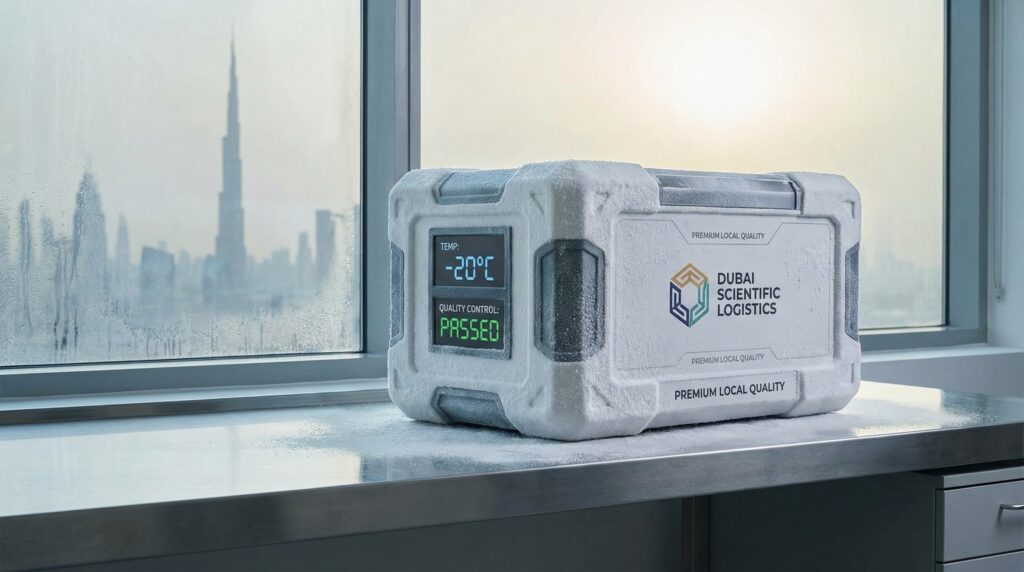
- Cold-Chain Logistics: Extreme UAE temperatures degrade unstable peptides. Ensure your supplier holds local stock and ships using temperature-controlled packaging.
- Regulatory Compliance: Research compounds are strictly for in-vitro laboratory R&D and calibration, never for human consumption or unauthorized therapeutic use.
How to Evaluate HPLC Tested Peptides Dubai
When sourcing HPLC tested peptides in Dubai, buyers must demand dual-verification documentation. A legitimate supplier will provide third-party HPLC reports proving purity above 99%, alongside Mass Spectrometry data verifying the exact molecular sequence. Always cross-reference batch numbers to ensure the safety and accuracy of your research.
The research and life sciences market in the United Arab Emirates is expanding at an unprecedented rate. However, this sector operates under strict regulatory frameworks. While MOHAP-regulated clinical therapies require prescriptions and medical oversight, the market for online reference materials caters strictly to laboratory research and development. For bio-analytical laboratories, university procurement staff, and independent researchers operating in the GCC, sourcing uncompromised, high-purity compounds is a non-negotiable requirement.
When evaluating regional suppliers, the documentation they provide is often the only barrier between a successful experimental protocol and compromised data. Trustworthy procurement requires the ability to independently read, scrutinize, and verify a Certificate of Analysis (COA). Understanding how HPLC interacts with Mass Spectrometry, and evaluating how local suppliers handle extreme GCC temperatures, separates legitimate research suppliers from high-risk vendors.
The Double-Verification Blueprint: Purity vs. Identity
Many buyers mistakenly believe that a high purity percentage is the single metric that matters. While purity is undeniably crucial, it is only half of the verification equation. To confidently purchase from any laboratory supplier, researchers must understand the technical distinction between testing for purity and testing for sequence identity.
High-Performance Liquid Chromatography (HPLC) for Purity
HPLC serves as the analytical gold standard for determining how much of a sample consists of the target compound versus leftover impurities. During chemical synthesis, peptides can retain truncated amino acid sequences, manufacturing solvents, or protective chemical groups.
HPLC functions by dissolving the peptide sample in a solvent and forcing it through an adsorbent column under high pressure. Because different molecules interact differently with the column material, they travel at distinct speeds. This variance creates a chromatogram—a visual graph of peaks and valleys.
A legitimate COA will show a sharp, towering primary peak representing the main peptide, with any impurities appearing as minor fluctuations near the baseline. The area under the main peak is calculated to determine the purity percentage. An acceptable threshold for research-grade peptides is generally 98% to 99% purity. Anything lower risks introducing uncontrolled variables into your assays.
Mass Spectrometry (MS) for Sequence Identity
Here lies the critical vulnerability in standard market testing: a sample could theoretically test at 99.9% purity on an HPLC machine, but actually be the completely wrong chemical compound. HPLC only measures the concentration of the primary substance—it does not inherently identify what that substance is.
This is why Mass Spectrometry (MS or LC-MS) is an absolute necessity. Mass Spectrometry bombards the sample with electrons to ionize it, allowing the machine to measure the precise mass-to-charge ratio (m/z) of the molecules. Every specific amino acid chain has a unique, non-negotiable molecular weight. If the MS data perfectly matches the theoretical molecular weight of the target peptide, the chemical identity is mathematically confirmed. If a supplier cannot provide MS data alongside their HPLC reports, their documentation is fundamentally incomplete and should not be trusted.
The COA Red-Flag Checklist for GCC Researchers
Evaluating a laboratory supplier in Dubai requires a critical, discerning eye. Fraudulent, generic, or outdated laboratory reports are unfortunately common in the unregulated corners of the global drop-shipping market. Before authorizing procurement or placing an order, run the supplier’s documentation through this strict verification checklist:
- Independent Third-Party Verification: Is the lab report generated in-house by the seller, or by an independent, ISO-accredited testing facility? In-house testing carries an inherent conflict of interest. High-trust suppliers utilize independent laboratories (often based in the USA or Europe) to eliminate bias and guarantee transparency.
- Batch and Lot Number Alignment: The lot number printed on the physical glass vial you receive must perfectly match the lot number on the published COA. If a supplier only displays a single, years-old COA for a popular product, they are not continuously testing new batches. This is a severe red flag.
- Resolution of MS Data: Look closely at the Mass Spectrometry results. Authentic, high-quality MS data will report the molecular mass to at least one or two decimal places (e.g., 4113.6 g/mol). Reports that round off numbers heavily, or show blurry graphs, may be low-resolution or entirely fabricated.
- Unobscured Laboratory Details: A legitimate COA will prominently display the name, logo, physical address, and contact information of the testing laboratory. If this information is blurred, redacted, blacked out, or cropped out of the image, the supplier is likely hiding the source of the test, or worse, stealing another company’s documentation.
- TFA Removal Data (Advanced): Trifluoroacetic acid (TFA) is frequently used during peptide synthesis. Because high TFA levels can be cytotoxic to cells in vitro, advanced suppliers will often provide data showing successful TFA removal or counter-ion exchange (usually to acetate salts) for sensitive cell-culture research.
At NOVA Labs, transparency is not an option; it is our operational standard. We ensure that our buyers have direct access to up-to-date, third-party verified documentation for every batch we stock. You can review our current testing protocols and verify purity standards directly by visiting our https://www.nova-biolabs.ae/lab-results page.
Desert Heat & Logistics: Protecting Peptide Integrity in the UAE
Even the most meticulously synthesized, 99.9% pure peptide is entirely useless if it degrades during transit. The climate in the United Arab Emirates presents a unique and severe logistical challenge. With summer temperatures frequently exceeding 45°C (113°F) in Dubai and Abu Dhabi, how a supplier stores and ships their product is just as vital as how they test it.
Lyophilization and Thermal Stability
Research peptides are typically synthesized and shipped in a lyophilised (freeze-dried) state. In this stable powder form, they are remarkably resilient and can withstand brief exposure to ambient temperatures without degrading. However, prolonged exposure to the extreme, baking heat of an unventilated Dubai delivery van or a customs warehouse can cause the delicate peptide bonds to denature, rendering the compound completely inert and useless for research.
For long-term storage, lyophilised peptides should be kept in a laboratory freezer at -20°C. Once reconstituted with bacteriostatic water or sterile saline for laboratory use, the solution must be immediately transferred to a refrigerator (2°C to 8°C) and utilized within 28 days to prevent bacterial growth and structural breakdown.
Cold-Chain and Local UAE Logistics
When selecting a supplier, localized stock and shipping practices are paramount. A supplier shipping internationally from overseas may have your package held at UAE customs for several days or weeks, exposing the vials to unregulated warehouse temperatures.
A reputable local supplier will hold their stock within the UAE in climate-controlled environments, enabling same-day or next-day delivery via reliable local couriers. They will also utilize temperature-controlled packaging—such as vacuum-sealed mylar bags, insulated bubble wrap, and cold packs—to insulate the vials from the regional heat. This commitment to local, rapid, cold-chain logistics is a strong indicator of a supplier’s dedication to quality control.
Evaluating Supplier Legitimacy and Business Operations
Beyond the scientific documentation and logistical capabilities, identifying a professional supplier requires looking at their corporate footprint in the GCC. The research reference market demands high standards, and legitimate operations signal their reliability through clear, legally compliant business practices.
Look for suppliers that display a Tax Registration Number (TRN) and are officially VAT-registered in the UAE. This proves they are a recognized, legally operating entity rather than an anonymous overseas drop-shipper operating out of a social media inbox.
Additionally, accessible customer support—such as direct WhatsApp communication, professional email support, or local phone numbers—demonstrates accountability. Buyers should also evaluate the available payment methods. Options like Cash on Delivery (COD) alongside secure, encrypted credit card gateways provide purchasing confidence and flexibility, whereas vendors demanding untraceable cryptocurrency payments should be treated with extreme caution.
Conclusion
Sourcing high-quality research compounds in the Middle East does not have to be a gamble. By demanding dual-verification documentation—HPLC for absolute purity and Mass Spectrometry for sequence identity—researchers can completely eliminate the risk of counterfeit, contaminated, or degraded compounds. Combine this rigorous documentation check with a strict demand for local, temperature-controlled logistics, and you will ensure the integrity of your research protocols from the exact moment of purchase to the final analytical application in the lab.
When you are ready to source rigorously tested, locally stocked research compounds backed by unredacted independent data, a transparent catalogue is your best asset. You can explore our complete inventory of batch-tested reference materials by visiting the NOVA Labs shop at https://www.nova-biolabs.ae/shop.
Disclaimer: The products mentioned in this article are strictly for in-vitro laboratory research and analytical purposes only. They are not intended for human consumption, diagnostic, therapeutic, or veterinary use. All handling must be performed by qualified professionals in accordance with local safety regulations.
References
- United Arab Emirates Ministry of Health and Prevention (MOHAP): Guidelines on Medical and Research Material Importation.
- Standard ISO/IEC 17025: General Requirements for the Competence of Testing and Calibration Laboratories.
- Journal of Chromatography A: “Validation of HPLC methods for the determination of peptide purity and sequence confirmation.”
- American Society for Mass Spectrometry (ASMS): Principles of LC-MS in biomolecular identity verification.
- European Medicines Agency (EMA): Guidelines on the specifications for synthetic peptides and reference standards.
Disclaimer: The products mentioned in this article are for research purposes only and are not intended for human consumption.
- Quality & Testing — HPLC Purity, COA & Legitimacy | UAEPeptide.ai
- Primero Peptides UAE: Research-Grade Peptides
- Research Peptides UAE — HPLC-Verified – Wellness Labs
- How to Read a Peptide COA: Understanding HPLC & Mass Spectrometry (MS)
- HPLC vs LC-MS for Peptide Purity Testing: Why Identity Confirmation Matters
- LAB REPORTS – https://peptidetechuae.com
- Are Peptides Legal in Dubai – FIBAV
- Do I Need a Prescription for Peptides? Understanding Medical Peptide Therapy in Dubai
Frequently asked questions
What does HPLC tested mean for research peptides?
HPLC (High-Performance Liquid Chromatography) testing measures the purity of a peptide by separating its components. It ensures that the final product is free from significant manufacturing byproducts or impurities, typically aiming for a research-grade purity level of 98% to 99%.
Why is Mass Spectrometry (MS) required alongside HPLC?
While HPLC confirms how pure a sample is, it cannot verify what the actual compound is. Mass Spectrometry measures the exact molecular weight of the sample, mathematically confirming that the amino acid sequence perfectly matches the target peptide.
How should lyophilised peptides be stored in Dubai?
To protect against extreme UAE heat, lyophilised (powdered) peptides should be stored in a laboratory freezer at -20°C for long-term preservation. Once reconstituted into a liquid state, they must be kept refrigerated at 2°C to 8°C and used within 28 days.
How can I verify a peptide COA is legitimate?
A legitimate Certificate of Analysis (COA) should be generated by an independent, third-party laboratory. Buyers must check that the lot number on the COA matches the physical vial, ensure both HPLC and MS data are present, and verify that the testing lab's contact details are clearly visible and unredacted.
Why is localized shipping important for peptides in the GCC?
Localized shipping prevents peptides from being held in unventilated customs warehouses where temperatures can exceed 45°C. Rapid local delivery via temperature-controlled packaging ensures the delicate peptide bonds do not denature during transit.
Nova Labs buyer tools
Ready to verify stock, testing and delivery?
Use the product page and lab report section to check availability, documentation, delivery timing and support before placing an order.
- COA / test-report checks
- Dubai delivery context
- Cold-chain handling
- COD and card payment options
- WhatsApp support