




The New Landscape for Wholesale Peptides Dubai
When sourcing wholesale peptides in Dubai, buyers must prioritize domestic suppliers with local warehousing to bypass customs friction and prevent thermal degradation. A reliable peptide wholesale supplier in Dubai will provide batch-specific third-party HPLC/MS Certificates of Analysis (COAs), ensure cold-chain logistics, and comply with UAE research regulations.
Procurement managers, laboratory directors, and informed buyers face a rapidly evolving regulatory and logistical environment in the United Arab Emirates. Historically, laboratories had to rely on international suppliers, exposing sensitive biological materials to lengthy shipping delays, customs holds, and extreme temperature fluctuations. Today, the local market has matured, but establishing a secure B2B supply chain requires careful vetting of potential partners.
Following the implementation of Federal Decree-Law No. 38 of 2024, the Emirates Drug Establishment (EDE) centralized health regulatory authority, replacing MOHAP for medical and pharmaceutical oversight. This regulatory shift heavily impacted the peptide market. In recent enforcement actions, local health authorities have actively cracked down on illegal peptide sources and referred multiple influencers to the National Media Office for promoting unapproved weight-loss compounds.
Because of this strict regulatory environment, the distinction between clinical medical compounding and laboratory research supply is absolute. Compounded peptides intended for human clinical use are legal in the UAE only when prepared by accredited compounding pharmacies (such as CureCell or Magenta Rx) under a valid physician’s prescription. In contrast, B2B suppliers providing research-grade compounds operate strictly under Research Use Only (RUO) classifications. When you are looking for bulk peptides in Dubai, understanding this framework ensures your procurement remains compliant and restricted to in-vitro scientific and laboratory applications.
Why Domestic Warehousing is Crucial for Bulk Peptides Dubai
The logistics of moving sensitive biological compounds into the GCC region pose unique challenges that dictate how procurement managers must operate. Importing bulk peptides internationally directly introduces major customs risks. Border clearance holds are frequent, and paperwork discrepancies can result in weeks of delays.
However, the most significant threat to peptide viability in the UAE is the climate. During the summer months, temperatures routinely exceed 45°C. Lyophilized (freeze-dried) peptides possess a degree of baseline stability, but prolonged exposure to high heat on an airport tarmac can lead to rapid thermal degradation. A shipment delayed at customs without proper climate control may arrive completely denatured, resulting in catastrophic financial losses for a laboratory’s procurement budget.
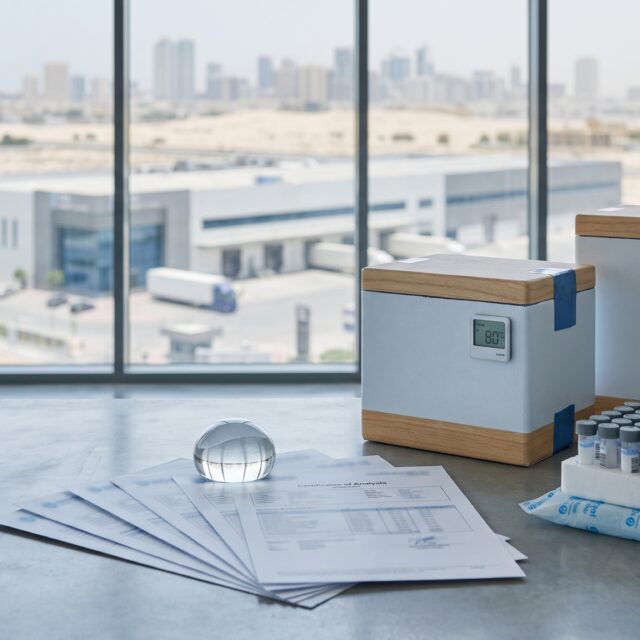
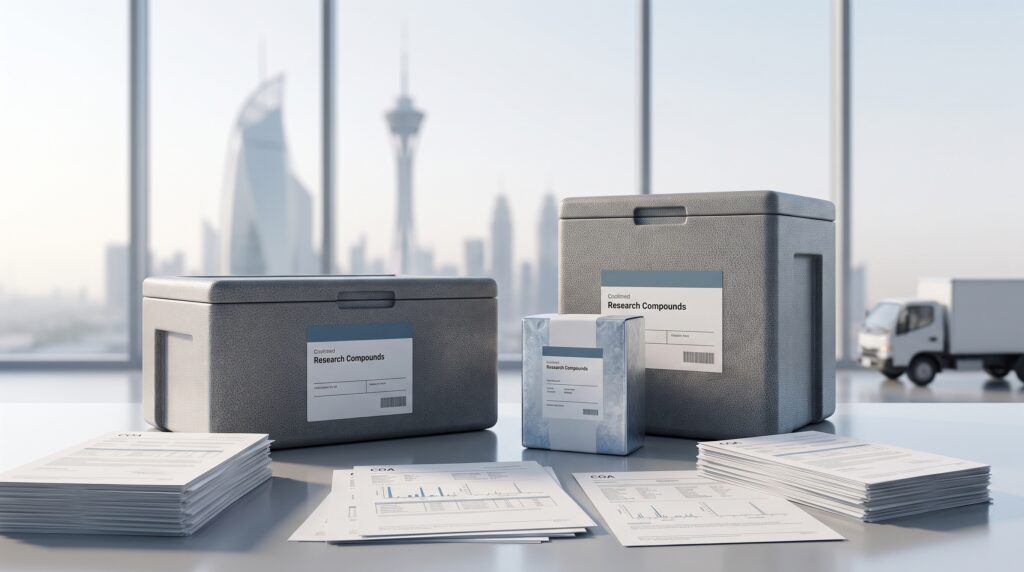
Sourcing from a supplier with local, domestic warehousing bypasses these issues entirely. A localized supply chain ensures continuous cold-chain logistics from the storage facility directly to your laboratory doors. By relying on a supplier holding stock within Dubai, you eliminate international customs friction, reduce transit times from weeks to hours, and guarantee that the molecular integrity of the compounds is preserved throughout the delivery window.
Assessing Your Peptide Wholesale Supplier Dubai
The cornerstone of any successful B2B relationship in the biotechnology sector is verifiable documentation. Trusting a supplier’s marketing claims is never sufficient when your laboratory’s baseline research depends on high-purity inputs.
A professional peptide wholesale supplier in Dubai must provide rigorous, batch-specific Certificates of Analysis (COAs). But a COA is only as valuable as the laboratory that generated it. Informed buyers must look for High-Performance Liquid Chromatography (HPLC) and Mass Spectrometry (MS) documentation conducted by independent, verifiable third-party testing facilities.
Key Metrics to Verify on a COA
When evaluating a supplier’s documentation, buyers should review the following critical fields:
- Batch Number Correlation: Ensure the batch number on the COA perfectly matches the batch number printed on the vial you are receiving. Generic, unnumbered COAs are a major red flag.
- Purity Percentage: Research-grade peptides should demonstrate a purity level of ≥99%. The HPLC graph will show a massive primary peak representing the target peptide, with minimal noise or secondary peaks representing synthesis impurities.
- Mass Spectrometry: The MS data confirms the exact molecular weight of the peptide, proving the compound’s identity.
- Third-Party Verification: Leading suppliers use internationally recognized testing databases (such as Janoshik) where the COA can be independently verified using a unique certificate key. If a supplier refuses to provide verifiable third-party testing, they are not a viable B2B partner.
Navigating Payment, Logistics, and Custom Synthesis
Beyond product quality, the operational mechanics of your wholesale supplier determine how smoothly your procurement cycle will run. The UAE business environment values relationship-based commerce, speed, and flexibility.
Professional suppliers operating in Dubai often provide localized support channels, including direct WhatsApp communication for rapid stock checks and logistical coordination. Furthermore, domestic payment options like Cash on Delivery (COD) provide an essential layer of financial security for buyers, allowing physical inspection of the packaging and delivery conditions before final payment is rendered.
For established biotechnology laboratories and institutional distributors, off-the-shelf catalog peptides may not be sufficient. Leading B2B suppliers in the UAE ecosystem frequently offer advanced custom peptide synthesis. This service allows laboratories to request specific amino acid sequences tailored to proprietary in-vitro protocols. Additionally, OEM (Original Equipment Manufacturer) and neutral packaging options are available for domestic distributors looking to private-label reagents while maintaining the strict quality controls of an established synthesis pipeline.
Streamlining Your Procurement Process
Transitioning to a reliable local supply chain requires aligning with a partner who understands the specific pressures of the UAE market. NOVA Labs prioritizes transparency, local accessibility, and verifiable testing for all our B2B partners.
Before initiating a large-volume purchase, we encourage procurement managers and researchers to independently review our testing documentation and assess our domestic fulfillment capabilities. When you are ready to evaluate our catalog and assess our baseline purity standards, you can explore the full research peptide shop to see currently available domestic stock.
For laboratories, research institutions, and sourcing managers seeking scalable supply solutions, tailored pricing tiers, or customized synthesis requests, formal applications for wholesale peptide purchasing can be initiated directly through our secure portal. Our team in Dubai is structured to coordinate directly with your procurement department to align delivery windows, documentation transfers, and payment terms seamlessly.
Bottom Line for UAE Researchers
Securing wholesale peptides in Dubai requires navigating a complex matrix of regulatory compliance, extreme climate logistics, and rigorous quality verification. The transition of oversight to the Emirates Drug Establishment has reinforced the boundary between clinical compounding and in-vitro research supply.
By prioritizing a domestic supplier that offers transparent third-party HPLC/MS COAs, localized cold-chain logistics, and responsive regional support, laboratories can protect their research investments from thermal degradation and customs friction. Always verify batch numbers, insist on verifiable independent testing, and ensure your procurement adheres to the Research Use Only classification.
*
References:
- Federal Decree-Law No. 38 of 2024: Establishing the Emirates Drug Establishment (EDE).
- Understanding the Latest Pharmaceutical Laws and Regulations in the UAE – Chambers.
- Gulf News: UAE regulatory crackdowns on unapproved peptide compounds.
Disclaimer: The products mentioned in this article are for research purposes only and are not intended for human consumption.
References
- Peptides Compounding Pharmacy Dubai – CureCell
- Peptide Supplier UAE | B2B Research Peptide Supply, COA & OEM – BT BioLabs
- Best Peptide Shop Dubai: How to Verify COAs & Delivery – NOVA Labs
- UAE Cracks Down on Unapproved Peptide Weight-Loss Drugs: 71 Sources and 14 Influencers Face Action – Gulf News
- How to Register Peptides in the UAE: A Regulatory Guide for Brands and Manufacturers
- Understanding the Latest Pharmaceutical Laws and Regulations in the UAE – Chambers
- Peptides Lab UAE
Frequently asked questions
Is it legal to buy wholesale peptides in Dubai?
Yes, purchasing wholesale peptides for in-vitro scientific research and laboratory applications is permitted under UAE regulations. They are strictly classified for Research Use Only (RUO) and not for human consumption.
Why is local warehousing important for bulk peptides in the UAE?
Local domestic warehousing prevents thermal degradation caused by the UAE's extreme summer heat, which can exceed 45°C. It also allows buyers to avoid international customs friction and lengthy border clearance delays.
What documentation should a peptide wholesale supplier in Dubai provide?
A reputable B2B supplier must provide batch-specific Certificates of Analysis (COAs) and HPLC/MS documentation from independent third-party testing facilities to verify peptide identity and purity levels of 99% or higher.
Can laboratories request custom peptide synthesis in the UAE?
Yes, established wholesale suppliers often provide custom peptide synthesis, private-label options, and OEM manufacturing tailored to the specific protocol requirements of domestic biotechnology laboratories.
Nova Labs buyer tools
Ready to verify stock, testing and delivery?
Use the product page and lab report section to check availability, documentation, delivery timing and support before placing an order.
- COA / test-report checks
- Dubai delivery context
- Cold-chain handling
- COD and card payment options
- WhatsApp support