
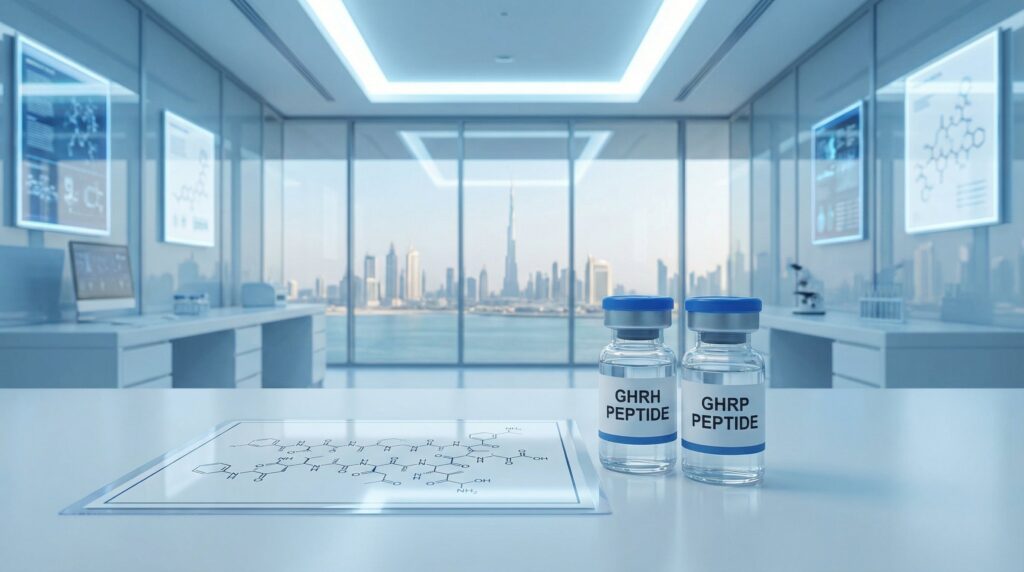
For researchers evaluating complex endocrinology pathways, understanding GHRH and GHRP is the essential first step toward mapping how growth hormone secretagogues operate. While these two classes of synthetic peptides are frequently studied alongside one another, they act upon entirely distinct cellular receptors and trigger distinct signalling cascades.
For procurement staff and independent researchers operating in the extreme climate of the UAE and GCC, mapping these biological mechanics is only half the equation. It is equally vital to evaluate the logistical realities of securing uncompromised, third-party verified compounds locally.
This guide breaks down the structural differences, mechanisms of action, and the critical procurement standards necessary for sourcing these compounds safely in the Middle East.
The Baseline: Understanding GHRH and GHRP
Quick answer: Growth Hormone-Releasing Hormones (GHRH) and Growth Hormone-Releasing Peptides (GHRP) are distinct secretagogues that stimulate endogenous growth hormone production. GHRH analogues bind directly to pituitary receptors to facilitate natural synthesis, while GHRPs target ghrelin receptors to trigger immediate release and suppress somatostatin. Together, they create a highly synergistic effect.
To conduct precise experimental protocols, researchers must delineate exactly how each compound interacts with the anterior pituitary gland. Although both ultimately influence the same downstream secretion, their functional pathways are parallel, not identical.
The GHRH Pathway
GHRH (Growth Hormone-Releasing Hormone) analogues are designed to mimic the body’s naturally occurring hypothalamic hormones. When introduced into a research environment, these compounds bind to the Growth Hormone-Releasing Hormone Receptor (GHRHR). This interaction primarily stimulates the synthesis of new growth hormone stores. It acts as the ‘producer’, ensuring that cellular reserves are adequately stocked and ready for pulsatile release.
The GHRP Pathway
GHRP (Growth Hormone-Releasing Peptide) compounds operate via a completely different mechanism. They are synthetic ligands that bind to the Growth Hormone Secretagogue Receptor (GHS-R1a), commonly known as the ghrelin receptor. Instead of focusing on synthesis, GHRPs act as the ‘releaser’. Furthermore, they actively antagonise somatostatin—the inhibitory hormone responsible for halting growth hormone secretion.
The Synergistic Push-Pull Effect Explained
When evaluating research applications, scientists frequently observe that co-administering a GHRH with a GHRP yields an outcome far greater than the sum of its parts. In endocrinology, this is often referred to as the ‘push-pull’ synergy.
This amplification occurs because the two peptide classes rely on different intracellular G-protein coupled receptor (GPCR) pathways:
- GHRH relies on the Gs pathway: Upon binding, it activates adenylate cyclase, leading to an increase in intracellular cyclic AMP (cAMP). This initiates the transcription and synthesis of new hormone vesicles.
- GHRP relies on the Gq/11 pathway: Upon binding to the ghrelin receptor, it triggers phospholipase C, which results in a rapid influx of intracellular calcium ions.
The simultaneous presence of elevated cAMP and intracellular calcium forces the pituitary somatotrophs to rapidly expel their newly synthesised stores. Concurrently, the GHRP actively suppresses somatostatin (the chemical brake). The result is an unobstructed pulse of secretion that has been documented in literature to be two to three times greater than administering either peptide in isolation.
Profiling the Secretagogue Matrix
Selecting the correct combination of peptides depends entirely on the specific aims of the research programme. Each compound carries unique molecular characteristics, half-lives, and secondary receptor affinities.
Notable GHRH Analogues
- CJC-1295 (No DAC): Also known as modified GRF 1-29, this analogue is structurally altered to resist enzymatic degradation by DPP-IV, extending its half-life to approximately 30 minutes. It provides a natural, physiological pulse in laboratory models.
- Tesamorelin: A highly stabilised GHRH analogue primarily studied for its distinct impact on lipid metabolism and visceral adipose tissue reduction in specific immunodeficiency models. It offers a very strong, targeted stimulatory effect.
- Sermorelin: The shortest-acting GHRH analogue, mirroring the exact 29 amino acid sequence of the naturally occurring hormone. Its rapid clearance makes it ideal for studies requiring a brief, highly controlled intervention.
Notable GHRP Compounds
- Ipamorelin: Widely regarded as the most selective GHRP. In vitro studies demonstrate that it strictly targets the GHS-R1a receptor without inducing the secondary spikes in cortisol or prolactin often seen with older compounds. It is highly valued for clean, targeted research.
- GHRP-2 (Pralmorelin): A highly potent secretagogue that produces an intense pulse. While it does stimulate the ghrelin receptor, it is less prone to triggering the extreme appetite stimulation observed with its predecessor, making it a reliable standard for robust secretion studies.
- GHRP-6: The earliest generation of this peptide class. While effective at releasing stores, it heavily stimulates appetite pathways and can induce modest elevations in cortisol and prolactin in research subjects.
Sourcing and Securing Peptide Integrity in the UAE
For researchers and procurement officers based in Dubai, Abu Dhabi, or the wider GCC, understanding the biological mechanisms of these peptides is only relevant if the chemical integrity of the compound is preserved.
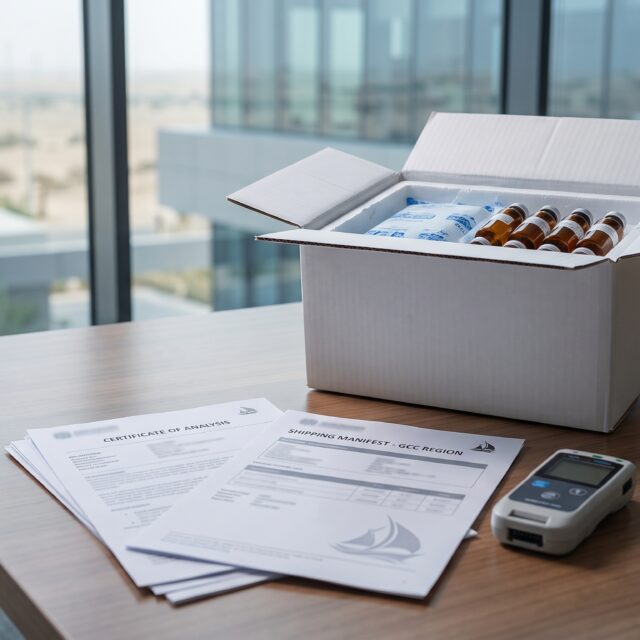
The primary threat to peptide stability in the Middle East is extreme heat. Lyophilised (freeze-dried) amino acid chains are inherently delicate. If a generic courier leaves a parcel in an unconditioned warehouse or a 45°C delivery van, the peptide bonds will rapidly degrade, rendering the compound inert and destroying the validity of the research.
The Necessity of Cold-Chain Logistics
When procuring research materials, evaluating the supplier’s operational infrastructure is paramount. A credible local supplier will never rely on standard postal networks.
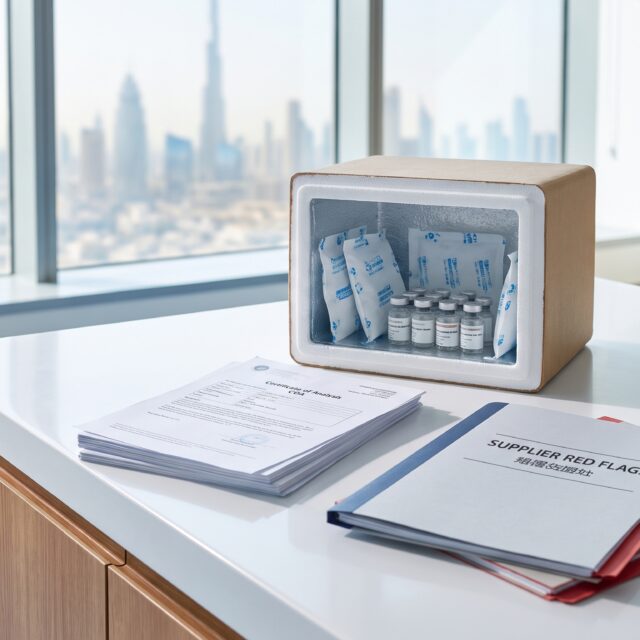
At NOVA Labs, biological integrity is non-negotiable. We utilise temperature-controlled packaging tailored for the GCC climate, offering next-day delivery across the UAE. This infrastructure ensures that vials remain shielded from thermal shock during transit. For added procurement ease, we provide WhatsApp support, Cash on Delivery (COD) options, and free shipping on orders exceeding 800 AED.
Verifying Purity Through Documentation
The secondary challenge in the local market is the prevalence of counterfeit or under-dosed materials. In this industry, trust is established exclusively through independent laboratory data.
Before ordering, buyers should demand batch-specific Certificates of Analysis (COAs) and High-Performance Liquid Chromatography (HPLC) reports. Industry gold standards, such as Janoshik analytical testing, provide verifiable keys that researchers can check against the lab’s public database. If a supplier obscures their COAs or relies solely on ‘in-house’ testing, the risk of contamination or incorrect synthesis is unacceptably high.
Best Practices for Reconstitution and Storage
Once safely delivered, maintaining the viability of GHRH and GHRP compounds requires strict adherence to laboratory handling protocols.
- Storage Upon Receipt: Unreconstituted lyophilised vials should be immediately placed in a monitored refrigerator at 2–8°C for short-to-medium term storage. For long-term archiving, freezing at -20°C is required to halt potential degradation.
- The Reconstitution Process: Lyophilised powders must be reconstituted using sterile Bacteriostatic Water. The introduction of the diluent must be gentle—dripping the water down the side of the glass vial rather than blasting the delicate powder directly.
- Post-Reconstitution Care: Once in liquid form, peptides become highly susceptible to mechanical and thermal damage. They must never be frozen. Agitation or shaking of the vial will shear the peptide bonds. Reconstituted vials must remain consistently refrigerated and are generally viable for research use for 14 to 28 days, depending on the specific analogue.
Conclusion
For modern laboratories and informed investigators, understanding GHRH and GHRP mechanisms is critical for designing precise, controlled experiments. By leveraging the push-pull synergy between the cAMP and calcium pathways, researchers can reliably observe amplified pulsatile secretions.
However, the scientific validity of these outcomes is entirely dependent on the quality of the raw materials. In the UAE’s demanding environment, securing compounds verified by independent COAs and protected by rigorous cold-chain transit is the only way to ensure experimental accuracy.
To equip your laboratory with verified, locally stocked compounds, browse our complete catalogue of research peptides for access to pure, stable, and transparently tested secretagogues.
*
References:
- Synthetic Growth Hormone-Releasing Peptides (GHRPs): A Historical Appraisal of the Evidences Supporting Their Cytoprotective Effects – PMC.
- GHRH vs GHRP: Different Receptors Guide – The Peptide Catalog.
- Understanding GHRH and GHRP: Key Differences in Growth Hormone Regulation – HITx.
Disclaimer: The products mentioned in this article are for research purposes only and are not intended for human consumption.
References
- GHRH vs GHRP: Different Receptors Guide (2026) – The Peptide Catalog
- GHRP-2 vs GHRP-6: Which Growth Hormone Peptide Is Right for You? (2026) | Peptidepedia
- Understanding GHRH and GHRP: Key Differences in Growth Hormone Regulation – HITx
- Tesa10+IP5 (Tesamorelin & Ipamorelin) – 15mg Bulk supplier blend Peptide Bulk Supply
- GHRP vs. GHRH: What’s the Difference and Why They Work Better Together
- GHRP-2: How It Works, Mechanism & Evidence (2026) – The Peptide Catalog
- Synthetic Growth Hormone-Releasing Peptides (GHRPs): A Historical Appraisal of the Evidences Supporting Their Cytoprotective Effects – PMC
Frequently asked questions
What is the main difference between GHRH and GHRP?
GHRH (Growth Hormone-Releasing Hormone) binds to pituitary receptors to stimulate the synthesis of new growth hormone stores. GHRP (Growth Hormone-Releasing Peptide) binds to ghrelin receptors to trigger the immediate release of these stores and suppress the inhibitory hormone somatostatin.
Why do researchers combine a GHRH with a GHRP?
Combining them creates a synergistic 'push-pull' effect. Because they use different cellular pathways (cAMP and intracellular calcium), administering both simultaneously results in a release of growth hormone two to three times greater than using either compound alone.
Which GHRP is considered the most selective?
Ipamorelin is widely regarded as the most selective GHRP in research settings. It effectively triggers hormone release without causing the secondary spikes in cortisol and prolactin commonly associated with earlier generation peptides like GHRP-6.
How should lyophilised peptides be stored in the UAE?
Due to the extreme heat in the GCC, lyophilised peptides must be shipped via cold-chain logistics. Upon receipt, they should be stored in a refrigerator at 2–8°C, or at -20°C for long-term preservation, away from direct light and moisture.
How can I verify the purity of research peptides in Dubai?
Purity should always be verified by requesting a batch-specific Certificate of Analysis (COA) and HPLC report from an independent, reputable third-party testing laboratory, such as Janoshik, before procuring materials.
Nova Labs buyer tools
Ready to verify stock, testing and delivery?
Use the product page and lab report section to check availability, documentation, delivery timing and support before placing an order.
- COA / test-report checks
- UAE delivery context
- Cold-chain handling
- COD and card payment options
- WhatsApp support