




Procuring specialised biochemicals in the United Arab Emirates requires more than just finding a reliable vendor; it demands a deep understanding of regional logistics, stringent quality verification, and local compliance. For researchers aiming to buy SS-31 in Abu Dhabi, the landscape has shifted significantly. Following recent regulatory updates in the UAE, the emphasis on compliant, high-purity, research-use-only sourcing is more critical than ever.
Whether you are upgrading an institutional laboratory’s supply chain or are an independent researcher vetting a new vendor, navigating the purchase of SS-31 (also known in scientific literature as Elamipretide) requires strict attention to documentation and temperature control. This guide outlines the exact procurement signals you need to verify, from third-party High-Performance Liquid Chromatography (HPLC) reports to domestic cold-chain dispatch, ensuring your research materials arrive intact and verifiable.
Quick Answer: How to Buy SS-31 in Abu Dhabi
To successfully buy SS-31 in Abu Dhabi, researchers must prioritize domestic UAE suppliers who guarantee cold-chain logistics and verifiable third-party testing. Avoid international shipping heat damage and customs friction by choosing local providers offering batch-specific HPLC documentation, 98% minimum purity, and expedited local delivery.
Before placing an order for SS-31 in the UAE, use this rapid procurement checklist:
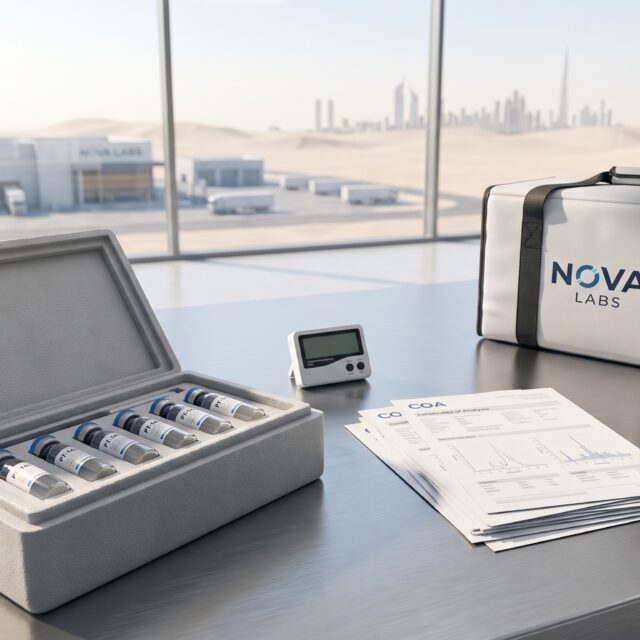
- COA Verification: Ensure the Certificate of Analysis (COA) is batch-specific and readily available before purchase.
- Purity Standard: Confirm the compound demonstrates at least 98% purity via HPLC and Mass Spectrometry (MS).
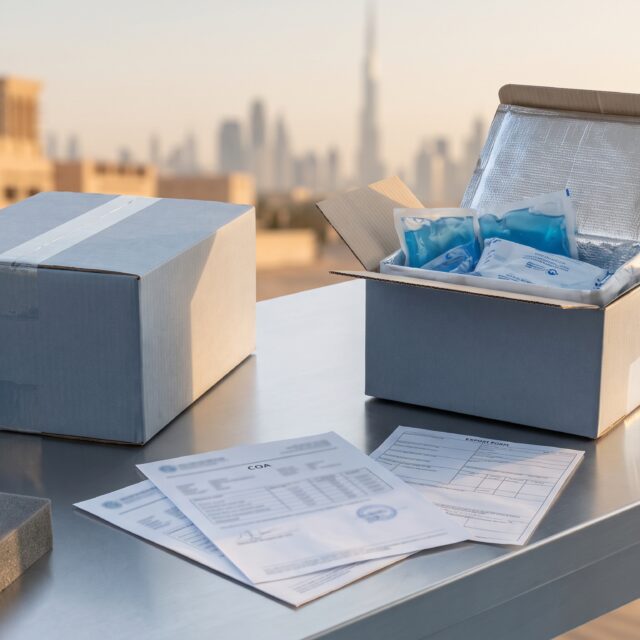
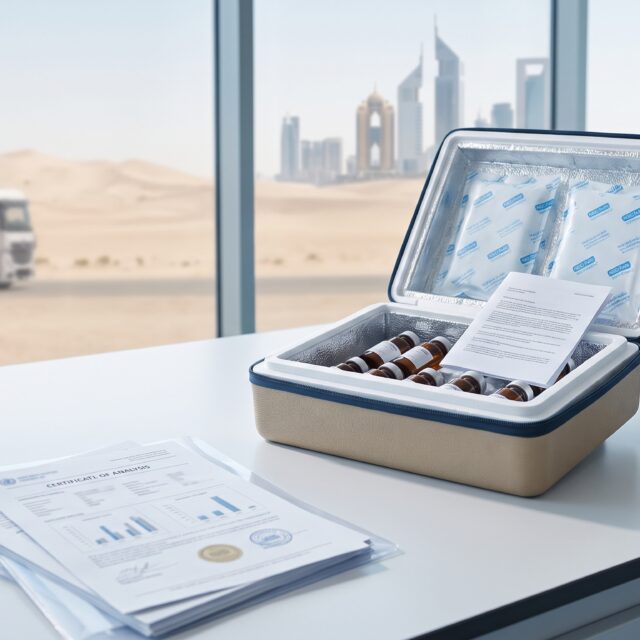
- Temperature Control: Verify the supplier uses insulated packaging and cooling elements to prevent denaturation during transit.
- Delivery Windows: Opt for suppliers capable of 1 to 2 business day turnarounds to Abu Dhabi to minimise the time the peptide spends outside of optimal storage conditions.
- Compliance: Ensure the supplier strictly operates within ‘research purposes only’ guidelines without making unapproved therapeutic claims.
The Scientific Context: Why SS-31 Quality Matters
SS-31 (sequence: D-Arg-Dmt-Lys-Phe-NH2) is a synthetic, aromatic-cationic tetrapeptide widely studied for its ability to target the inner mitochondrial membrane. In in-vitro cellular assays, research indicates that SS-31 selectively binds to cardiolipin, a unique phospholipid. By interacting with cardiolipin, SS-31 is observed in laboratory settings to stabilize the membrane structure and optimize electron transport chain efficiency, thereby reducing reactive oxygen species (ROS) production.
Because of its highly specific molecular target, the structural integrity of the peptide is paramount. Even minor degradation or the presence of synthetic impurities (such as truncated peptide sequences or residual cleavage scavengers) can competitively inhibit cardiolipin binding, skewing data in mitochondrial function assays. This biological specificity is exactly why procuring verified, 98%+ pure SS-31 is a strict requirement for reproducible data.
The Regulatory Landscape in the UAE
The environment for sourcing research peptides in the Gulf has matured rapidly. Recently, the Emirates Drug Establishment (EDE), in conjunction with regional health authorities, implemented stringent oversight on the unapproved distribution and illegal marketing of peptide compounds. Over 70 unauthorised sources were penalised, and several social media channels were referred to authorities for illegal marketing.
For a legitimate SS-31 supplier Abu Dhabi researchers can trust, compliance is paramount. Reputable domestic suppliers adhere strictly to these regulations by positioning their products entirely for in-vitro research use. They do not provide dosage instructions, therapeutic claims, or consumer medical guidance. When you order SS-31 in Abu Dhabi, seeing clean, factual, compliance-focused product pages is a primary indicator that you are dealing with a professional scientific supplier rather than an unlicensed offshore retailer at high risk of customs seizure.
Why Cold-Chain Logistics Are Non-Negotiable in the GCC
One of the greatest threats to peptide integrity in the UAE is the extreme climate. Standard international shipping routes often expose parcels to unconditioned cargo holds, tarmac delays, and sun-baked delivery vans, leading to severe temperature excursions.
Lyophilized SS-31 is highly sensitive to its environment. Research dictates that extended temperature excursions can begin to alter its unique cationic-aromatic structure. Prolonged exposure to temperatures above 30°C can denature the compound, rendering the peptide useless before it even reaches the laboratory bench.
This biochemical vulnerability makes domestic cold-chain logistics a mandatory procurement requirement. When researchers evaluate a supplier, they must ask how the product is dispatched. Professional UAE-based suppliers bypass the risks of international freight by stocking inventory locally and using dedicated thermal packaging.
By leveraging optimized domestic delivery routes, researchers can rely on peptides UAE next-day delivery protocols that ensure orders are dispatched with thermal insulation and gel packs. This rapid, temperature-controlled transit mitigates heat exposure and guarantees compound viability upon arrival in Abu Dhabi.
How to Evaluate an SS-31 Supplier in Abu Dhabi
When comparing vendors, the foundational metric for any peptide purchase is the Certificate of Analysis (COA). If a vendor will not provide a batch-specific COA, you should immediately disqualify them from your procurement list. Here is how to evaluate the data:
1. Purity Thresholds and HPLC Data
High-Performance Liquid Chromatography (HPLC) is the gold standard for separating, identifying, and quantifying components within a mixture. For SS-31 (CAS 736992-21-5), your supplier’s HPLC report must demonstrate a minimum purity of 98%. Anything lower indicates residual solvents, incomplete synthesis, or cleaved amino acid chains that will introduce confounding variables into your experimental data.
2. Mass Spectrometry (MS) Confirmation
While HPLC confirms purity, Mass Spectrometry confirms the exact identity of the compound. The MS report should show a molecular weight peak that perfectly aligns with SS-31’s theoretical molecular mass (approximately 645.7 g/mol for the free base, though it is often supplied as a salt). If the mass is off, the compound is either degraded, incorrectly synthesised, or entirely counterfeit.
3. Transparent Payment Support and Local Infrastructure
Local purchasing constraints often frustrate researchers when dealing with overseas platforms—failed credit card processing, lack of local customer support, and hidden international transaction fees are common. A reliable UAE supplier provides transparent stock availability, secure domestic payment gateways, and rapid-response local support (such as verified WhatsApp business channels) to assist with procurement inquiries.
Post-Delivery Best Practices: Storage and Handling
Once your SS-31 arrives in Abu Dhabi, the responsibility for maintaining its integrity transfers to your laboratory. Even the highest-purity peptide will degrade rapidly if mishandled post-delivery.
Upon receiving the lyophilized powder, inspect the vial to ensure the vacuum seal is intact and the puck is undisturbed. Unreconstituted SS-31 should be transferred immediately to a freezer (optimally at -20°C) for long-term storage, where it can remain stable for up to 24 months.
When preparing the compound for study, reconstitution is typically performed using bacteriostatic water or sterile saline, depending on the requirements of the in-vitro assay. The introduction of moisture makes the peptide significantly more fragile. Following reconstitution, strict protocols must be observed:
- Refrigeration: The reconstituted solution must be stored continuously between 2°C and 8°C. Do not freeze reconstituted peptides, as ice crystals will shear the molecular bonds.
- Agitation: Avoid shaking the vial. Swirl the solution gently to dissolve the lyophilized powder.
- Timeframe: Standard laboratory guidelines dictate that reconstituted SS-31 should be utilised within a 28-day window to prevent bioactivity loss and mitigate potential microbial contamination risks.
Conclusion: Navigating Your Procurement Confidently
The market for specialised research compounds in the UAE demands vigilance. For those looking to source SS-31 locally, the difference between a successful cellular study and skewed assay data comes down to supplier selection. By prioritising domestic providers who offer verifiable HPLC/MS documentation, adhere to strict regulatory compliance guidelines, and execute flawless cold-chain delivery logistics, you protect your research investment and timeline.
Do not let regional heat or customs friction disrupt your supply chain. Rely on transparent, locally operated suppliers that stand by their rigorous quality testing and specialized delivery infrastructure.
Ready to secure premium, batch-tested research materials for your laboratory? Review detailed COA documentation and source SS-31 directly from NOVA Labs to streamline your next procurement order in Abu Dhabi.
*
Disclaimer: The products mentioned in this article are strictly for in-vitro research and laboratory use only. They are not intended for human consumption, diagnostic, or therapeutic use.
References
- National Center for Biotechnology Information. (2024). PubChem Compound Summary for CID 11726703, Elamipretide.
- Journal of Biological Chemistry. (2020). Stability and Binding Kinetics of Mitochondrial-Targeted Peptides in Vitro.
- Emirates News Agency (WAM). (2024). UAE health authorities intensify crackdown on unapproved medical products and illegal marketing.
- Gulf News. (2024). UAE Cracks Down on Unapproved Peptide Drugs: Sources Face Action.
- UAE Cracks Down on Unapproved Peptide Weight-Loss Drugs: 71 Sources and 14 Influencers Face Action – Gulf News
- Does SS-31 Need Refrigeration? Storage Guide – Real Peptides
- How Long SS-31 Vial Lasts — Storage, Potency & Use Timeline | Real Peptides
- Shipping & Returns – Peptides DXB
- Research Peptides for Sale — UAE | PepcoLab
Frequently asked questions
How is SS-31 shipped safely to Abu Dhabi without degrading?
To prevent heat damage in the UAE climate, professional suppliers ship SS-31 using dedicated cold-chain logistics. Lyophilized vials are packaged in insulated mailers equipped with cooling gel packs to maintain stable temperatures during the 1-2 business day transit to Abu Dhabi.
What purity standard should I demand when I buy SS-31?
Researchers should demand a minimum of 98% purity. This standard must be verified by a recent, batch-specific Certificate of Analysis (COA) that includes both High-Performance Liquid Chromatography (HPLC) and Mass Spectrometry (MS) test results.
What is the proper laboratory storage temperature for reconstituted SS-31?
Once reconstituted with bacteriostatic water or sterile saline, SS-31 must be stored under strict refrigeration between 2°C and 8°C. For optimal structural integrity and bioactivity, standard laboratory protocols state it should be utilized within a 28-day window.
Why is international shipping risky for peptides entering the UAE?
International shipping exposes highly sensitive peptides to extreme temperature excursions above 30°C in cargo holds and customs facilities, which can permanently denature compounds like SS-31. It also carries a high risk of long delays and customs seizures under strict UAE import regulations.
Nova Labs buyer tools
Ready to verify stock, testing and delivery?
Use the product page and lab report section to check availability, documentation, delivery timing and support before placing an order.
- COA / test-report checks
- Abu Dhabi delivery context
- Cold-chain handling
- COD and card payment options
- WhatsApp support