
In the Gulf Cooperation Council (GCC), ambient summer temperatures routinely exceed 45°C, creating a highly hostile environment for sensitive biological compounds. For research facilities, procurement officers, and informed buyers, managing the precise peptide storage temperature GCC protocols demand is the most critical factor in preserving molecular integrity. When fragile peptide chains are exposed to extreme thermal stress, they rapidly degrade via hydrolysis, oxidation, and structural collapse. This guide outlines the exact temperature thresholds, handling protocols, and procurement strategies necessary to protect your research investments in the Middle East.
The Essential Guide to Peptide Storage Temperature GCC
The ideal peptide storage temperature in the GCC depends on the compound’s state. Lyophilized powders require deep freezing between -20°C and -80°C for long-term stability. Once reconstituted, liquid peptide solutions must be strictly refrigerated at 2°C to 8°C and used within 14 to 30 days.
Failing to strictly adhere to these parameters results in degraded research materials and compromised data. In the UAE and wider GCC, the ‘Tarmac Factor’—the time a package spends sitting in unairconditioned customs warehouses or delivery vans—is a primary threat to peptide stability. International shipments are frequently exposed to temperatures exceeding 60°C inside courier vehicles, a threshold where secondary molecular structures begin to unravel. This makes local, temperature-controlled fulfillment not just a convenience, but a strict scientific necessity for viable research.
Quick Buyer Checklist: Key Checks for Handling Peptides in the Gulf
Before you evaluate a supplier or design a laboratory handling programme, it is vital to understand the fundamental rules of thermal stability. Keep this practical checklist in mind:
- State-Dependent Storage: Lyophilized (freeze-dried) powder must remain frozen (-20°C). Reconstituted (liquid) solutions must be refrigerated (2°C to 8°C).
- The Humidity Threat: Always allow a cold vial to reach room temperature before breaking the seal. Coastal GCC humidity will instantly condense inside a cold vial, introducing destructive moisture.
- Avoid Freeze-Thaw Cycles: Never re-freeze a reconstituted liquid peptide. The formation of ice crystals will physically shear the peptide bonds, destroying the compound.
- Light Protection: Store all vials away from direct UV light. Opt for amber glass vials when available, especially for compounds containing sensitive amino acids.
- Demand Local Cold Chain: Only source from suppliers who guarantee active or passive cold-chain transit within the region to avoid tarmac degradation.
Lyophilized vs. Reconstituted: Precise Temperature Thresholds
Understanding the exact peptide storage temperature guide GCC laboratories rely on requires distinguishing between the two primary states of research compounds: the stable powder and the active liquid solution.
Protecting Lyophilized Powders
In their freeze-dried (lyophilized) state, peptides are relatively stable, provided they are kept completely free of moisture. The removal of water significantly slows down chemical reactions that lead to degradation. For long-term storage spanning months or years, these vials should be placed in a manual-defrost deep freezer.
Frost-free freezers are unsuitable for long-term peptide storage because they periodically cycle warm air through the chamber to melt ice accumulation. These micro-fluctuations in temperature can slightly warm the vial, repeatedly stressing the molecular structure. A stable environment between -20°C and -80°C halts nearly all kinetic molecular movement, preserving the peptide chain indefinitely.
Securing Reconstituted Solutions
The moment you introduce bacteriostatic water to the lyophilized cake, the preservation clock begins ticking rapidly. Water acts as a catalyst for hydrolysis, a chemical reaction where water molecules cleave the peptide bonds, breaking the chain into smaller, inactive fragments.
Once reconstituted, the absolute maximum shelf life of the solution is typically 14 to 30 days. During this window, the solution must be stored strictly between 2°C and 8°C (standard laboratory refrigeration). Allowing a reconstituted vial to reach room temperature in a 25°C+ Dubai laboratory, even for a few hours, drastically accelerates bacterial growth and molecular deamidation (especially in sequences containing Asparagine or Glutamine). Furthermore, amino acids like Methionine, Cysteine, and Tryptophan are highly prone to rapid oxidation when in solution, making precise temperature and light control mandatory.
The Condensation Trap: Managing Coastal UAE and GCC Humidity
While heat is an obvious danger in the GCC, relative humidity is often the silent threat that destroys lyophilized compounds before reconstitution even occurs. Cities like Dubai, Abu Dhabi, Doha, and Manama frequently experience coastal humidity levels exceeding 80%.
When you remove a vial of lyophilized powder from a -20°C freezer, the glass is significantly colder than the ambient laboratory air. If you immediately pop the cap and expose the powder to the humid environment, ambient moisture will instantly condense on the cold interior glass and directly onto the peptide cake. This localized moisture introduction triggers rapid hydrolysis, ruining the batch before you have even added the solvent.
To safely navigate this condensation trap, always implement a strict thawing protocol. Remove the vial from the freezer and let it sit on the benchtop in a dark, temperature-controlled room for 10 to 15 minutes. Wait until the vial has completely acclimated to ambient room temperature before opening the seal and proceeding with reconstitution.
Evaluating GCC Suppliers: Cold-Chain Logistics and Verification
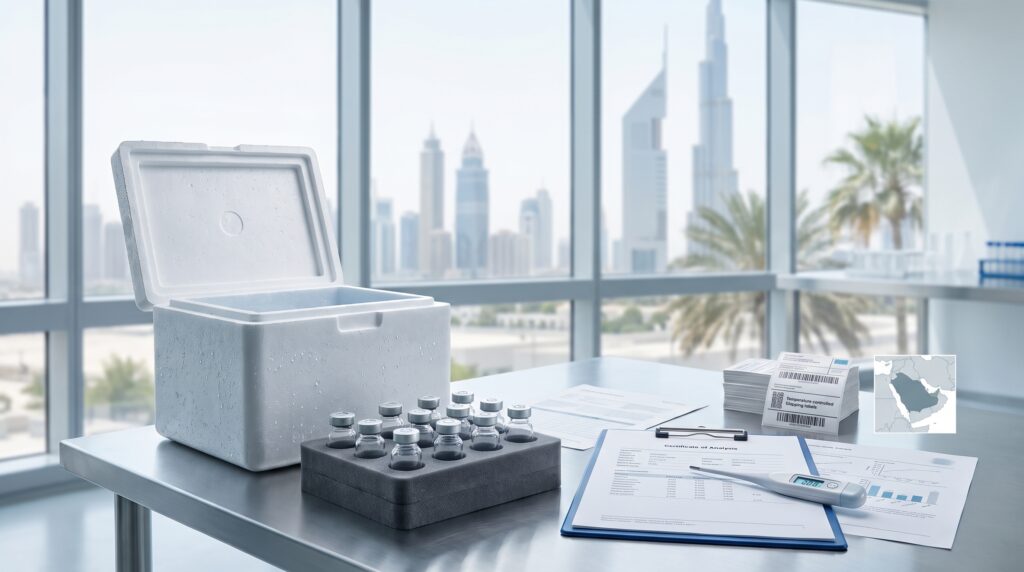
Procuring high-purity research materials in the Middle East presents unique logistical hurdles. An overseas supplier might provide a pristine Certificate of Analysis (COA) generated at their manufacturing facility, but if that parcel spends four days navigating global customs checkpoints and clearing hubs in 45°C heat, the compound arriving at your facility will not match the purity on the paperwork.
When assessing a supplier, informed buyers must verify the entire logistical chain. You should evaluate how a vendor protects the peptide storage temperature in GCC transit conditions.
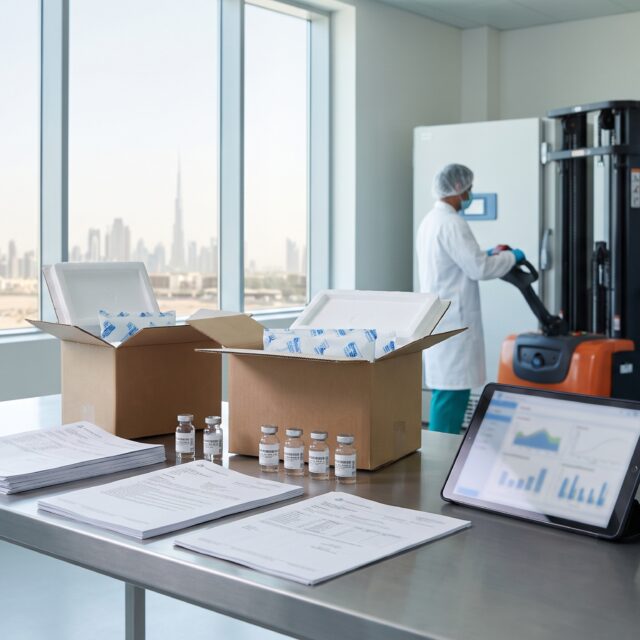
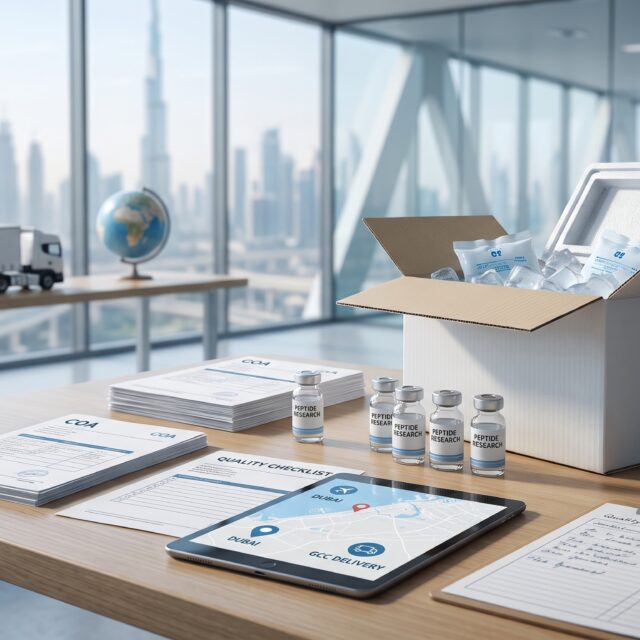
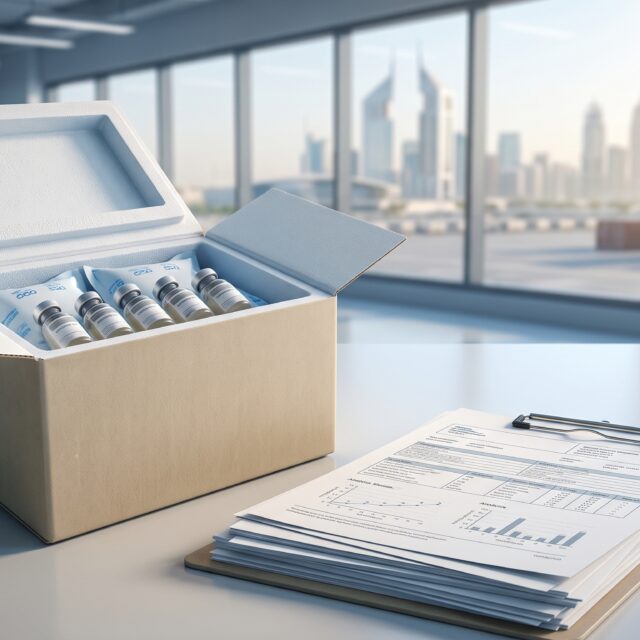
At NOVA Labs, we mitigate thermal transit risks by keeping our operations entirely localized. By maintaining regionally warehoused stock, we utilize comprehensive active and passive cold-chain shipping strategies. We pack vials in high-density insulated mailers with pharmaceutical-grade gel ice packs, ensuring the internal temperature remains stable during the critical transit window.
Because we fulfill locally, we bypass the severe delays and thermal exposure associated with international customs friction. This operational footprint allows us to offer immediate secure UAE next-day delivery across the Emirates, alongside rapid 2-5 business day transit to wider GCC nations like Saudi Arabia, Bahrain, and Oman. Local sourcing also means our clients benefit from flexible procurement options, including Cash on Delivery (COD) and direct WhatsApp support for immediate logistical coordination.
Furthermore, independent verification is paramount. Before placing an order, buyers should insist on reviewing third-party High-Performance Liquid Chromatography (HPLC) and Mass Spectrometry (MS) test reports. These documents prove the exact purity percentage of the batch at the time of bottling. You can review these detailed COAs and browse our full research catalogue to ensure your procurement meets rigorous analytical standards.
Bottom Line: Securing Your Research Investment
Maintaining optimal peptide storage temperature in GCC environments is a complex but entirely manageable challenge. The harsh local climate dictates that researchers and procurement teams cannot rely on standard shipping or casual storage methods. By understanding the distinct temperature thresholds for lyophilized powders versus reconstituted solutions, strictly avoiding the condensation trap, and demanding rapid, cold-chain local fulfillment, you can effectively safeguard the structural integrity of your compounds.
Always prioritize regional suppliers who understand local climate constraints, provide transparent third-party batch documentation, and utilize thermal-protective packaging to bridge the gap between their laboratory and your facility.
Disclaimer: The products mentioned in this article are for research purposes only and are not intended for human consumption or clinical diagnostic use.
References
- Thermo Fisher Scientific. (2023). Handling and Storage of Peptides. Technical Resources.
- Sigma-Aldrich (Merck). (2022). Peptide Stability and Storage Guidelines. Research Resource Protocol.
- NOVA Labs. (2024). GCC Cold Chain Logistics: Preserving Peptide Integrity. Supply Chain Documentation.
- D’Hondt, M., et al. (2014). Related impurities in peptide medicines. Journal of Pharmaceutical and Biomedical Analysis, 101, 2-30.
- Peptide Storage Temperature Bahrain: Practical Buyer Guide – NOVA Labs
- How to Store Research Peptides: Complete UK Guide to Stability and Shelf Life (2026)
- Storing Peptides in Bali’s Heat & Humidity | BioPepTech
- Do Research Peptides Need Refrigeration? Cold Chain, Customs and Carriers | PepcoLab
- Peptide Storage and Handling Guidelines – GenScript
- Shipping & Returns – Peptides DXB
Frequently asked questions
What is the correct peptide storage temperature in the GCC?
Lyophilized (powder) peptides should be stored in a deep freezer between -20°C and -80°C. Reconstituted (liquid) peptides must be kept strictly refrigerated between 2°C and 8°C.
Can I freeze a reconstituted liquid peptide to make it last longer?
No. Freezing a reconstituted liquid peptide causes ice crystals to form, which physically shear and destroy the delicate peptide bonds, rendering the research compound useless.
How do extreme GCC summer temperatures affect peptide shipping?
Temperatures exceeding 45°C can rapidly degrade peptides through structural collapse and deamidation. This is why utilizing local UAE suppliers with insulated, cold-chain packaging and next-day delivery is essential to protect the compounds.
Why must a peptide vial reach room temperature before I open it?
If you open a frozen vial immediately in humid coastal GCC air, moisture will instantly condense inside the vial. This water triggers premature hydrolysis, which degrades the lyophilized powder before reconstitution.
Nova Labs buyer tools
Ready to verify stock, testing and delivery?
Use the product page and lab report section to check availability, documentation, delivery timing and support before placing an order.
- COA / test-report checks
- GCC delivery context
- Cold-chain handling
- COD and card payment options
- WhatsApp support