




How to Buy MOTS-c in Kuwait: Sourcing & Logistics
To safely buy MOTS-c in Kuwait, researchers must source from suppliers providing third-party HPLC and Mass Spectrometry testing to verify 99%+ purity. Due to extreme Gulf temperatures, active cold-chain logistics from a regional GCC hub are mandatory to prevent lyophilized peptide degradation during transit.
Buyer Checklist: Sourcing Peptides in Kuwait
- Purity Verification: Demand batch-specific Certificates of Analysis (COAs) showing >99% purity via HPLC and exact molecular weight confirmation via Mass Spectrometry.
- Cold-Chain Transport: Ensure the supplier utilizes specialized thermal liners and gel packs to maintain a stable microclimate during transit.
- Customs Compliance: Verify that all commercial invoices explicitly declare the compounds as non-hazardous, in vitro laboratory chemicals for research use only.
- Regional Operations: Choose vendors with localized GCC payment gateways, regional shipping hubs, and responsive communication channels for institutional procurement.
For procurement teams and independent researchers operating in the GCC, acquiring high-quality mitochondrial-derived peptides involves much more than just finding an online vendor. The decision to source MOTS-c requires rigorously evaluating a vendor’s ability to provide transparent testing, manage extreme regional temperature variations, and comply with Kuwait’s strict import frameworks. Because MOTS-c is a sensitive compound heavily studied for its role in cellular energy metabolism, maintaining its structural integrity from the synthesis lab to your Kuwaiti facility is critical.
Historically, researchers in Kuwait had to rely on overseas suppliers from North America or Europe. This reliance frequently led to extended transit times, degraded compounds due to prolonged heat exposure on airport tarmacs, and complex customs delays. Today, informed buyers are increasingly turning to dedicated regional suppliers who understand the intricacies of GCC logistics and can deliver intact, high-purity compounds rapidly.
Understanding MOTS-c in the Laboratory Context
MOTS-c (Mitochondrial open reading frame of the 12S rRNA-c) is a 16-amino acid peptide that is unique because it is encoded by the mitochondrial genome rather than the nuclear genome. In the research community, it is heavily investigated for its role in regulating metabolic homeostasis, promoting AMP-activated protein kinase (AMPK) activation, and influencing cellular glucose uptake.
Because in vitro cellular assays involving AMPK pathways are highly sensitive to external variables, the structural integrity of the peptide used in the lab is non-negotiable. Any degraded peptide fragments or synthesis impurities introduced into a cell culture can severely confound experimental data. Therefore, securing an exceptionally pure form of MOTS-c is the foundational step for any rigorous metabolic research project.
Evaluating Purity: The Role of COA, HPLC, and MS Testing
Visual inspection of a lyophilized vial reveals absolutely nothing about its chemical makeup. The foundational requirement for any credible peptide supplier is the provision of a batch-specific Certificate of Analysis (COA) conducted by an independent, third-party laboratory.
For researchers looking to buy MOTS-c, there are two primary analytical methods you must look for on the COA to ensure viability:
High-Performance Liquid Chromatography (HPLC)
This analytical technique separates the various components in a mixture. In peptide synthesis, it allows the laboratory to quantify the exact purity of the primary compound. A reliable supplier should guarantee a minimum purity threshold of 99%. By examining the HPLC chromatogram, researchers can visually confirm a single, sharp peak that corresponds to the target peptide, indicating that synthesis byproducts have been successfully eliminated. Anything less than 99% purity introduces unacceptable variables into sensitive in vitro research.
Mass Spectrometry (MS)
While HPLC confirms how pure the powder is, Mass Spectrometry is required to confirm its identity. By ionizing the sample and measuring the mass-to-charge (m/z) ratio of those ions, MS ensures that the molecular weight of the vial’s contents matches the precise biological structure of MOTS-c. If a synthesis error occurred (such as a missing amino acid or a failed cleavage), the mass spectrum would immediately reveal the discrepancy.
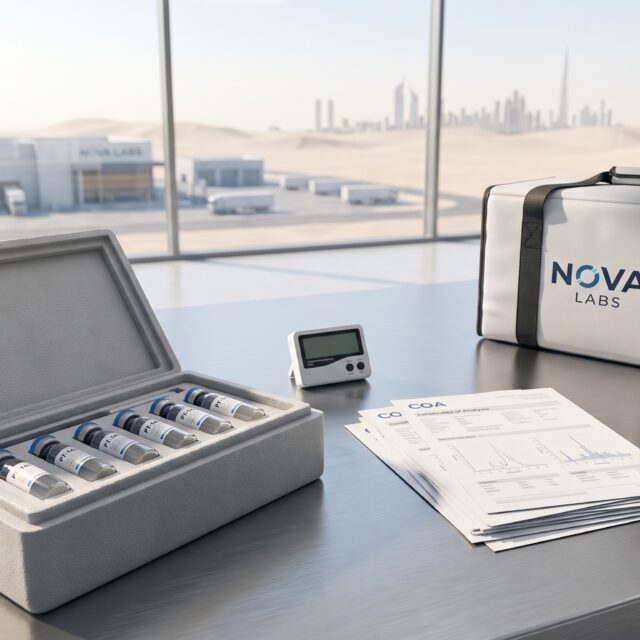
Before finalizing any procurement order, demand visibility into these specific analytical documents. At NOVA Labs, we prioritize absolute analytical transparency. Researchers looking to source premium MOTS-c research vials can easily access current, batch-specific COAs, ensuring absolute confidence in the compound’s structural integrity before it ever enters their lab.
Defeating the Desert Heat: Cold-Chain Logistics in Kuwait
The single greatest threat to peptide stability in the GCC is the ambient climate. Peptides are delicate amino acid chains that can rapidly degrade when exposed to heat, UV light, or physical agitation. Standard international shipping methods—which often leave parcels sitting in unairconditioned warehouses—are entirely insufficient when Kuwaiti summer temperatures routinely soar above 45°C.
To combat this environmental challenge, elite suppliers employ a dual-layered approach to peptide stability:
Firstly, the MOTS-c peptide must be supplied as a lyophilized (freeze-dried) powder rather than a pre-mixed liquid. The lyophilization process removes moisture under a vacuum, locking the fragile peptide structure into a highly stable state. It is packaged in standardized glass vials, which are sealed with secure butyl rubber stoppers and crimped aluminum caps to maintain a sterile, moisture-free environment until laboratory reconstitution is ready to take place.
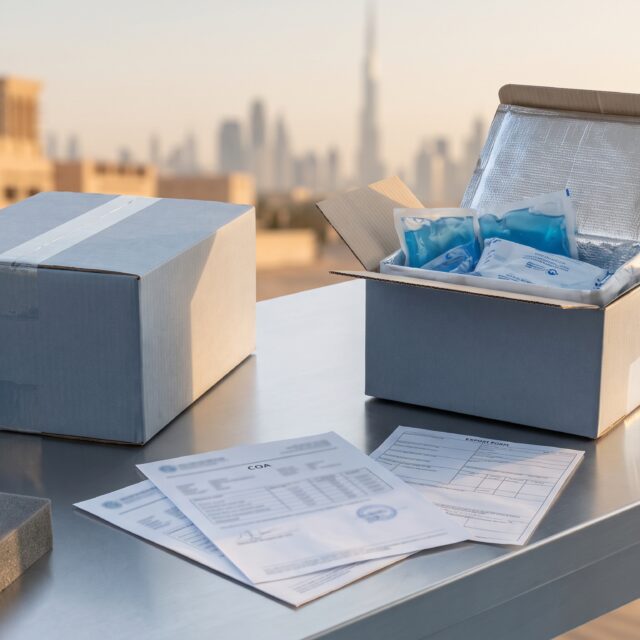
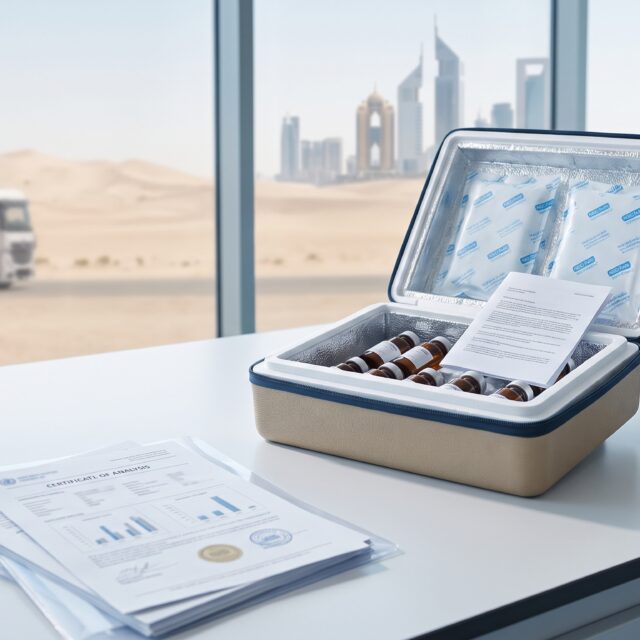
Secondly, the physical transit phase must utilize active cold-chain logistics. Premium suppliers utilize insulated thermal liners and specialized refrigerated phase-change materials (gel packs) designed to maintain a controlled microclimate within the parcel. By leveraging a centralized logistics hub in Dubai, NOVA Labs provides highly optimized regional GCC shipping and next-day UAE delivery infrastructure. This geographic proximity drastically reduces the total time a package spends in transit to Kuwait, minimizing heat exposure windows and ensuring the powder arrives structurally sound and ready for research.
Navigating Kuwaiti Customs for Research Materials
Navigating the administrative landscape of chemical imports is a primary concern for procurement teams. The State of Kuwait, governed by the Ministry of Health (MOH) and local customs authorities, enforces strict regulations on the importation of finished medicines, pharmaceuticals, and biologicals. Unregistered finished medicines cannot be legally imported without an exceptionally complex registration process requiring an authorized local commercial agent.
However, research peptides like MOTS-c occupy a distinct and clear category when documented correctly. Because these compounds are not approved therapeutics, do not carry medical claims, and are absolutely not intended for human or animal consumption, they are strictly imported, categorized, and sold as laboratory reagents.
A reputable MOTS-c supplier servicing Kuwait will explicitly frame their operations and logistics around this “research-use only” framework. The commercial invoice, packing slip, and customs declarations must accurately reflect the contents as non-hazardous, in vitro laboratory chemicals using the correct Harmonized System (HS) codes. Suppliers who irresponsibly make therapeutic claims, or package their products to look like finished medicines, frequently face severe customs delays or complete parcel seizures. By adhering to rigorous compliance standards, dedicated regional suppliers ensure your laboratory materials pass through specialized GCC couriers without unnecessary administrative friction.
Institutional Operations: Secure Delivery and Local Support
Beyond purity testing and insulated packaging, the operational reliability of the supplier dictates the overall procurement experience. Kuwaiti buyers increasingly demand streamlined digital convenience adapted specifically for the B2B laboratory sector.
When evaluating a regional MOTS-c supplier, look for these operational hallmarks:
- Last-Mile Delivery Expertise: The supplier should partner with established regional couriers capable of handling final customs clearance and prompt, secure delivery directly to your facility or institution.
- Payment Flexibility & Security: Sourcing specialized reagents shouldn’t require complex international wire transfers that take weeks to clear. Look for secure, encrypted payment gateways that easily process institutional corporate cards and offer localized GCC payment routing to build institutional trust.
- Accessible, Real-Time Support: The best regional suppliers maintain active, direct lines of communication. Availability via professional WhatsApp channels for real-time order tracking, direct COA requests, and immediate stock availability checks is a strong indicator of a supplier’s genuine commitment to serving the Gulf market.
Long-Term Storage Protocols for Researchers
Once the cold-chain delivery has successfully concluded and the package has arrived at your facility in Kuwait, the responsibility for stability transfers to the researcher. Proper storage protocols dictate that lyophilized MOTS-c vials should be immediately transferred to a laboratory freezer (typically set to -20°C). In this state, the peptide can remain stable for up to 24 months.
Upon reconstitution with sterile bacteriostatic water for in vitro assays, the peptide transitions to a liquid state and becomes significantly more vulnerable to degradation. Reconstituted MOTS-c must be kept strictly refrigerated between 2°C and 8°C, shielded from direct light, and used promptly. Researchers should actively avoid subjecting the vials to repeated freeze-thaw cycles, as this will rapidly degrade the peptide bonds.
Conclusion
Procuring specialized laboratory materials in the GCC requires strategic, informed vendor selection. If you intend to buy MOTS-c in Kuwait, the success of your research relies heavily on verifying unquestionable analytical purity, demanding localized cold-chain logistics, and ensuring strict adherence to compliant customs declarations. Partnering with a dedicated regional supplier allows researchers and procurement teams to focus entirely on their scientific objectives rather than battling supply chain hurdles.
Ready to stock your lab with uncompromising quality? Review NOVA Labs’ testing transparency and specialized GCC operational capabilities today to secure your premium research compounds.
Disclaimer: The products mentioned in this article are intended strictly for in vitro laboratory research purposes only. They are not intended for human consumption, diagnostic use, or therapeutic treatment.
References
- Ministry of Health, State of Kuwait. Law No. 28 of 1996 Concerning the Regulation of the Pharmacy Profession and the Trading of Medicines.
- International Safe Transit Association (ISTA). Guidelines for Temperature-Controlled Transport Packaging for Pharmaceutical and Biological Products.
- Lee, C., et al. (2015). The mitochondrial-derived peptide MOTS-c promotes metabolic homeostasis and reduces obesity and insulin resistance. Cell Metabolism, 21(3), 443-454.
- PubChem. MOTS-c (Compound). National Center for Biotechnology Information. U.S. National Library of Medicine.
- World Health Organization (WHO). Good storage and shipping practices for time- and temperature-sensitive pharmaceutical products (Technical Report Series, No. 961).
- Buy MOTS-c UAE — Mitochondrial Research Peptide in Dubai
- Buy MOTS-c Peptide UAE PharmaLabGlobal
- MOTS-C Peptide for Metabolism & Energy – Valeo Health
- Peptide Cold Chain Packaging | Temperature-Controlled Shipping Solutions
- Import unapproved medicine into Kuwait – Everyone.org
- Kuwait’s New Pharmaceutical Registration Guidelines – Al Tamimi & Company
- Import & Export Guide State of Kuwait – NAQEL Express
Frequently asked questions
How can I verify the purity of MOTS-c before buying in Kuwait?
You should always request a batch-specific Certificate of Analysis (COA) from the supplier before purchasing. This independent laboratory document must include High-Performance Liquid Chromatography (HPLC) to confirm 99%+ purity and Mass Spectrometry (MS) to verify the compound's exact molecular identity.
Why is cold-chain shipping necessary for research peptides in the GCC?
Peptides are sensitive amino acid structures that can rapidly degrade in the high summer temperatures typical of Kuwait and the wider Gulf region. Cold-chain shipping utilizes insulated thermal packaging and cooling gel packs to maintain a stable microclimate, preserving the lyophilized powder during transit.
Is it legal to order MOTS-c for a laboratory in Kuwait?
Yes, provided the peptide is imported strictly as a laboratory reagent for in vitro research purposes only. It must not be marketed or declared as a therapeutic drug, finished medicine, or dietary supplement, ensuring compliance with Kuwaiti Ministry of Health (MOH) and customs regulations.
What is the best way to store MOTS-c once delivered to my facility?
Upon receiving your delivery, the lyophilized (freeze-dried) MOTS-c vials should be placed immediately into a laboratory freezer (typically -20°C) for maximum long-term stability. Once reconstituted with bacteriostatic water for assays, the liquid solution must be kept refrigerated at 2°C to 8°C and protected from light.
Nova Labs buyer tools
Ready to verify stock, testing and delivery?
Use the product page and lab report section to check availability, documentation, delivery timing and support before placing an order.
- COA / test-report checks
- Kuwait delivery context
- Cold-chain handling
- COD and card payment options
- WhatsApp support