



Sourcing high-quality research compounds in the GCC comes with a unique set of regional challenges. For researchers and procurement staff looking to secure verifiable HPLC tested peptides, Kuwait presents two distinct hurdles: strict Air Cargo Customs protocols and extreme desert temperatures that can degrade fragile biologicals in transit.
Because the global market is flooded with generic resellers, purchasing safely requires more than just looking for a “99% pure” badge on a website. Buyers must know how to critically read a Certificate of Analysis (COA), differentiate between high-performance liquid chromatography (HPLC) and mass spectrometry (MS), and evaluate a supplier’s logistics network. This guide breaks down exactly how informed buyers evaluate documentation and secure reliable, climate-controlled delivery in the region.
Quick Checklist: Verifying HPLC Tested Peptides Kuwait
To safely source HPLC tested peptides Kuwait researchers must always verify the unique Janoshik or third-party report ID directly on the testing facility’s website. Ensure the batch number on your vial matches the COA date, confirm the presence of a visual chromatogram, and mandate regional GCC fulfillment using active cold-chain packaging.
Overcoming Kuwait Customs and Climate Friction
Most international peptide shipments originating from the US, UK, or the EU face significant friction before they ever reach a local laboratory.
Kuwait’s Air Cargo Customs maintains strict monitoring protocols over imported chemical and biological products. When ordering from overseas, buyers frequently experience severe customs delays, extensive paperwork requests, or outright seizures. This bottleneck forces compounds to sit in poorly regulated, un-air-conditioned holding facilities for days or weeks.
During the Kuwaiti summer, temperatures routinely peak between 45°C and 50°C. Lyophilised (freeze-dried) peptides are inherently fragile. While they are more stable than reconstituted liquids, prolonged exposure to extreme heat can degrade the molecular structure, rendering the compound useless for precise analytical research.
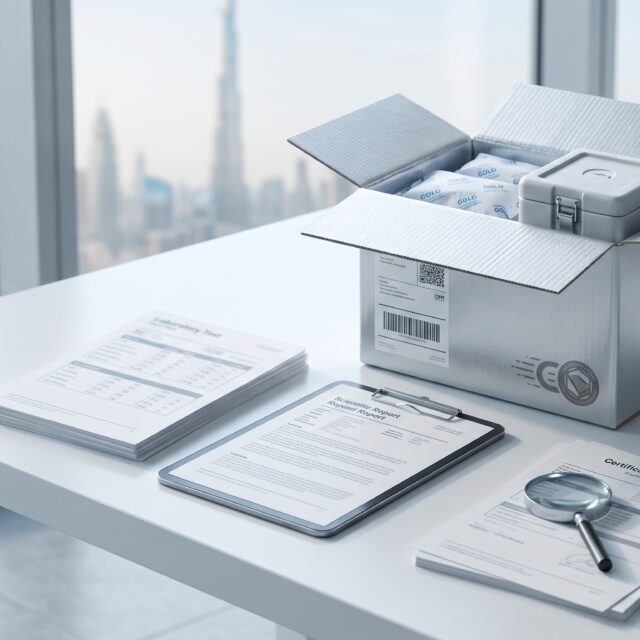
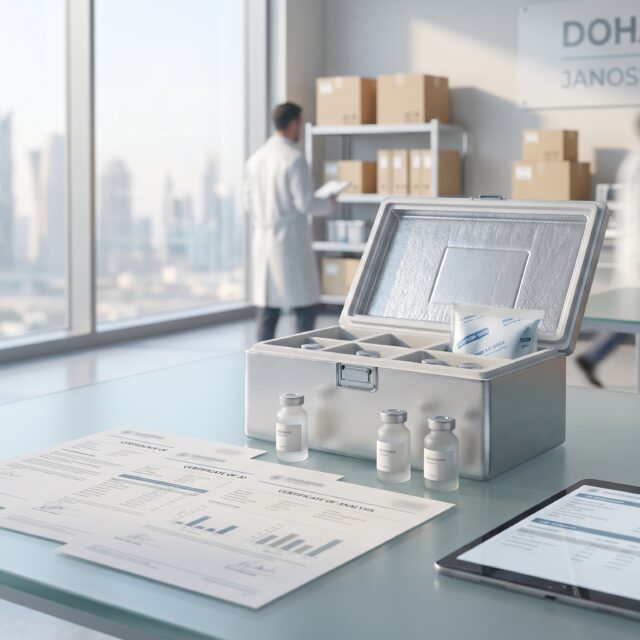
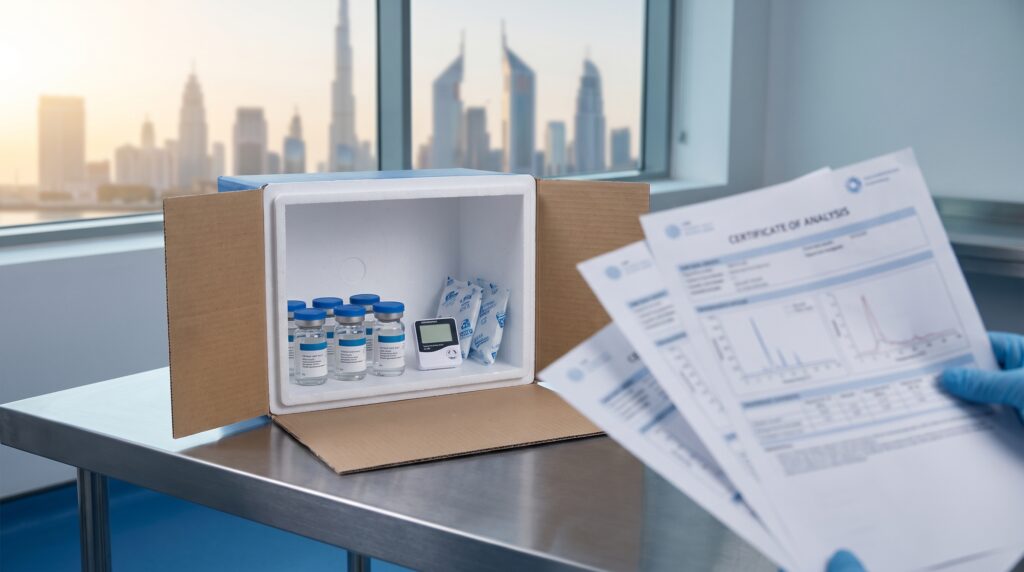
For these reasons, informed procurement staff avoid international direct-to-consumer shipping routes. Instead, they rely on regional suppliers offering domestic or GCC-based logistics. By shipping from within the UAE or GCC, suppliers bypass international customs bottlenecks and can implement active cold-chain logistics—such as EPS insulated packaging and clinical-grade gel ice packs—ensuring the compound remains stable from dispatch to delivery.
Decoding the COA: What HPLC and Mass Spectrometry Actually Tell You
When evaluating an HPLC tested peptides supplier, Kuwait researchers must understand the analytical pillars of a Certificate of Analysis. A legitimate COA provides two primary pieces of data: purity and identity.
HPLC: The Gold Standard for Purity
High-Performance Liquid Chromatography (HPLC) is the analytical method used to determine how pure a sample is. During synthesis, fragments, amino acid mis-pairings, and residual solvents are often left behind. HPLC separates the desired target peptide from these impurities.
On a legitimate lab report, you will see a visual graph called a chromatogram. The main peak represents the target compound, while smaller peaks represent impurities. The area under the main peak is calculated as a percentage—this is where the “99% purity” claim originates. Without the visual chromatogram, a purity percentage is essentially a meaningless number.
Mass Spectrometry (MS): Confirming Identity
While HPLC tells you how pure a substance is, it does not tell you what the substance actually is. A sample could be 99% pure table sugar and still produce a clean HPLC peak.
This is why Mass Spectrometry (MS) is non-negotiable. MS determines the exact molecular weight of the compound in the vial. Every peptide sequence has a precise, theoretical molecular mass. If a researcher is analysing a specific chain of amino acids, the observed mass on the MS report must exactly match the theoretical mass. Together, HPLC and MS provide the complete picture: the vial contains the correct compound, and it is free from synthesis contaminants.
Red Flags: How to Spot Fake Lab Reports
Because third-party testing is expensive, low-trust vendors frequently manipulate documentation. If you are assessing an HPLC tested peptides shop, Kuwait researchers should look out for these common red flags:
- Missing Chromatograms: A real COA always includes the visual graph mapping the peaks. If a supplier only provides a generic PDF stating “Purity: 99.4%” with no supporting visual data, the document is likely fabricated.
- Unsearchable Report IDs: The industry standard for independent testing is utilising recognised labs like Janoshik Analytical. These reports carry a unique key or task ID. You should be able to go directly to the testing laboratory’s official website, type in the ID, and pull up the exact same report. If the supplier’s report cannot be independently verified on the lab’s site, it is not trustworthy.
- Mismatched Dates and Batch Numbers: A COA is only valid for the specific batch it was tested against. If you receive a vial with a batch number that does not match the testing document, or if the COA is dated three years ago, you have no proof of what is currently in your vial.
- Swapped Logos: A common tactic among illegitimate resellers is downloading a genuine COA from a reputable brand and using PDF editing software to paste their own logo over the top. Always rely on independent verification links rather than static images.
Choosing a Regional Supplier with Full Transparency
For researchers operating in the GCC, mitigating risk means evaluating the supplier’s operational infrastructure as rigorously as their product list.
First, assess their transparency. Do they gatekeep their testing data, or is it publicly accessible? At NOVA Labs, we believe researchers should never have to guess. We maintain an openly accessible database of our verifiable third-party lab results, allowing buyers to independently confirm purity and identity before initiating an order.
Second, evaluate their logistics framework. As noted, relying on international freight for temperature-sensitive compounds introduces too many variables. A supplier must offer regional fulfillment. We utilise advanced EPS thermal packaging and cold-chain handling to ensure compounds survive the GCC heat, arriving intact and ready for immediate laboratory application.
Finally, consider the procurement experience. Legitimate suppliers understand the needs of regional buyers, offering discrete packaging, secure payment gateways, and direct support channels like WhatsApp for real-time order tracking and batch inquiries.
The Bottom Line for GCC Researchers
Procuring HPLC tested peptides Kuwait requires diligence. The combination of restrictive customs, extreme summer temperatures, and deceptive documentation practices means researchers cannot afford to cut corners. By demanding verifiable third-party Janoshik reports, ensuring both HPLC and MS data are present, and partnering with suppliers who utilise GCC-based cold-chain logistics, you can protect the integrity of your research.
If you are ready to source fully documented, climate-protected compounds, explore our complete research catalogue to view available inventory and testing data.
*
References:
- Experiences with customs importing supplements/research chemicals: r/Kuwait. Customs clearance restrictions and delays regarding chemical compounds in Kuwait.
- How to Read a Peptide COA + Verify a Janoshik Report. Industry guidelines on verifying third-party analytical testing keys.
- How Are Peptides Tested? HPLC, COA & Purity Explained. Technical breakdown of High-Performance Liquid Chromatography separating target compounds from synthesis fragments.
- NOVA Labs Cold Chain Logistics. Utilisation of EPS insulated packaging and clinical gel ice packs for GCC regional fulfillment.
Disclaimer: The products mentioned in this article are for research purposes only and are not intended for human or animal consumption.
References
- How to Read a Peptide COA + Verify a Janoshik Report – CertaPeptides
- Sharjah Cold Chain Peptide Delivery | Next-Day Local – NOVA Labs
- How to Spot a Fake Peptide COA: 5 Red Flags | Peptify UK
- Experiences with customs importing supplements/research chemicals : r/Kuwait – Reddit
- How Are Peptides Tested? HPLC, COA & Purity Explained (2026)
- GCC Peptides — Research Grade Peptides Kuwait & GCC | 99% Purity Lab Verified
- Peptide Certificates of Analysis: How to Read and Verify a COA (2026 Guide) | Peptidepedia
- How to Read a Peptide COA: Verification Checklist (2026) – PepPal
Frequently asked questions
How can I verify HPLC tested peptides in Kuwait?
You can verify HPLC tested peptides by checking the unique Task ID on the Certificate of Analysis (COA) against the official website of the independent testing laboratory, such as Janoshik. Always ensure the COA includes a visual chromatogram and that the batch number matches your vial.
Why is Mass Spectrometry (MS) required alongside HPLC testing?
While HPLC testing determines the purity of a compound by separating out synthesis fragments, it cannot identify the compound itself. Mass Spectrometry confirms the specific identity of the peptide by matching its exact molecular weight to its theoretical mass.
Why do international peptide shipments to Kuwait often fail?
International shipments frequently face severe delays or seizures by Kuwait Air Cargo Customs due to strict regulations on imported biologicals. During these delays, the extreme local heat can quickly degrade uninsulated, temperature-sensitive compounds.
How are research compounds protected from the heat during Kuwait delivery?
Reliable GCC-based suppliers bypass international customs delays and utilise active cold-chain logistics. This includes shipping compounds in EPS insulated thermal packaging accompanied by clinical-grade gel ice packs to maintain molecular stability in transit.
Nova Labs buyer tools
Ready to verify stock, testing and delivery?
Use the product page and lab report section to check availability, documentation, delivery timing and support before placing an order.
- COA / test-report checks
- Kuwait delivery context
- Cold-chain handling
- COD and card payment options
- WhatsApp support