



The Core Realities of Cold Chain Peptide Delivery Bahrain
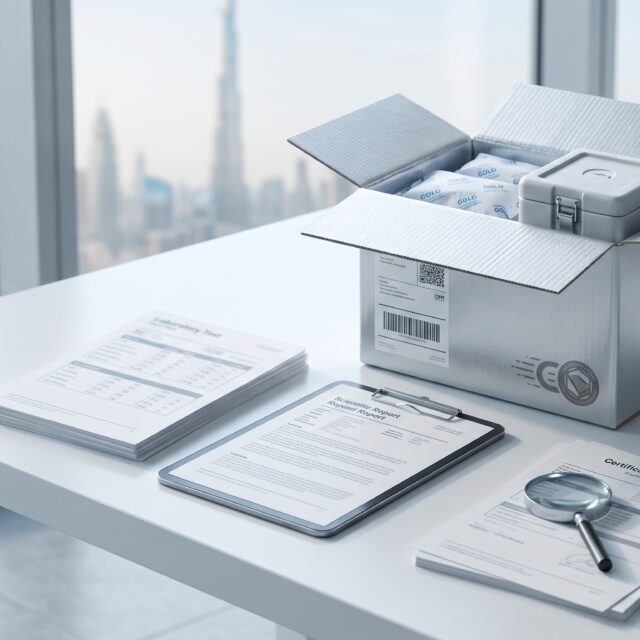
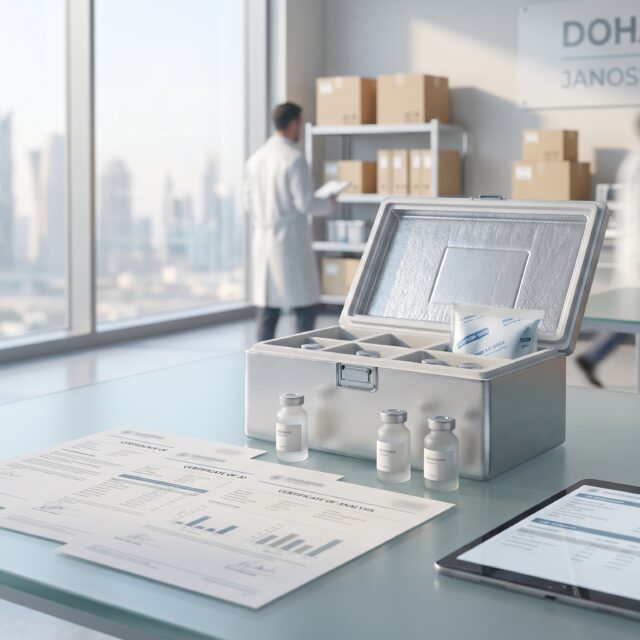
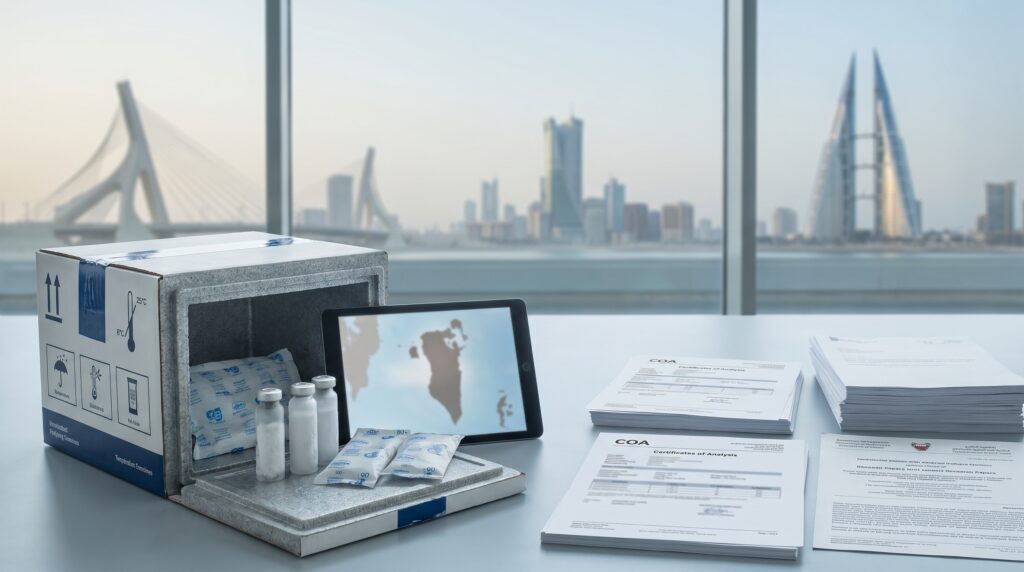
Quick Answer: For reliable cold chain peptide delivery in Bahrain, buyers must utilize regional GCC logistics networks that employ validated Phase-Change Materials (PCMs) and pharmaceutical-grade insulation. Sourcing from local hubs bypasses severe customs delays, preventing thermal degradation and ensuring compound stability during transit.
Securing sensitive research compounds in the Kingdom of Bahrain requires verified temperature-controlled logistics. The primary challenge facing researchers is protecting these delicate molecules from the extreme heat typical of the Gulf Cooperation Council (GCC) region. To prevent devastating thermal degradation, laboratories must rethink their procurement strategies, focusing on regional fulfillment hubs, advanced insulation technology, and highly controlled transit routes.
Sourcing laboratory compounds in the Middle East poses a distinct logistical challenge that researchers in Europe or North America rarely face. Because ambient temperatures in Manama frequently exceed 45°C during the peak summer months, standard courier shipping exposes delicate molecules to rapid heat degradation. A supplier might provide a pristine Certificate of Analysis (COA) confirming 99% purity upon manufacture, but if that compound sits on a hot tarmac or in an unventilated customs warehouse for three days, the delivered research material will be fundamentally compromised before the vial is even opened.
Understanding thermal protection mechanics, local customs workflows, and last-mile courier practices is absolutely essential for researchers importing laboratory materials into Bahrain. This guide details the critical factors involved in securing viable, high-purity peptides for in-vitro analysis.
The Biochemistry of Heat Exposure: Why Peptides Degrade
To understand why standard parcel shipping fails in the Gulf, buyers must first recognize the underlying biochemical vulnerability of peptide chains. Peptides naturally degrade when exposed to environmental stressors, primarily heat, UV light, and moisture. When temperatures spike inside a delivery van or a customs holding facility, three primary degradation pathways rapidly accelerate:
1. Deamidation
Deamidation is one of the most common chemical degradation pathways. It involves the removal of an amide group from specific amino acid residues (most notably asparagine and glutamine). When exposed to elevated temperatures, the rate of deamidation increases exponentially, altering the peptide’s structural conformation. This small shift can completely alter a peptide’s binding affinity in cellular assays, leading to skewed research data.
2. Oxidation
Exposure to heat, especially in the presence of trace oxygen, causes specific vulnerable amino acids (like methionine and tryptophan) to oxidize. Oxidized peptides often exhibit vastly different biological profiles compared to their pristine counterparts. In precise laboratory settings, an oxidized batch of research material is effectively useless.
3. Aggregation
Severe thermal stress forces molecules to unfold, expose hydrophobic regions, and clump together into insoluble aggregates. In extreme cases, this aggregation is visible to the naked eye as cloudiness upon reconstitution. Aggregated peptides ruin the compound’s intended profile, block sterile filters, and often trigger toxic immunogenicity in cell-culture experiments.
While lyophilized (freeze-dried) peptides are significantly more stable than reconstituted (liquid) solutions—which mandate strict 2-8°C refrigeration at all times—lyophilization does not render them immune to Bahrain’s summer heat. Even as dry, stable powders, these compounds require robust thermal shielding to survive hot transit phases.
Regional Logistics vs. International Imports
The most significant hurdle to cold chain peptide delivery in Bahrain is the time spent waiting in unregulated environments. Standard international shipping routes originating from North America, Europe, or Asia frequently face severe, unpredictable delays at GCC borders.
The Customs Bottleneck
Under local regulatory frameworks, the importation of biological and scientific materials is heavily monitored. International parcels containing laboratory compounds are routinely flagged for manual inspection. Without established, GCC-approved distribution networks and commercial documentation, packages can be held for weeks. Crucially, these customs holding areas are rarely temperature-controlled to the specifications required for sensitive biochemicals.
The Advantage of GCC Fulfillment Hubs
Procuring materials through regional GCC hubs drastically reduces these administrative and physical friction points. Professional suppliers holding inventory in the UAE can leverage compliant logistics networks that operate smoothly across Gulf borders.
While laboratories operating in Dubai rely on peptides UAE next-day delivery to maintain workflow momentum, researchers in Manama require similarly rapid cross-border transit originating from these well-stocked GCC hubs. By bypassing massive transcontinental shipping lanes and routing directly through regional ground and air freight corridors, transit times to Bahrain shrink to a highly manageable 2–5 days. This minimizes the duration the package must rely on its passive cooling mechanisms.
Advanced Packaging Protocols: Beyond Wet Ice
In GCC logistics, standard cooling methods are insufficient. The “last mile”—the final leg from the local Bahrain distribution center to the buyer’s laboratory—is historically the weakest link in the entire supply chain.
Even if a package successfully clears customs via a temperature-controlled air freight network, it is frequently transferred to a standard, non-refrigerated courier van for final local delivery. Inside these vans, temperatures can soar above 50°C during summer afternoons. If a package is out for delivery for six hours under these conditions, standard wet ice or cheap gel packs will melt entirely, turning into a warm liquid that actively transfers heat to the vials.
Validated Phase-Change Materials (PCMs)
Professional suppliers engineer their packaging to withstand these exact high-stress scenarios using Phase-Change Materials (PCMs). PCMs are advanced thermal cooling agents engineered to absorb heat and maintain a strict, specific temperature range (such as 2-8°C or 15-25°C) as they transition from a solid to a liquid.
Unlike standard gel packs, which offer unpredictable cooling curves, high-grade PCMs are laboratory-tested to maintain stable internal transit windows for up to 72 hours, even against extreme ambient temperatures.
Pharmaceutical-Grade Insulation
Coupled with PCMs, the outer packaging must feature strong insulation properties. Thin, unrated bubble mailers provide zero thermal resistance. Reliable suppliers utilize specialized EPS (Expanded Polystyrene) coolers or Vacuum Insulated Panels (VIPs) that dramatically slow the rate of thermal exchange, ensuring the interior payload remains secure regardless of the external environment.
Evaluating a Supplier: A Comprehensive Buyer Checklist
When arranging cold chain delivery for research peptides in Bahrain, researchers must evaluate both the physical logistics mechanisms and the overarching quality assurance protocols the supplier employs. Look for the following critical elements before initiating procurement:
- Independent Analytical Testing: Before logistics even matter, the compound must be pure. Ensure the supplier provides batch-specific High-Performance Liquid Chromatography (HPLC) and Mass Spectrometry (MS) test reports from independent third-party laboratories.
- Lyophilization Standards: Verify that compounds are shipped exclusively in their stable, freeze-dried state, sealed tightly in sterile vials.
- Thermal Packaging Validation: Confirm that the supplier uses pharmaceutical-grade insulated enclosures and PCMs tailored for GCC summer environments.
- Responsive Regional Support: Cross-border logistics require agile, real-time communication. Look for suppliers offering active regional support (e.g., dedicated WhatsApp channels) to handle delivery rescheduling, answer technical queries, and ensure packages are never left outside in the heat.
- Secure Payment Gateways: Reputable GCC suppliers provide transparent, institutional-grade payment options rather than relying exclusively on unregulated crypto transfers.
Tying Quality Assurance to Fulfilment at NOVA Labs
Procuring high-quality compounds requires a holistic view of the supply chain, from initial synthesis to the moment the vial reaches your laboratory bench. At NOVA Labs, we design our fulfilment operations specifically for the unique realities of the GCC climate.
By maintaining extensive regional stock and utilizing advanced thermal packaging, we mitigate the risks associated with international customs bottlenecks and extreme ambient temperatures. Every vial dispatched from our facility is backed by transparent, third-party HPLC and MS test reports, ensuring that the purity verified during manufacture is the exact purity that arrives at your facility.
To review batch-specific testing documentation, check current regional inventory, and secure reliable cold-chain fulfilment for your next project, explore our research peptides catalogue today.
*
Disclaimer: NOVA Labs products are strictly for laboratory research and development purposes only. They are not intended for human consumption, diagnostic use, therapeutic application, or any form of self-administration. All handling must be conducted by qualified professionals in a controlled laboratory setting.
References
- World Health Organization (WHO). (2015). Good trade and distribution practices for pharmaceutical starting materials. WHO Technical Report Series.
- Manning, M. C., Chou, D. K., Murphy, B. M., Payne, R. W., & Katayama, D. S. (2010). Stability of Protein Pharmaceuticals: An Update. Pharmaceutical Research, 27(4), 544–575.
- Patel, S. M., Doen, T., & Pikal, M. J. (2010). Determination of End Point of Primary Drying in Freeze-Drying Process Control. AAPS PharmSciTech, 11(1), 73–84.
- Bahrain Customs Affairs. (2023). Prohibited and Restricted Goods Guidelines. Kingdom of Bahrain Ministry of Interior.
- Wang, W. (1999). Instability, stabilization, and formulation of liquid protein pharmaceuticals. International Journal of Pharmaceutics, 185(2), 129–188.
Disclaimer: The products mentioned in this article are for research purposes only and are not intended for human consumption.
- Cold Chain Integrity for Peptide Injectables 2026 – USA MedPremium
- Peptide Cold Chain Packaging | Temperature-Controlled Shipping Solutions
- PEP UAE
- Peptides Lab GCC – High-Purity Research Peptides | GCC Supply for Laboratories
- Bahrain – Prohibited and Restricted Imports – Data Privacy Framework
- Pharma & Cold Chain Solutions – Global Logistics Services
Frequently asked questions
How long does peptide delivery to Bahrain take from regional hubs?
When shipping from established GCC regional hubs like the UAE, transit times to Bahrain typically range from 2 to 5 business days. This is significantly faster and safer than relying on standard international imports, minimizing the time compounds spend outside controlled storage.
Do lyophilized research peptides need cold chain shipping?
Yes. While lyophilized (freeze-dried) peptides are much more structurally stable than reconstituted liquid forms, they still require robust thermal protection, such as insulated packaging and phase-change materials, to prevent degradation during the extreme heat of GCC summers.
What happens if a research peptide is exposed to high heat during shipping?
Prolonged exposure to excessive ambient heat causes peptides to undergo rapid deamidation, oxidation, and aggregation. This destroys the structural integrity of the molecule and renders the batch completely ineffective for precise laboratory research.
Why do international peptide orders often get delayed by Bahrain Customs?
Bahrain strictly regulates the import of biological and scientific materials. International parcels lacking direct GCC-approved commercial documentation are frequently held for extended periods for manual inspection, often in holding facilities without strict temperature controls.
What are phase-change materials (PCMs) in cold chain packaging?
PCMs are advanced thermal cooling agents engineered to absorb heat and maintain a strict temperature range (such as 2-8°C) for up to 72 hours as they transition from solid to liquid, offering far superior and more predictable protection than standard wet ice packs.
Nova Labs buyer tools
Ready to verify stock, testing and delivery?
Use the product page and lab report section to check availability, documentation, delivery timing and support before placing an order.
- COA / test-report checks
- Bahrain delivery context
- Cold-chain handling
- COD and card payment options
- WhatsApp support