
For research laboratories and informed procurement specialists in Doha, securing specialized biochemical reagents locally can be challenging. While retail wellness pharmacies generally carry consumer health products, high-purity laboratory peptides are rarely held in domestic inventory. As a result, securing reliable, cold-chain protected reagents requires coordinating with established regional hubs.
This guide outlines everything researchers need to know about evaluating suppliers, verifying analytical documentation, navigating Qatar’s customs infrastructure, and managing cross-border logistics when sourcing CJC-1295 No DAC for in-vitro research.
Key Takeaways for Sourcing in Qatar
- Regional Procurement: Physical stock in Doha is virtually non-existent; leading research facilities source from dedicated UAE-based dispatch hubs for reliable cold-chain delivery.
- Customs Documentation: Packages require strict “Research Use Only” (RUO) labeling, batch-specific Certificates of Analysis (COA), and correct Harmonized System (HS) codes to clear Qatar’s Al Nadeeb customs system.
- Biochemical Specificity: Ensure the peptide is truly “No DAC” (Modified GRF 1-29), which possesses a 30-minute half-life ideal for pulsatile secretory modeling, unlike the DAC version which lasts for days.
- Payment Limitations: Due to cross-border courier rules, Cash on Delivery (COD) is unavailable in Qatar; secure digital payments like Tabby, Apple Pay, or credit cards are required.
Where to Buy CJC-1295 No DAC in Qatar
When looking to buy CJC-1295 No DAC in Qatar, researchers must rely on established UAE-based laboratories rather than local pharmacies. UAE hubs provide verified cold-chain shipping to Doha, batch-specific Certificates of Analysis, and accurate Research Use Only documentation required for smooth Al Nadeeb customs clearance.
When evaluating a CJC-1295 No DAC supplier, Qatar-based buyers frequently encounter a fragmented market. Local forums and active scientific networks confirm that locating high-purity, third-party tested peptides within Doha is nearly impossible. Instead of risking volatile international shipments from overseas suppliers in Asia or North America—which can take weeks and suffer catastrophic temperature degradation—savvy buyers rely on UAE-based laboratories.
These regional distributors serve as the primary lifeline for the GCC, balancing close geographic proximity with robust testing protocols. By leveraging UAE hubs, researchers ensure that the transit window is reduced from weeks to mere days, drastically minimizing the time sensitive lyophilized compounds spend outside optimal storage conditions. However, bridging the gap between a UAE dispatch facility and a laboratory bench in Qatar requires more than just standard courier services; it demands strict adherence to documentation and specialized packaging to prevent border delays.
Pulsatile vs. Continuous Release: The Biochemical Profile of “No DAC”
Before navigating the logistics of procurement, researchers must ensure the precise sequence being sourced matches their assay parameters. CJC-1295 No DAC, frequently referred to in scientific literature as Modified GRF 1-29 (Growth Hormone-Releasing Factor 1-29), is a synthetic, truncated analogue of endogenous growth hormone-releasing hormone (GHRH).
The defining characteristic of this specific sequence is the intentional omission of the Drug Affinity Complex (DAC). When the DAC modification (a maleimidopropionic acid linker) is present, the peptide binds covalently to circulating serum albumin. This conjugation artificially extends the peptide’s half-life to approximately 6 to 8 days in biological models. While a prolonged half-life may be useful for specific continuous-exposure studies, it creates a constant, non-physiological elevated state in cellular assays that can lead to receptor down-regulation or “bleed” in in-vitro feedback loop studies.
Conversely, CJC-1295 No DAC features an extremely brief half-life of roughly 30 minutes. In endocrine research, this rapid clearance is highly prized because it accurately mimics natural, pulsatile secretory pathways. For laboratories investigating episodic receptor activation, or natural secretory rhythms, verifying that a supplier is delivering true Modified GRF 1-29—without accidental DAC contamination or mislabeling—is a foundational requirement for data integrity.
Navigating Qatar Customs and the Al Nadeeb System
One of the primary hurdles for any peptide shipment entering Qatar is successfully clearing customs at Hamad International Airport or Abu Samra. Qatar Customs utilizes a highly efficient, digitized clearance platform known as Al Nadeeb. While this system streamlines regional trade, it enforces strict regulatory oversight on imported chemicals and biological reagents.
CJC-1295 No DAC is entirely legal to import into Qatar, provided it is strictly designated for in-vitro laboratory and research purposes. If a shipment lacks the proper paperwork, or worse, if a supplier uses inappropriate commercial packaging suggesting therapeutic, medical, or human consumption, the package will inevitably be flagged, delayed, or seized by local authorities.
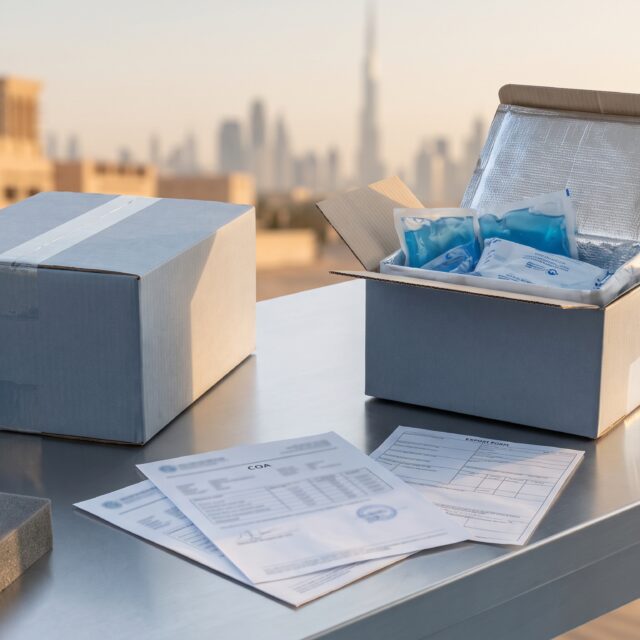
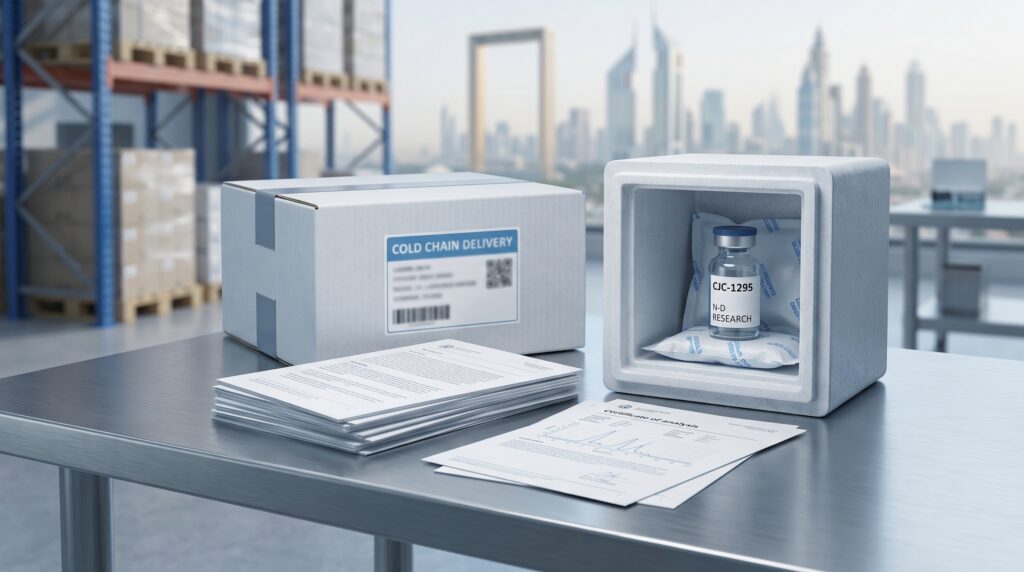
To prevent transit holds, informed buyers ensure their supplier proactively includes specific documentation electronically attached to the commercial invoice. The most critical document is a batch-specific Certificate of Analysis (COA). The COA serves a dual purpose: it proves to researchers that the compound meets strict purity standards, and it demonstrates to customs officials that the material is a highly controlled, well-documented research chemical rather than a restricted pharmaceutical. When correct “Research Use Only” (RUO) documentation is provided alongside clear Harmonized System (HS) codes for organic research chemicals, standard customs inquiries via Al Nadeeb are typically resolved within 24 to 48 hours.
Defeating GCC Heat: Cold-Chain Logistics for Doha
In the GCC, ambient environmental temperature is the absolute enemy of lyophilized (freeze-dried) peptides. Extreme summer heat can rapidly degrade delicate amino acid sequences, breaking peptide bonds and rendering expensive research materials inert before they ever reach the laboratory. Therefore, regional logistics support is arguably as important as the purity of the compound itself.
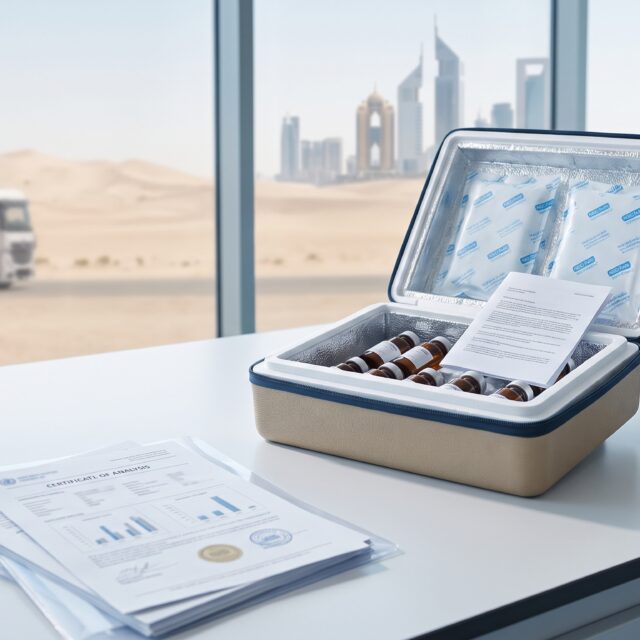
When sourcing from the UAE to Qatar, transit times generally range between 3 to 5 business days. While significantly faster than intercontinental shipping, this window still requires robust thermal protection. Reputable regional suppliers do not rely on standard cardboard envelopes. Instead, they package compounds in validated expanded polystyrene (EPS) thermal mailers, packed with adequate phase-change materials or industrial ice packs designed to maintain a stable microclimate during transit.
While UAE local peptide deliveries benefit from rapid overnight networks allowing for less intense thermal packaging, cross-border transit into Qatar makes cold-chain validation a non-negotiable factor in supplier selection.
Once the lyophilized vial safely arrives in Doha, the responsibility for temperature control immediately shifts to the receiving laboratory. Unreconstituted CJC-1295 No DAC should immediately be transferred to a laboratory freezer at -20°C for long-term stability, protecting the integrity of the compound for months or even years prior to reconstitution.
The Buyer’s Checklist: Verifying Purity and Supplier Authenticity
Transparency separates premium biochemical suppliers from opaque drop-shippers. Before committing to a purchase, research procurement staff should run through a strict verification checklist to ensure both compound viability and logistical reliability.
1. Independent Third-Party Purity Testing (HPLC/MS)
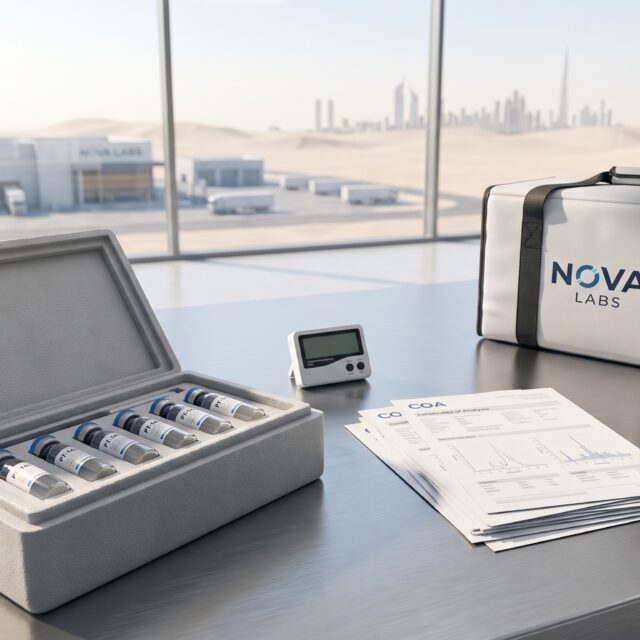
Never rely solely on a supplier’s internal claims of purity. High-intent buyers must demand recent, verifiable Certificates of Analysis generated by recognized independent analytical laboratories (such as Janoshik or MZ Biolabs). These reports must include High-Performance Liquid Chromatography (HPLC) graphs proving purity exceeds 99%, alongside Mass Spectrometry (MS) data confirming the correct molecular weight of Modified GRF 1-29. Ensure the lot number on the COA directly matches the batch number printed on the physical vial you receive.
2. Strict Research-Compliant Labeling
Check how the supplier markets and labels their inventory. Authentic suppliers strictly adhere to RUO guidelines. Avoid any vendor providing dosage protocols, human-use instructions, or medical claims. Such non-compliant operations routinely trigger customs seizures in Qatar and often cut corners on biochemical synthesis.
3. Accessible Regional Payment Methods
Reliable suppliers targeting the Qatari market support modern, secure digital payment gateways including local debit and credit cards (Visa/Mastercard), Apple Pay, and split-payment BNPL platforms like Tabby. It is critical to note that while Cash on Delivery (COD) is highly popular within the UAE domestic market, cross-border courier restrictions dictate that COD is strictly unavailable for all shipments into Qatar.
4. Responsive Support and Documentation Access
Should a customs inquiry occur at Hamad International Airport, having direct access to your supplier is vital. Operations that offer rapid WhatsApp or email support and can quickly supply digital copies of commercial invoices, COAs, and safety data sheets are essential for Qatari buyers who need to clear Al Nadeeb without frustrating administrative delays.
Conclusion: Securing Authentic Reagents in Qatar
Acquiring high-purity research compounds in the GCC requires balancing biochemical authenticity with regional logistical realities. For laboratories that require precise mimicry of pulsatile endocrine pathways, ensuring the exact synthesis of Modified GRF 1-29 without DAC modifications is paramount. By prioritizing UAE-based suppliers who provide verifiable third-party testing, utilize robust cold-chain thermal packaging, and correctly format RUO customs documentation, Qatari researchers can confidently secure their required reagents and keep their assays on schedule.
To view current batch documentation, transparent third-party purity percentages, and initiate a secure cold-chain order to Doha, explore the CJC-1295 No DAC inventory available through NOVA Labs.
*
Disclaimer: The products and compounds mentioned in this article are strictly for in-vitro research and laboratory use only. They are not intended for human consumption, diagnostic, treatment, or therapeutic purposes. Handling should be restricted to qualified laboratory personnel following standard safety protocols.
References
- Jaffe, C. A., et al. (1993). Pulsatile vs continuous growth hormone (GH) delivery: Effects on GH binding protein and insulin-like growth factor-I. The Journal of Clinical Investigation, 92(2), 695-701.
- Teichman, S. L., et al. (2006). Prolonged stimulation of growth hormone (GH) and insulin-like growth factor I secretion by CJC-1295, a long-acting analog of GH-releasing hormone, in healthy adults. The Journal of Clinical Endocrinology & Metabolism, 91(3), 799-805.
- Qatar General Authority of Customs. (2023). Al Nadeeb Electronic Clearance System Guidelines for Restricted Chemicals and Laboratory Reagents.
- Martin, C., et al. (2006). Modified Growth Hormone-Releasing Factor (GRF) Analogues in Endocrine Research. Journal of Endocrinological Investigation.
Disclaimer: The products mentioned in this article are for research purposes only and are not intended for human consumption.
- CJC-1295 No DAC Qatar: Buying, Purity, COA and Delivery Guide – NOVA Labs
- Best Peptide Shop Qatar: Supplier & Buyer’s Guide (2024) – NOVA Labs
- Peptide Delivery to Qatar: A Clinical Summary of the Doha Logistics – NuroCore Labs
- Peptides in Qatar – Doha – Reddit
- CJC-1295 DAC vs No-DAC Explained | GH Release, Half-Life, Muscle Building, Fat Loss, Sleep Quality & Recovery Optimization : r/USPeptides – Reddit
- NOVA Labs UAE Review (2026): COAs, Prices & Delivery – PeptideStat
Frequently asked questions
Is CJC-1295 No DAC legal to import into Qatar?
Yes, CJC-1295 No DAC is legally permitted for import into Qatar strictly for in-vitro laboratory and research purposes, provided all customs paperwork designates it as a Research Use Only (RUO) chemical and is accompanied by a valid Certificate of Analysis.
What is the difference between CJC-1295 with and without DAC?
CJC-1295 No DAC (Modified GRF 1-29) features a brief half-life of approximately 30 minutes, mimicking natural pulsatile release in assays. The DAC version binds to serum albumin, artificially extending the half-life to several days for continuous activation studies.
How long does peptide delivery to Qatar typically take?
When shipping from UAE dispatch hubs to Doha, cold-chain delivery typically requires 3 to 5 business days, utilizing validated thermal mailers to protect the lyophilized peptides from extreme GCC heat during transit.
Can I pay with Cash on Delivery (COD) in Qatar?
No, Cash on Delivery (COD) is generally restricted to domestic UAE addresses due to cross-border courier policies. Buyers in Qatar must utilize secure digital options such as credit/debit cards, Apple Pay, or BNPL platforms like Tabby.
What documents are required for Al Nadeeb customs clearance?
Smooth clearance through Qatar's Al Nadeeb system requires a clear commercial invoice, appropriate Harmonized System (HS) codes, and a batch-specific Certificate of Analysis (COA) proving the compound is strictly for laboratory research use.
Nova Labs buyer tools
Ready to verify stock, testing and delivery?
Use the product page and lab report section to check availability, documentation, delivery timing and support before placing an order.
- COA / test-report checks
- Qatar delivery context
- Cold-chain handling
- COD and card payment options
- WhatsApp support