
Sourcing highly sensitive research compounds in the Middle East requires rigorous attention to logistics, documentation, and supplier transparency. For laboratory professionals, university departments, and private analytical facilities looking to buy Thymosin Alpha-1 in Oman, the purchasing decision extends far beyond the initial price tag. The extreme regional temperatures, specific customs requirements, and the fragile nature of peptide structures mean that choosing the right supplier is critical to ensuring your research materials arrive viable and intact.
In this comprehensive guide, we break down exactly how to evaluate a Thymosin Alpha-1 supplier servicing the Omani market. From verifying third-party Certificates of Analysis (COAs) to understanding the cold-chain shipping protocols necessary for safe transit to Muscat, Sohar, or Salalah, this resource equips procurement teams with the technical knowledge needed to order securely and confidently.
Quick Answer: Essential Checks for Sourcing Peptides in Oman
If you need to buy Thymosin Alpha-1 in Oman, your procurement checklist must prioritize three main factors:
- Analytical Purity: The supplier must provide batch-specific, third-party HPLC and Mass Spectrometry (MS) documentation proving 99%+ purity.
- Thermal Logistics: The vendor must utilize insulated packaging and cooling agents to protect the compound from the GCC climate.
- Regional Proximity: Sourcing from a supplier integrated into Middle Eastern logistics networks dramatically reduces transit exposure compared to overseas vendors.
Skipping any of these operational checks significantly increases the risk of receiving degraded, inactive, or structurally compromised compounds that will ultimately skew your experimental data.
Understanding the Structural Fragility of Thymosin Alpha-1
Thymosin Alpha-1 is a highly sought-after peptide in scientific literature. Originally isolated from thymus gland tissue, this 28-amino acid sequence is extensively utilized in in-vitro models to study immune system modulation, cellular signaling cascades, and protein binding affinities.
However, like many complex macromolecular structures, its molecular integrity is delicate. The acetylated N-terminus and specific peptide bonds are highly susceptible to environmental stressors. When subjected to prolonged heat, UV exposure, or severe agitation, the compound undergoes rapid degradation, oxidation, and hydrolysis. A degraded peptide will fail to interact correctly in cellular assays, rendering the compound useless for precise analytical research.
Researchers based in Oman face a unique set of logistical challenges. Summer temperatures in the GCC frequently exceed 40°C. Standard parcel post from international vendors in the United States or Europe often results in the peptide sitting in un-air-conditioned transit hubs or airport tarmacs for days. By the time it clears customs, the compound is often irreparably compromised. This reality dictates that procurement strategies must account for environmental risks from the moment the vial leaves the laboratory until it reaches your freezer.
The Vendor Verification Checklist: Decoding the COA
Before you finalize any order for Thymosin Alpha-1, the most critical step is verifying the chemical purity of the compound. Reputable suppliers do not expect researchers to take their marketing claims at face value; they provide empirical evidence through a Certificate of Analysis (COA).
When reviewing a vendor’s documentation, laboratory technicians should look for the following stringent criteria:
High-Performance Liquid Chromatography (HPLC)
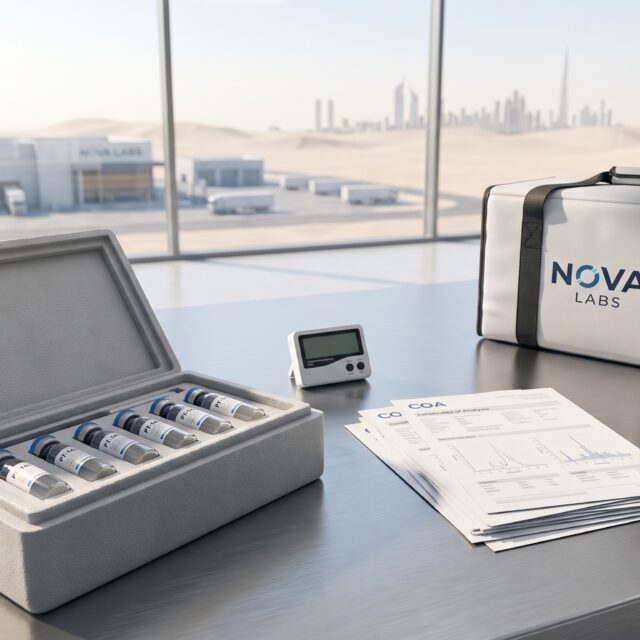
This analytical technique separates the components in a mixture. The resulting chromatogram for Thymosin Alpha-1 should display a single, highly pronounced, sharp peak indicating that the target compound makes up at least 99% of the vial’s contents. Multiple smaller peaks, a broad primary peak, or “shoulders” on the curve indicate the presence of impurities, truncated sequences, or synthesis byproducts.
Mass Spectrometry (MS)
While HPLC demonstrates relative purity, Mass Spectrometry (MS) confirms the exact molecular identity of the compound. By measuring the mass-to-charge ratio (m/z) of the ions, MS proves that the molecular weight aligns with the theoretical weight of Thymosin Alpha-1 (approximately 3108 g/mol). This ensures you are receiving the correct 28-amino acid sequence and not a mislabeled or cheaper alternative.
Endotoxin Assays
For highly sensitive cellular or tissue culture assays, the presence of endotoxins—lipopolysaccharides left over from bacterial synthesis processes—can trigger unwanted cellular responses, completely invalidating research data. Premium suppliers will conduct and report Limulus Amebocyte Lysate (LAL) testing to quantify endotoxin levels in EU/mg.
Batch Traceability
Ensure that the COA provided directly corresponds to the specific batch or lot number of the vial you are purchasing. A common red flag among unverified vendors is the use of a generic, years-old COA to represent current stock. Transparency is a non-negotiable factor in chemical procurement.
Overcoming Regional Logistics: Cold-Chain Transit to Oman
Once chemical purity is established, the next major hurdle is physical delivery. Oman’s climate makes active or passive temperature-controlled delivery mandatory for any serious peptide supplier.
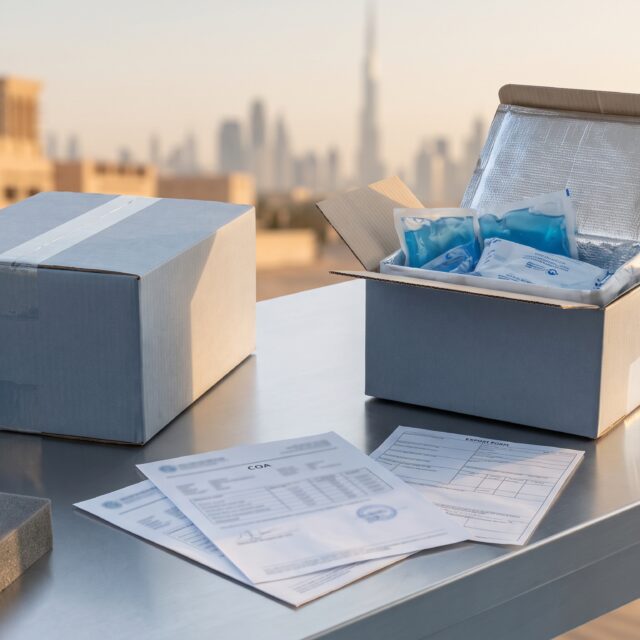
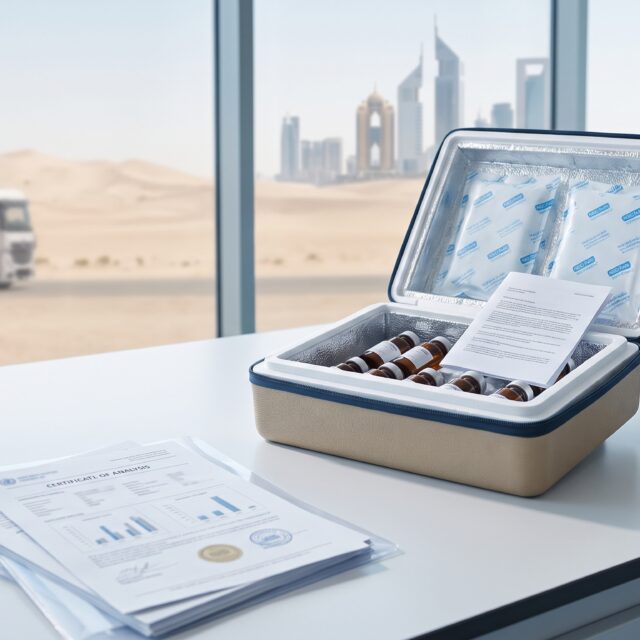
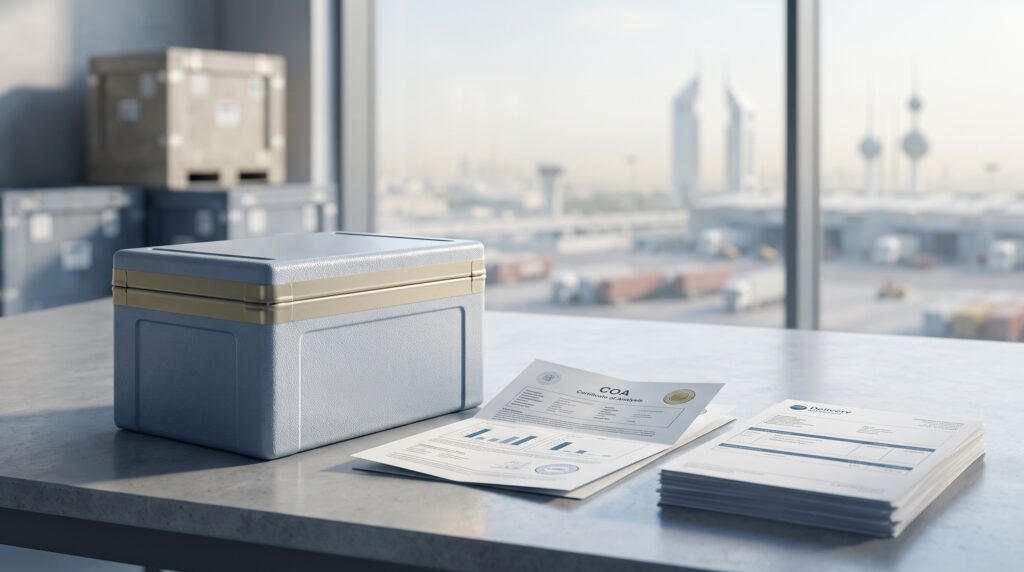
When inquiring with a vendor about shipping to Oman, ask specifically about their thermal logistics capabilities. Top-tier regional suppliers utilize Expanded Polystyrene (EPS) insulated packaging paired with specialized cooling gel packs or dry ice. This “passive cold-chain” setup is engineered to keep the lyophilized peptide stable within the critical transit window, shielding it from external heat spikes on the tarmac.
Because international shipments from the West can face prolonged delays at regional customs borders, sourcing locally or from a neighboring GCC hub provides a massive operational advantage. Researchers leveraging regional hubs can utilize fast UAE and GCC delivery options to drastically minimize transit exposure. Shortening the delivery timeline from weeks to mere days is the most effective way to protect the structural integrity of your research materials.
Handling and Storage Protocols for Laboratory Stability
Receiving a pure, well-shipped product is only the first phase of the process; strictly controlled laboratory handling is required to maintain the stability of Thymosin Alpha-1 upon arrival.
Storing Lyophilized Vials
When your order arrives, the peptide will typically be in a lyophilized (freeze-dried) powder format. This solid-state “puck” is relatively stable but still requires immediate environmental control. For long-term storage spanning several months to years, lyophilized Thymosin Alpha-1 should be stored at -20°C in a dedicated laboratory freezer, kept strictly away from direct light, moisture, and frost-free freezer cycles.
Reconstitution and Liquid Storage
To utilize the peptide in active research, it must be reconstituted into a liquid solution. Researchers typically use sterile bacteriostatic water or sterile saline, depending on the specific requirements of their protocol. Once a solvent is introduced to the vial, the peptide’s fragility increases exponentially.
Reconstituted Thymosin Alpha-1 must be stored at 2-8°C (standard laboratory refrigeration) and should ideally be utilized within a few weeks to prevent hydrolytic degradation. Furthermore, researchers must avoid repeated freeze-thaw cycles, which will rapidly shear and destroy the delicate peptide bonds. If the full vial is not needed immediately, aliquoting the reconstituted solution into smaller, single-use microcentrifuge tubes prior to freezing is standard best practice.
Evaluating a Supplier: Procurement and Operations
When deciding where to allocate laboratory budgets, the operational reliability of the vendor is just as critical as product quality. The Middle East has specific banking, currency, and communication nuances that informed buyers must navigate effectively.
- Payment Flexibility and Security: Due to occasional banking friction regarding international research supply transactions, a top-tier supplier should offer secure, modern payment infrastructure. Look for vendors that accept major credit cards with 3D Secure processing, direct bank wire transfers, and widely used cryptocurrencies (such as USDT) to ensure seamless, unrestricted transaction processing.
- Direct Customer Support: Automated email ticketing systems are highly frustrating when a temperature-sensitive package is delayed at customs. Look for suppliers that offer direct, human-led communication channels, such as dedicated WhatsApp support lines, to handle real-time logistical queries and supply chain updates.
- Consistent Stock Availability: Procurement delays can halt ongoing longitudinal research. Reliable suppliers maintain consistent, verified stock levels of critical compounds rather than relying on drop-shipping models.
Next Steps for Peptide Procurement in Oman
Procuring high-quality research compounds in the Middle East does not have to be an exercise in guesswork or risk management. By prioritizing suppliers that offer transparent HPLC and MS testing, robust cold-chain shipping logistics, and responsive regional support, Oman-based researchers can secure the precise materials necessary for reproducible scientific inquiry.
Take the time to scrutinize the vendor’s documentation, insist on climate-appropriate packaging, and verify their capability to navigate GCC transit efficiently.
If you are ready to source fully verified, analytical-grade research compounds, explore our inventory of third-party tested Thymosin Alpha-1 at NOVA Labs. Our operation is optimized for the region, ensuring your laboratory materials arrive securely, efficiently, and ready for your next critical assay.
*
Disclaimer: The products mentioned in this article are intended strictly for laboratory, in-vitro, and analytical research applications. They are strictly not for human consumption, medical treatment, or diagnostic purposes. Handling should be restricted to qualified research professionals operating within equipped laboratory environments.
References
- World Health Organization (WHO). (2015). Model guidance for the storage and transport of time- and temperature-sensitive pharmaceutical products.
- D’Hondt, M., et al. (2014). Related impurities in peptide medicines. Journal of Pharmaceutical and Biomedical Analysis, 101, 2-30.
- Frokjaer, S., & Otzen, D. E. (2005). Protein drug stability: a formulation challenge. Nature Reviews Drug Discovery, 4(4), 298-306.
- GCC Standardization Organization (GSO). Guidelines on the Cold Chain for Transporting Temperature-Sensitive Compounds.
Disclaimer: The products mentioned in this article are for research purposes only and are not intended for human consumption.
- Buy Thymosin Alpha-1 UAE from PharmaLabGlobal
- Buy Thymosin Alpha-1 Dubai 99% Pure – Direct Peptides
- Thymosin Alpha 1 (10mg) for Sale | 99% Purity & COA Included – BioLongevity Labs
- Buy Thymosin Alpha 1 | Third Party Tested | BioEdge Peptides
- Healthcare & Pharmaceutical Logistics Oman – Clarion Shipping Services
- Peptides Treatment in Muscat | Anti-Ageing Peptide Therapy – Enfield Royal Clinics Oman
Frequently asked questions
Can laboratory researchers order Thymosin Alpha-1 to Oman?
Yes, qualified laboratory professionals and research institutions can order Thymosin Alpha-1 for analytical use in Oman. However, buyers must ensure the supplier utilizes cold-chain logistics to protect the peptide's structural integrity during transit through the extreme GCC climate.
What documentation verifies the quality of Thymosin Alpha-1?
A reputable supplier will provide a batch-specific Certificate of Analysis (COA). This document must include High-Performance Liquid Chromatography (HPLC) results showing 99%+ purity and Mass Spectrometry (MS) data confirming the correct molecular weight of the peptide.
How should Thymosin Alpha-1 be shipped to prevent degradation?
To prevent heat-induced degradation, peptides must be shipped via cold-chain logistics. This involves packaging the lyophilized vials in Expanded Polystyrene (EPS) insulated containers alongside specialized cooling gel packs or dry ice to maintain a stable transit temperature.
What is the proper laboratory storage method for Thymosin Alpha-1?
Upon arrival, unmixed (lyophilized) vials should be stored immediately in a laboratory freezer at -20°C. Once reconstituted with a sterile solvent for research, the liquid peptide must be kept refrigerated at 2-8°C and used within a few weeks to avoid degradation.
What are the best payment methods for peptide procurement in the GCC?
Top suppliers operating within the GCC offer diverse and secure payment gateways. To ensure seamless transactions and avoid delays, researchers typically utilize major credit cards, direct bank wire transfers, or stable cryptocurrencies like USDT.
Nova Labs buyer tools
Ready to verify stock, testing and delivery?
Use the product page and lab report section to check availability, documentation, delivery timing and support before placing an order.
- COA / test-report checks
- Oman delivery context
- Cold-chain handling
- COD and card payment options
- WhatsApp support