
The Essentials: How to Buy Thymosin Alpha-1 GCC
Buyer Checklist & Quick Answer:
To safely buy Thymosin Alpha-1 in the GCC, researchers must source from suppliers offering verified local inventory to bypass customs delays. Ensure the vendor provides batch-specific COAs—including HPLC showing ≥99% purity and LC-MS confirming a molecular weight of ~3108.3 g/mol—and utilizes active cold-chain packaging for domestic delivery to prevent thermal degradation.
The Gulf Cooperation Council (GCC) region, particularly the UAE, is rapidly expanding its footprint in biotechnology, clinical research, and advanced institutional laboratory studies. As regional research initiatives scale up, the demand for highly purified, specialized reagents has surged. Among these compounds is Thymosin Alpha-1 (Tα1), a 28-amino acid peptide naturally occurring in the thymus gland that plays a pivotal role in modulating the immune system during in-vitro studies.
However, procuring specialized research compounds in the Middle East presents unique logistical and environmental challenges. For laboratory professionals, principal investigators, and institutional procurement staff, navigating the regional climate, complex regulatory landscape, and varying standards of supplier transparency requires a highly disciplined purchasing approach. To successfully secure Thymosin Alpha-1 in the GCC, researchers must prioritize local domestic stock, verifiable third-party analytical testing, and rigorous active cold-chain logistics.
The GCC Heat Factor: Why Cold-Chain Logistics Matter
One of the most significant variables when you order research peptides in the GCC is the ambient temperature during transit. In the UAE, Saudi Arabia, and the broader Gulf region, summer temperatures frequently peak above 45°C (113°F), and even winter months can present warm transit conditions. For delicate biological materials and synthesized peptides, this extreme heat is an immediate threat to structural integrity.
Lyophilized Stability vs. Heat Degradation
Thymosin Alpha-1 is typically supplied in a lyophilized (freeze-dried) state for laboratory use. Lyophilization removes water from the peptide under vacuum, significantly improving its stability compared to liquid aqueous counterparts. In this dormant state, the peptide is far more resilient.
However, “resilient” does not mean “invulnerable.” Extreme thermal stress—such as sitting in the back of an uninsulated delivery van in Dubai or on a tarmac at an airport customs facility—can induce rapid structural damage. Prolonged exposure to high heat causes peptide bond cleavage, deamidation, oxidation, and aggregation. A research compound leaving a manufacturing facility at 99% purity can degrade significantly before it ever reaches the laboratory bench if transit conditions are neglected.
Active Thermal Packaging Requirements
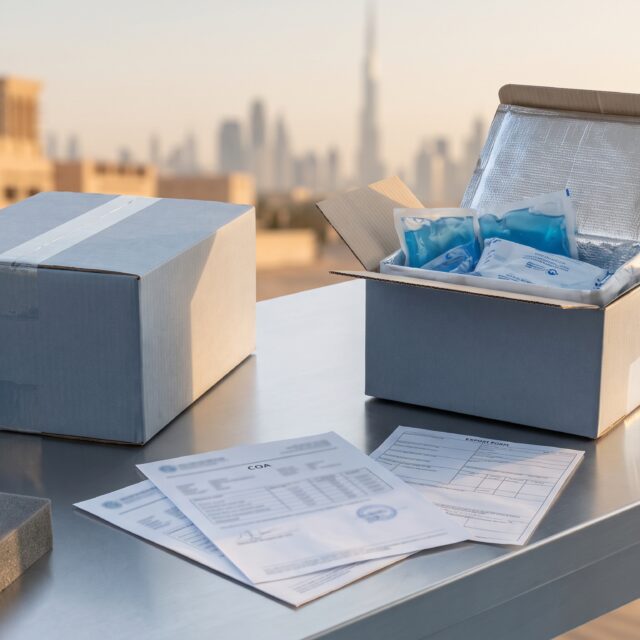
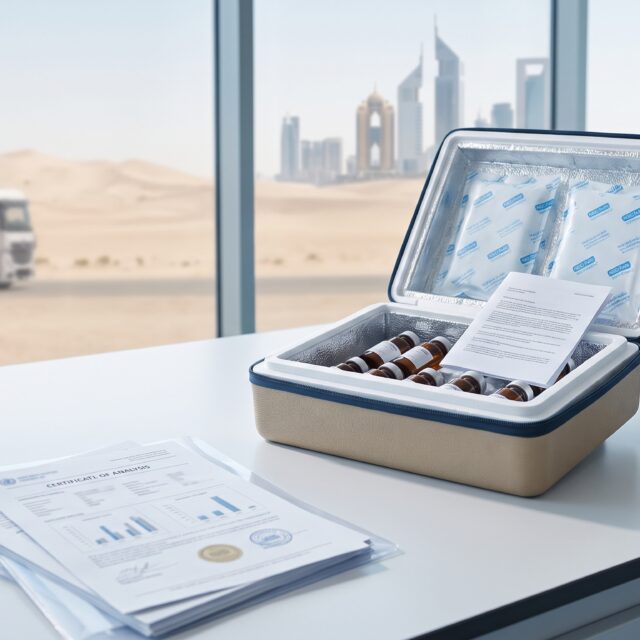
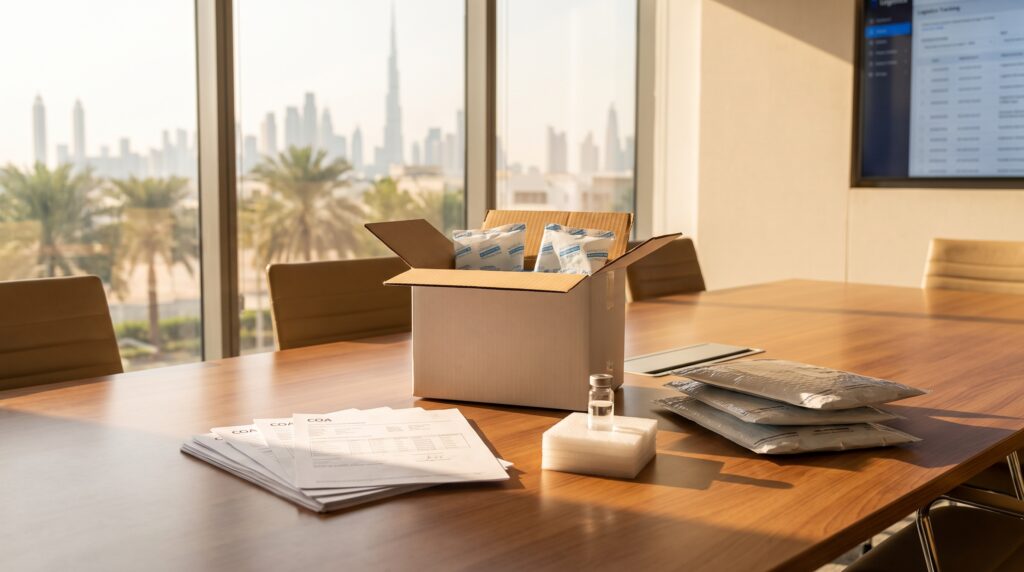
When evaluating a supplier, buyers must insist on active thermal packaging. Standard parcel delivery with simple bubble wrap is entirely insufficient for the Gulf climate. Reputable regional suppliers utilize specialized insulated shielding, expanded polystyrene (EPS) coolers, and phase-change materials (PCMs) or dry ice to maintain specific internal temperature thresholds during transit.
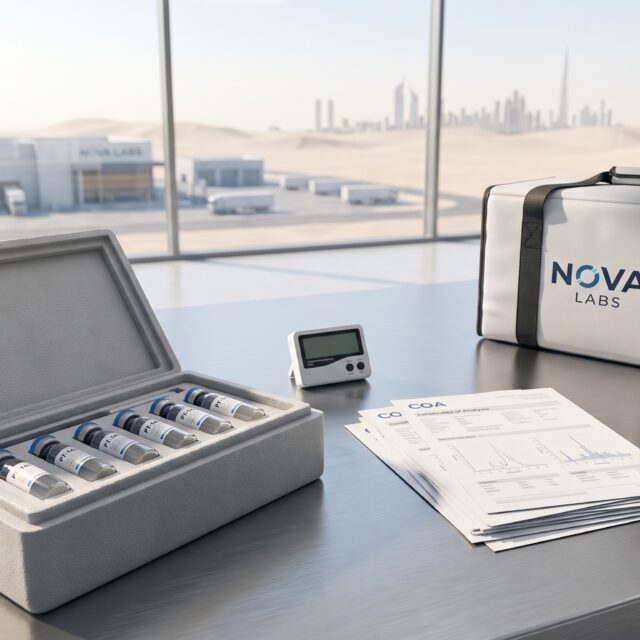
At NOVA Labs, structural integrity is paramount. Researchers can rely on our advanced logistics networks and robust thermal packaging protocols. By utilizing peptides UAE next-day delivery, researchers ensure that vials spend the absolute minimum amount of time in transit, arriving ready for immediate temperature-controlled laboratory storage without compromising molecular stability.
Navigating Customs and Local Stock Availability
Importing research materials into the Middle East from overseas vendors involves unpredictable and often opaque customs clearances. Unregulated international shipments of research peptides and chemicals are frequently subjected to severe regulatory inspections.
When international shipments are flagged, they can be held for days or even weeks. Unfortunately, these customs holding facilities are rarely temperature-controlled to the specifications required for biological reagents. This routinely results in extended delays, severe thermal degradation, or complete seizure and destruction of the shipment by regulatory authorities.
The Advantage of Domestic Dispatch
Informed buyers bypass these logistical bottlenecks entirely by prioritizing suppliers who hold inventory locally within the UAE or GCC. Domestic dispatch allows for rapid, predictable courier timelines and completely eliminates the risk of international customs delays.
When evaluating a prospective vendor, procurement officers should confirm the following:
- Do they ship directly from a warehouse within the UAE/GCC?
- Is the inventory held locally, or is the company quietly drop-shipping from overseas manufacturers?
- Can they guarantee trackable, domestic next-day delivery windows?
Securing a vendor with true local infrastructure ensures that your research schedule is not compromised by supply chain volatility.
How to Evaluate a Thymosin Alpha-1 Supplier in the GCC
Beyond logistics, verifiable purity is the absolute cornerstone of any reliable research chemical. Using impure or degraded peptides in cellular or animal models will inevitably skew data, waste expensive laboratory resources, and invalidate study results. Before committing to a purchase, you must rigorously validate the product’s analytical documentation.
Decoding the Certificate of Analysis (COA)
When you buy Thymosin Alpha-1 for your laboratory, you must require two specific, non-negotiable forms of third-party analytical testing:
- High-Performance Liquid Chromatography (HPLC): This analytical technique is used to separate, identify, and quantify each component in a mixture. It dictates the purity of the peptide. For high-level, reproducible research, the HPLC report should indicate a purity level of 99% or greater. The resulting graph (chromatogram) should display a sharp, distinct primary peak with absolute minimal secondary noise or broad shoulders, which would indicate contamination or degradation byproducts.
- Liquid Chromatography-Mass Spectrometry (LC-MS): While HPLC shows purity, LC-MS verifies identity. Authentic Thymosin Alpha-1 has a very specific molecular structure and must match a molecular weight of approximately 3108.3 g/mol. Mass spectrometry confirms this exact weight, effectively verifying the exact sequence of amino acids is correct and that the compound is indeed Thymosin Alpha-1, rather than a mislabeled alternative.
Batch Transparency and Audit Trails
A trustworthy vendor provides batch-specific testing, ensuring the documentation provided matches the exact production run you are purchasing. Unscrupulous vendors often post a single, perfect COA from years ago and use it to sell subsequent, untested batches. Always verify the dates on analytical reports to ensure they apply to current local stock, and do not hesitate to contact the third-party testing facility to verify the COA’s authenticity if necessary.
Proper Storage Protocols for the Laboratory
Once a verified, thermally protected shipment is received, maintaining the compound’s integrity shifts to the researcher. According to standard laboratory protocols, lyophilized Thymosin Alpha-1 must be handled strictly to prevent rapid degradation:
- Short-Term Storage (Up to 30 days): Keep unconstituted vials refrigerated at 2–8°C. Ensure they are tightly sealed, stored upright, and protected from UV light exposure.
- Long-Term Storage (Months to Years): For extended preservation, lyophilized vials should be stored at -20°C (or ideally -80°C in ultra-low temperature freezers for multi-year storage).
Handling and Reconstitution
Researchers must aggressively avoid repeated freeze-thaw cycles, which introduce condensation and moisture into the vial, accelerating degradation. If a researcher plans to use a vial over multiple experiments, it is best to reconstitute the peptide using a sterile diluent (such as bacteriostatic water) and then immediately aliquot the solution into separate, sterile microcentrifuge tubes before freezing.
Upon reconstitution, the peptide’s fragility increases exponentially. The hydrogen bonds maintaining its structure become highly susceptible to physical and thermal stress. Reconstituted Thymosin Alpha-1 must remain refrigerated at all times and should never be shaken vigorously; gentle swirling is required to dissolve the lyophilized powder safely.
Payment Flexibility and Client Support
Researchers and procurement officers operating in the GCC require seamless payment options and accessible, professional support. Many international, overseas chemical sites struggle to process GCC-based corporate cards, triggering fraud alerts or requiring cumbersome international wire transfers that delay shipping.
Look for suppliers offering secure, encrypted payment gateways alongside localized options like Cash on Delivery (COD) within the UAE. The availability of COD is not just a convenience—it serves as a strong trust signal, confirming that the supplier possesses legitimate, established local delivery infrastructure and inventory.
Furthermore, direct communication through familiar regional channels—such as WhatsApp for Business or dedicated local procurement email addresses—is essential. The ability to instantly message a supplier to request a batch-specific COA, coordinate specific laboratory delivery timings, or ask technical questions demonstrates a supplier’s operational excellence and commitment to client success.
Securing Your Research Supply
Procuring high-quality research materials in the Middle East requires a disciplined, highly diligent approach. The extreme climate and strict regulatory environment leave zero margin for error. By demanding up-to-date HPLC and LC-MS documentation, insisting on active cold-chain logistics, and prioritizing local GCC stock, buyers mitigate experimental risk and ensure complete material integrity from the warehouse to the lab bench.
Are you ready to secure premium, highly viable materials for your next study? Explore NOVA Labs’ comprehensive catalog to find batch-tested, verifiable research compounds, all backed by robust local logistics and dedicated support designed specifically for the Gulf market.
Disclaimer: All products, information, and materials mentioned in this article are strictly for in-vitro research and laboratory purposes only. They are not intended for human consumption, animal consumption, diagnostic, or therapeutic use. Handle all research chemicals strictly according to standard laboratory safety protocols.
References
- International Peptide Laws. “Overview of regulatory frameworks regarding research chemicals and laboratory compliance.” PeptideLaws.
- Al Barrak Group. “Cold Chain Logistics for GCC’s Food and Pharma Supply Chains.” Insights on thermal packaging requirements in the Middle East.
- Meto Health. “Thymosin Alpha-1 Immune Peptide: Evidence & Legal Status.” Data on molecular structure, synthesis, and stability profiles.
- BIOCARD. “Insights & News | Temperature-Controlled Logistics.” Best practices for avoiding thermal degradation in biological and peptide shipments.
- DarDoc Journal. “Why peptide therapy belongs with a doctor, not a gym.” General context on peptide handling and regulatory environments.
Disclaimer: The products mentioned in this article are for research purposes only and are not intended for human consumption.
- Why peptide therapy belongs with a doctor, not a gym | DarDoc Journal
- International Peptide Laws – PeptideLaws.com
- Traveling with peptides: can you fly? TSA, cold chain, and customs rules
- Insights & News | Temperature-Controlled Logistics – BIOCARD
- About – https://peptidetechuae.com
- Thymosin Alpha-1 Immune Peptide: Evidence & Legal Status – Meto Health
- Cold Chain Logistics for GCC’s Food and Pharma Supply Chains – Al Barrak Group
- Thymosin Alpha-1 Research Supplier — UAE | Aarise Healthcare – aarisehealthcare.com
Frequently asked questions
How should Thymosin Alpha-1 be stored in the GCC?
For short-term storage, lyophilized Thymosin Alpha-1 should be kept refrigerated at 2–8°C. For long-term preservation, it must be stored in a laboratory freezer at -20°C to protect its structural integrity from ambient heat.
What is the correct molecular weight for authentic Thymosin Alpha-1?
Authentic, high-quality Thymosin Alpha-1 must match a molecular weight of approximately 3108.3 g/mol, which should be verified via a third-party mass spectrometry (LC-MS) report.
Why is local stock important when ordering peptides in the UAE?
Local stock bypasses unpredictable international customs clearances, preventing extended delays or seizures. It also ensures minimal transit time, reducing the compound's exposure to extreme regional heat.
What should I look for in a Thymosin Alpha-1 COA?
Buyers should verify that the Certificate of Analysis includes an HPLC report showing at least 99% purity and an LC-MS report confirming the correct molecular identity. The documentation must be recent and batch-specific.
Can Thymosin Alpha-1 withstand standard shipping in Dubai?
No. Standard uninsulated shipping in the extreme heat of Dubai can cause rapid thermal degradation of peptides. Buyers must insist on active cold-chain logistics utilizing insulated coolers and phase-change materials.
Nova Labs buyer tools
Ready to verify stock, testing and delivery?
Use the product page and lab report section to check availability, documentation, delivery timing and support before placing an order.
- COA / test-report checks
- GCC delivery context
- Cold-chain handling
- COD and card payment options
- WhatsApp support