
Navigating the Market to Buy GHK-Cu in Kuwait
Buyer Checklist: How to Safely Source GHK-Cu in Kuwait
- Verify Purity: Demand third-party HPLC and MS testing showing >99% purity for your specific batch.
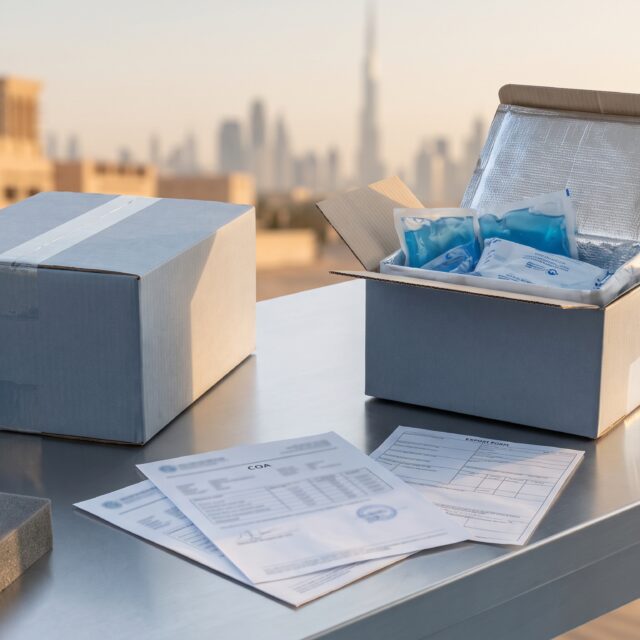
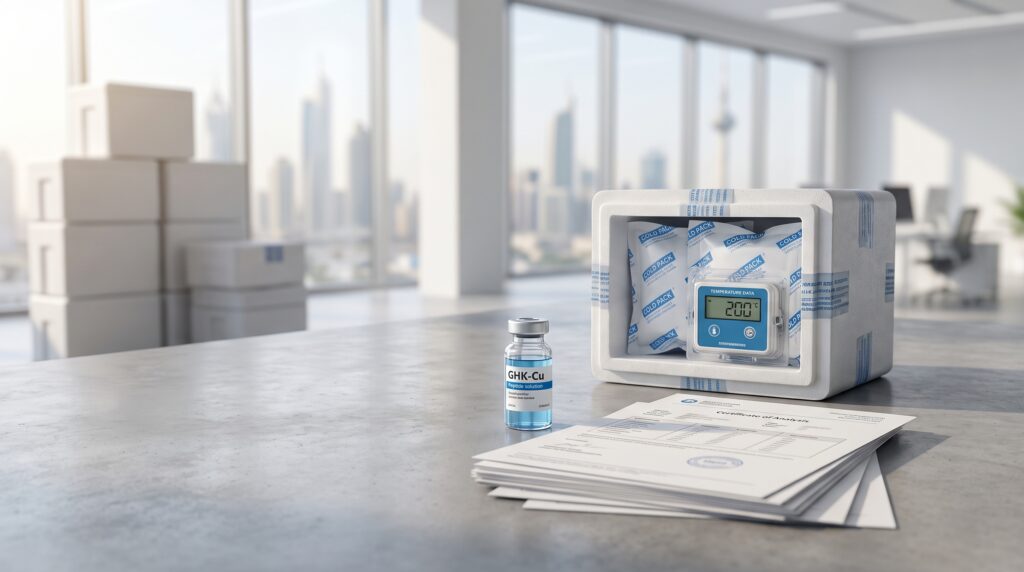
- Check Logistics: Ensure the supplier uses insulated, temperature-controlled packaging to survive Kuwait’s 45°C+ summer heat.
- Ensure Compliance: Confirm commercial invoices explicitly state “For Research Purposes Only” to prevent customs delays.
- Assess Format: Only purchase lyophilized (freeze-dried) powder, as liquid peptides degrade rapidly in transit.
When looking to buy GHK-Cu in Kuwait, laboratory managers and dedicated researchers must prioritize suppliers who can offer transparent third-party testing and climate-controlled shipping. Because Kuwait’s summer temperatures routinely exceed 45°C, uninsulated transit rapidly degrades sensitive peptides. Secure sourcing requires verifiable purity documentation, reliable GCC delivery infrastructure, and strictly compliant research-only labeling to pass smoothly through local customs.
For procurement staff evaluating peptide suppliers in the GCC, securing stable materials is a significant operational challenge. Buyers frequently encounter a market divided between generic international beauty aggregators lacking proper certification and local suppliers suffering from chronic stock shortages. Successfully sourcing high-purity GHK-Cu requires evaluating suppliers on several critical fronts: comprehensive testing, robust cold-chain logistics, and clear conformity with local import regulations.
Avoiding Retail Inventory Shortages and Sourcing Reliable Raw Materials
The competitive landscape for GHK-Cu in the Gulf is largely dominated by consumer-facing beauty platforms offering pre-formulated cosmetic products. While these serve the casual retail market, they present severe limitations for institutional buyers, universities, or independent researchers requiring precise, high-potency raw materials for longitudinal studies.
One of the most prominent friction points for local buyers is inconsistent inventory. Retail platforms frequently display out-of-stock statuses for high-demand copper peptide formulations. Procuring raw, lyophilized GHK-Cu powder from a dedicated research supplier eliminates this dependency on volatile retail supply chains. Dedicated peptide suppliers maintain consistent inventory of laboratory-grade compounds, ensuring that researchers in Kuwait have access to stable, high-purity stock exactly when their projects demand it. Consistent supply is paramount for researchers who cannot afford mid-experiment delays due to a vendor’s supply chain bottlenecks.
Beating the Kuwait Heat: Why Cold-Chain Logistics is Non-Negotiable
The physical stability of peptides during transit is a primary concern for any buyer in the GCC. Standard international express shipping models—which often rely on uninsulated cargo holds, hot delivery vans, and extended layovers in uncooled customs sorting facilities—expose sensitive GHK-Cu peptides to extreme thermal stress.
While lyophilized (freeze-dried) peptides possess a much higher degree of baseline stability compared to reconstituted liquid solutions, extended exposure to intense heat can trigger peptide chain oxidation and rapid hydrolysis. This structural degradation breaks down the amino acid sequence, rendering the compound completely ineffective for accurate in vitro evaluation.
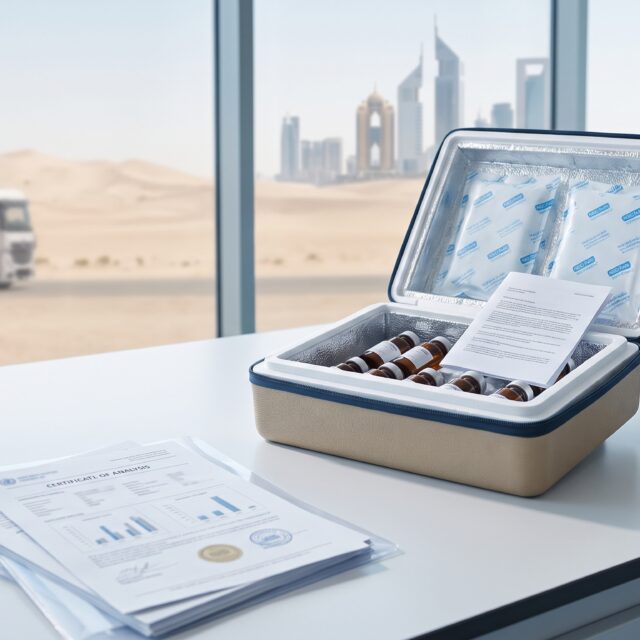
To mitigate this risk, buyers must partner with suppliers who integrate passive cold-chain systems or heavily insulated packaging protocols into their fulfillment operations. Evaluating a supplier’s reliable GCC delivery networks is just as critical as evaluating the product itself. Suppliers operating with regional hubs—often centralized in the UAE for rapid GCC distribution—significantly reduce transit times and dangerous tarmac exposure, ensuring structural integrity upon arrival in Kuwait.
How to Read a GHK-Cu Certificate of Analysis (COA)
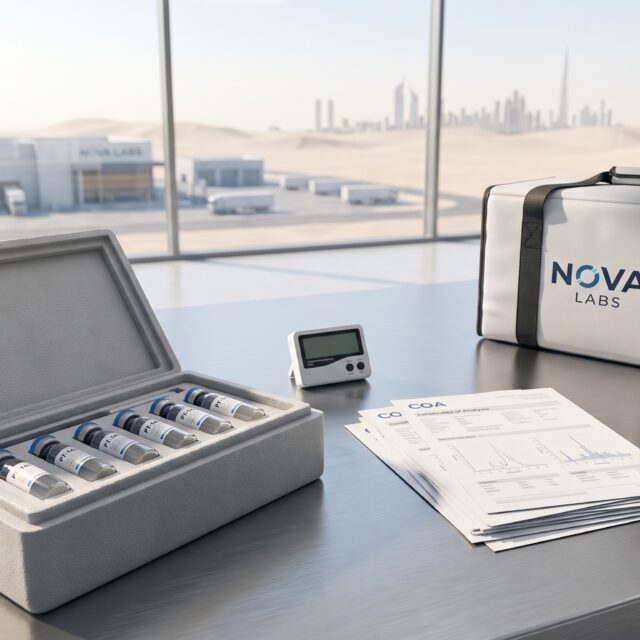
Discriminating buyers and research laboratories cannot rely on marketing claims regarding purity; they require objective, verifiable data. The industry standard for this verification is an independent, third-party Certificate of Analysis (COA) backed by High-Performance Liquid Chromatography (HPLC) and Mass Spectrometry (MS). If a supplier cannot produce this document, they should be immediately disqualified.
When reviewing a COA for a GHK-Cu peptide order, systematically verify the following fields:
- Purity Percentage (HPLC): High-quality research peptides should demonstrate a purity level of 99% or greater. Look at the chromatogram graph; it should display one sharp, distinct peak. Multiple smaller peaks indicate the presence of manufacturing impurities or degraded peptide fragments.
- Molecular Weight Verification (MS): The mass spectrometry data must match the exact theoretical molecular weight of the GHK-Cu molecule (approximately 340.38 g/mol without the copper ion, or higher depending on the specific salt form). This confirms the compound’s identity.
- Batch and Lot Tracking: A legitimate COA should feature specific batch numbers that correspond directly to the vials you are purchasing. Generic, unnumbered, or outdated COAs (older than a year) are red flags.
- Independent Laboratory Letterhead: Documentation should originate from a recognized, independent analytical laboratory to eliminate conflicts of interest.
Navigating Kuwait Customs: Import Conformity and Documentation
The regulatory landscape for importing research materials into the GCC is rigorous. The Kuwait General Administration of Customs and the Public Authority for Industry (PAI) enforce strict conformity protocols. While certain schemes target regulated consumer products, the broader focus on import compliance means all incoming chemical and biological shipments are subject to intense scrutiny.
To avoid customs friction, delays, or potential seizure, the documentation accompanying the shipment must be flawless. Premium GHK-Cu must be explicitly categorized and labeled for laboratory or in vitro evaluation purposes. Clear “Research Purposes Only” designations, alongside accurate Harmonized System (HS) codes for laboratory reagents, prevent the product from being incorrectly classified as an unregistered pharmaceutical, cosmetic, or therapeutic drug.
Buyers should ensure their chosen supplier is experienced in Middle Eastern customs protocols, provides accurate commercial invoices, and strictly avoids any direct therapeutic, medical-use, or cosmetic claims on the exterior packaging or accompanying paperwork.
Lyophilized vs. Liquid: Choosing the Right Format for GCC Import
When sourcing peptides internationally, buyers often see options for pre-mixed liquid solutions. For buyers in Kuwait, purchasing pre-reconstituted liquid peptides is highly unadvisable.
Once a peptide is introduced to bacteriostatic water or any solvent, the countdown on its stability begins. Liquid peptides are highly susceptible to agitation, temperature fluctuations, and bacterial contamination. A liquid peptide sitting in a Kuwaiti customs facility for just 48 hours in summer temperatures will likely arrive completely degraded.
Lyophilization—the process of freeze-drying the peptide into a stable powder—removes the moisture that facilitates degradation. Lyophilized GHK-Cu, when stored correctly away from direct light, can survive transit temperature fluctuations much better than its liquid counterpart. Once the lyophilized vial arrives safely at your laboratory, it should be stored in a freezer (optimally at -20°C) until you are ready to reconstitute it for immediate research use.
Payment Convenience and Local Support in the Middle East
Beyond logistics and documentation, the actual purchasing experience matters for Kuwaiti procurement staff. International suppliers operating out of North America or Europe often fail to accommodate regional payment preferences, relying solely on restrictive wire transfers or credit gateways that flag Middle Eastern transactions as high-risk.
Top-tier suppliers serving the GCC understand the necessity of seamless local payment ecosystems. Buyers should look for suppliers that integrate smoothly with preferred payment methods, including Apple Pay and standard Visa/Mastercard options processed through reliable, localized gateways.
Furthermore, responsive customer support is critical. Dealing with time zone differences via email can turn a minor shipping delay into a week-long headache. Having direct access to support via WhatsApp or a dedicated local service channel allows buyers to quickly verify stock levels, request specific batch COAs, and track shipments in real-time with an agent who understands the regional logistics network.
Securing Your GHK-Cu Supply with NOVA Labs
For researchers, laboratory managers, and informed buyers seeking a reliable GHK-Cu supplier Kuwait destination, evaluating the operational standards of the vendor is paramount. NOVA Labs bridges the gap between stringent laboratory requirements and regional logistical realities.
We provide transparent access to batch-specific COAs, ensuring that every vial meets rigorous >99% purity standards verified by independent HPLC and MS analysis. By operating with logistics optimized for the UAE and the broader GCC network, we drastically reduce the transit vulnerabilities associated with extreme regional temperatures.
If you are ready to secure high-purity research materials backed by transparent documentation and GCC-ready fulfillment, explore our GHK-Cu peptide vials today.
Disclaimer: The products mentioned in this article are strictly for in vitro research and laboratory evaluation purposes only, and are not intended for human consumption, therapeutic use, cosmetic application, or medical treatment.
References
- Kuwait General Administration of Customs (KGAC) – Prohibited and Restricted Goods Guidelines.
- Journal of Peptide Science – “Impact of Temperature Excursions on the Stability of Lyophilized Peptides.”
- Kuwait Public Authority for Industry (PAI) – Kuwait Conformity Assurance Scheme (KUCAS) Import Requirements.
- Cold-Chain Shipping and Import Documentation for Research Peptides in the GCC
- Kuwait Tightens Import Regulations to Enhance Product Safety and Compliance
- Kuwait – Import Requirements and Documentation
- Cold Chain Peptide Fulfillment Services – RapidFulfillment.com
Frequently asked questions
How can I safely order GHK-Cu to Kuwait during the summer?
To safely order GHK-Cu during Kuwait's extreme summer heat, choose a supplier that utilizes temperature-controlled logistics or insulated packaging. Partnering with suppliers who operate from regional GCC fulfillment hubs minimizes tarmac exposure and transit time.
What documentation is required for importing research peptides into Kuwait?
Importing research peptides requires accurate commercial invoices, explicit "Research Purposes Only" labeling to align with customs classifications, and verifiable Certificates of Analysis (COA) to prove the item is a laboratory reagent rather than an unregistered pharmaceutical.
How do I verify the purity of my GHK-Cu peptide order?
Verify purity by requesting a third-party Certificate of Analysis (COA) corresponding to your specific batch number. The document must include High-Performance Liquid Chromatography (HPLC) results showing >99% purity and Mass Spectrometry (MS) confirming the compound's correct molecular weight.
Should I buy lyophilized powder or liquid GHK-Cu for research in Kuwait?
Always purchase lyophilized (freeze-dried) powder for delivery to Kuwait. Pre-reconstituted liquid peptides degrade rapidly when exposed to agitation and the high temperatures typical of international transit to the GCC.
Nova Labs buyer tools
Ready to verify stock, testing and delivery?
Use the product page and lab report section to check availability, documentation, delivery timing and support before placing an order.
- COA / test-report checks
- Kuwait delivery context
- Cold-chain handling
- COD and card payment options
- WhatsApp support