
Where to Buy BPC-157 in Kuwait: The Procurement Challenge
To safely buy BPC-157 in Kuwait, researchers must prioritize specialized regional suppliers offering verifiable HPLC purity testing, transparent mass spectrometry reports, and insulated cold-chain shipping. Navigating local procurement requires bypassing generic global dropshippers to avoid extreme summer temperatures that rapidly degrade uninsulated lyophilized peptides during customs transit.
Quick Buyer Checklist: Sourcing Peptides in Kuwait
- Documentation: Insist on a batch-specific Certificate of Analysis (COA) showing >99% HPLC purity.
- Logistics: Verify the use of passive thermal packaging and express regional couriers.
- Compliance: Ensure the commercial invoice clearly states “For Research Purposes Only” to satisfy Kuwait customs.
- Origin: Prefer GCC-based hubs (e.g., UAE) to minimize international transit time and heat exposure.
- Support: Confirm access to responsive, English/Arabic speaking support for technical or clearance queries.
For procurement staff and independent laboratory researchers operating in the GCC, sourcing stable, high-purity chemical reagents is a complex logistical operation. If you are looking to procure peptides locally, you are likely navigating a frustrating landscape of generic global aggregators, frequent stock shortages, and opaque quality standards. Furthermore, the extreme local climate introduces severe stability risks for sensitive compounds during transit.
Securing a reliable BPC-157 supplier in Kuwait requires moving beyond basic marketing claims. Informed buyers must evaluate a supplier’s operational infrastructure, focusing specifically on third-party documentation, local regulatory compliance, and thermal shipping protocols. This comprehensive guide breaks down exactly what to look for before placing an order to ensure your laboratory receives viable, high-quality materials.
The Kuwait Heat Problem: Why Standard Shipping Ruins Peptides
One of the most critical factors when you order BPC-157 in Kuwait is the transit environment. BPC-157 is a synthetic 15-amino acid sequence typically supplied as a lyophilized (freeze-dried) powder. While the lyophilization process dramatically improves baseline stability compared to reconstituted liquid solutions, these fragile peptide chains are not impervious to extreme environmental stress.
During the peak summer months, ambient temperatures in Kuwait regularly reach 45°C to 50°C. Standard logistics networks rely on uninsulated cargo holds, non-air-conditioned delivery vans, and prolonged processing times at customs sorting facilities.
The Risk of Molecular Degradation
When lyophilized peptides are subjected to temperatures exceeding 40°C for extended periods, they are at a high risk of thermal degradation and denaturation. This alters the molecular structure, cleaving the peptide bonds and rendering the compound completely useless for precise in-vitro laboratory applications. Research data derived from degraded peptides is inherently flawed.
Major global e-commerce aggregators often list research peptides, but they typically utilize standard international mail systems. These routes frequently involve transit times of 9 to 20 days. A 20-day transit window through the GCC summer without passive thermal packaging all but guarantees that the delivered compound will fail to yield accurate research data.
To preserve compound integrity, a professional BPC-157 supplier in Kuwait must employ a rigorous shipping protocol:
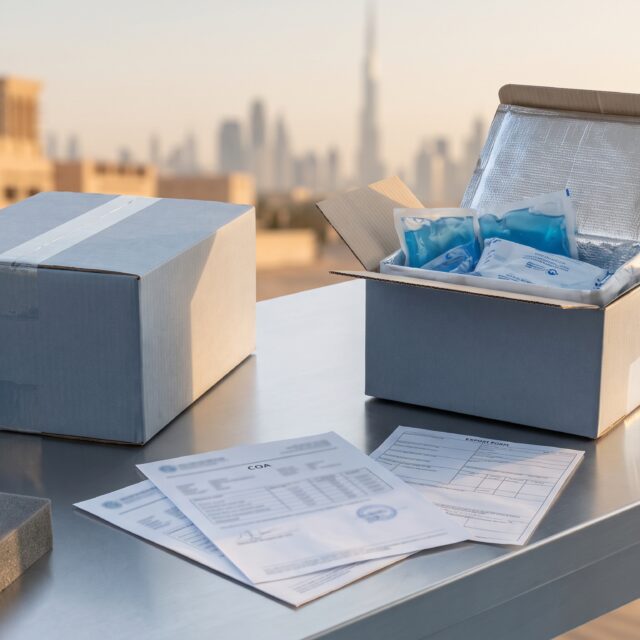
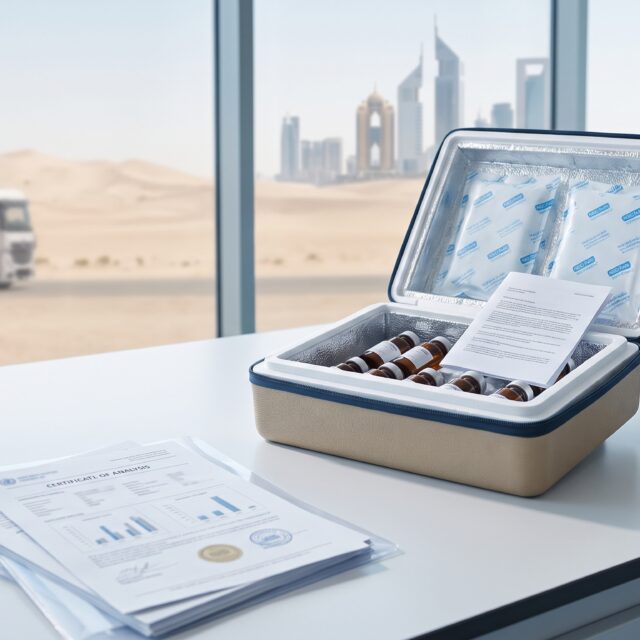
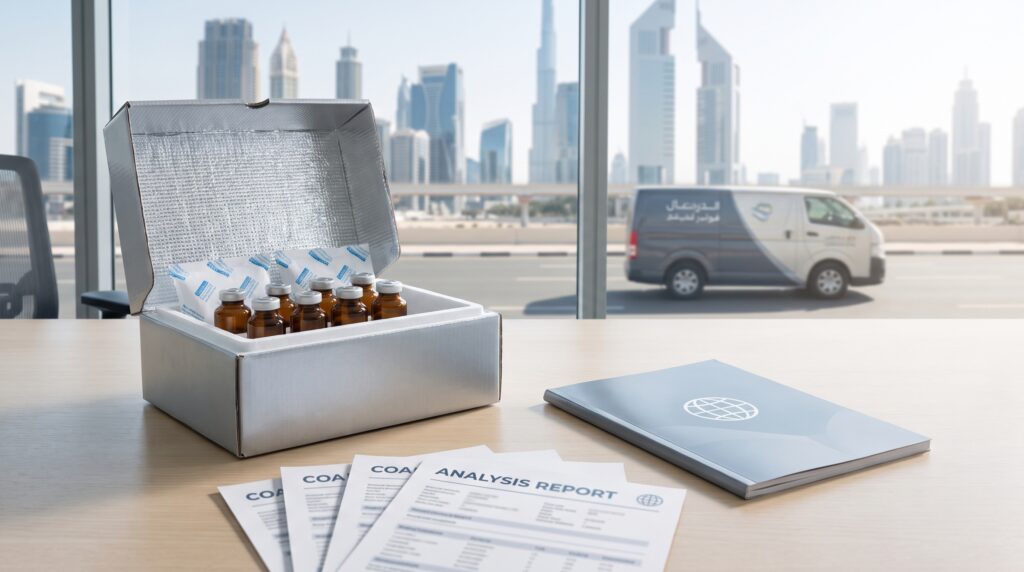
- Passive Thermal Packaging: Using specialized insulated containers (such as EPS foam or validated thermal mailers) that reflect external heat and maintain a stable internal climate.
- Express Logistics: Utilizing premium courier networks to reduce transit times from weeks to mere days, drastically minimizing environmental exposure during the critical “last mile” of delivery.
Evaluating BPC-157 Suppliers: The Role of Analytical Testing
When evaluating a BPC-157 peptide Kuwait source, the presence or absence of a verified Certificate of Analysis (COA) is the definitive metric of operational reliability. The regional market is currently saturated with dropshipping platforms and wellness aggregators that occasionally list peptides alongside general supplements. These platforms frequently suffer from out-of-stock statuses and fail to provide compound-specific analytical data.
Before you procure BPC-157, you must demand the following scientific documentation:
High-Performance Liquid Chromatography (HPLC)
HPLC testing separates the components of a sample to quantify its exact purity. For rigorous research applications, an acceptable BPC-157 batch must demonstrate a purity level of 99% or higher. Anything less indicates the presence of synthesis byproducts, truncated peptide sequences, or leftover toxic chemical reagents (like TFA) that could confound experimental results or damage cell cultures.
Mass Spectrometry (MS)
While HPLC confirms how pure a sample is, Mass Spectrometry confirms its exact molecular identity. MS analyzes the mass-to-charge ratio of the molecules in the sample. For BPC-157, the molecular weight must accurately match 1419.5 g/mol. A legitimate supplier will always make these batch-specific testing documents readily available for review prior to purchase, ensuring you get exactly what you pay for.
Navigating Kuwait’s Import and Compliance Landscape
Understanding local regulations is essential for procurement staff and researchers to avoid costly customs seizures and legal friction. Kuwait operates under strict Ministry of Health (MOH) guidelines regarding the importation of chemical, biological, and pharmaceutical compounds.
Medicinal vs. Research Classifications
Under Kuwait Law, the importation of unapproved medicinal drugs for personal, clinical, or therapeutic use requires a local physician’s prescription and prior MOH approval. Consequently, local clinics and commercial pharmacies do not stock, sell, or prescribe experimental peptide therapies like BPC-157.
However, BPC-157 and similar compounds are legally classified as chemical reagents intended exclusively for laboratory and in-vitro research. They bypass strict pharmaceutical registration rules provided they adhere to specific documentation criteria:
- The commercial invoice and vials must be clearly labeled and sold as “For Research Purposes Only.”
- The supplier must make absolutely zero therapeutic, health, human-use, or medicinal claims.
- The buyer must utilize the compounds strictly within a controlled, licensed research context.
KUCAS and Conformity Standards
Additionally, the Kuwait Public Authority for Industry (PAI) enforces the Kuwait Conformity Assurance Scheme (KUCAS). Stricter import regulations require Technical Evaluation Reports (TER) and Technical Inspection Certificates (TIR) for various commercial imports. By ensuring your supplier categorizes and documents the shipment accurately as a research reagent—backed by proper COAs and transparent commercial invoices—buyers can facilitate a smooth, unhindered clearance process at the border.
The Pitfalls of Global Dropshippers vs. Regional Hubs
A common pitfall for GCC-based buyers is relying on general global e-commerce platforms. A quick search for a BPC-157 supplier Kuwait often yields results from mass-market aggregators based in the US or Asia. These platforms present several severe operational risks:
- Lack of Specialization: These vendors do not specialize in laboratory supplies. They cannot answer technical questions regarding reconstitution protocols, precise storage temperatures, or batch variances.
- Inventory Unreliability: Because they dropship from third-party global warehouses, popular research compounds frequently show as backordered or out-of-stock only after your payment is processed, stalling your research timeline.
- Missing Quality Control: Dropshippers rarely hold physical inventory, meaning they cannot independently batch-test the products they sell. You are entirely reliant on unverified factory claims, which often inflate purity percentages.
- No Local Support: If a shipment is held by Kuwait customs, getting responsive support from a global dropshipper operating in a completely different time zone is nearly impossible.
Payment Security and Localized Support in the GCC
When purchasing high-value research materials internationally, payment security and responsive support are paramount. Many international peptide vendors struggle to process credit cards from GCC countries due to strict risk-management protocols, forcing researchers to use opaque offshore payment methods or wire transfers with exorbitant fees.
Researchers should look for suppliers that offer localized, secure payment gateways compatible with GCC banking standards. Furthermore, post-purchase support is critical. The ability to reach a supplier via direct channels—such as WhatsApp or a dedicated local support desk—ensures that any issues with customs documentation, tracking delays, or COA requests are resolved within hours, not days.
Securing Your BPC-157 Supply with NOVA Labs
NOVA Labs provides a direct, highly specialized supply chain designed specifically to overcome the inherent challenges of GCC and Kuwait procurement. By operating as a dedicated regional hub, we eliminate the friction, delays, and quality risks associated with overseas dropshippers.
Verifiable Quality and Stock Confidence
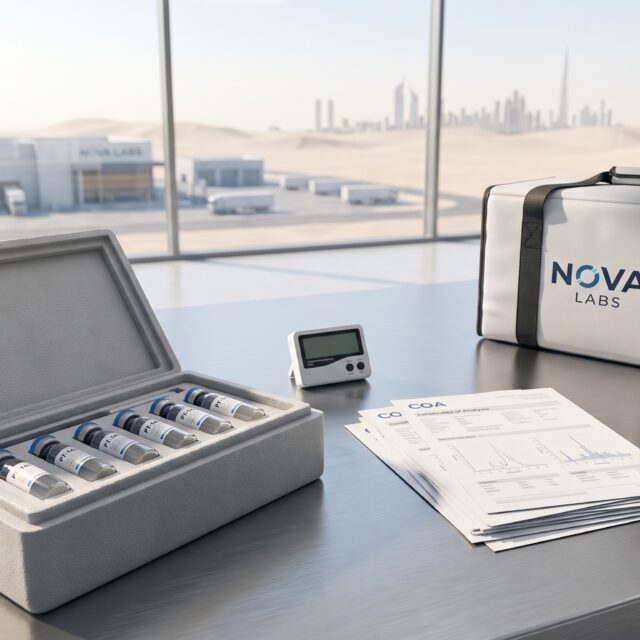
We maintain strict internal inventory control, meaning what is listed on our site is physically in stock in our regional facility and ready for immediate dispatch. Every single batch of BPC-157 is accompanied by transparent, easily accessible COA documentation, verifying >99% purity via High-Performance Liquid Chromatography and correct molecular identity via Mass Spectrometry.
Validated Cold-Chain Logistics
We thoroughly understand the realities of the Kuwait climate. All peptide shipments are processed using validated passive thermal packaging to shield delicate compounds from extreme heat. Leveraging our established GCC and UAE delivery network, we completely bypass the 20-day delays typical of global aggregators. Our expedited logistics ensure your research materials arrive swiftly, clear customs smoothly, and remain fully intact for your laboratory applications.
Dedicated Support and Secure Payments
Researchers navigating local procurement need responsive, intelligent support. NOVA Labs offers direct communication channels to assist with custom documentation requests, real-time tracking updates, and technical reagent inquiries. We also provide secure, GCC-friendly payment options to streamline the purchasing process from cart to delivery.
Summary and Next Steps
Choosing to buy BPC-157 in Kuwait requires careful supplier vetting and an understanding of regional logistics. Standard global e-commerce platforms fail to provide the necessary cold-chain insulation, rigorous HPLC testing documentation, and rapid transit times required to maintain peptide stability in the unforgiving GCC climate.
By partnering with a specialized regional supplier that understands customs compliance, KUCAS regulations, and thermal protection, researchers can secure high-purity compounds without costly delays or degraded materials.
Review batch data, confirm shipping protocols, and ensure your procurement process aligns with local research regulations. Explore the NOVA Labs catalog today to secure third-party tested, climate-protected reagents for your next critical laboratory study.
Disclaimer: All products mentioned in this article are strictly for in-vitro laboratory research purposes only. They are not intended for human consumption, diagnostic, therapeutic, or clinical use. NOVA Labs does not provide medical advice or dosage guidance.
References
- Kuwait Ministry of Health (MOH). (2024). Guidelines on the Importation of Chemical and Biological Compounds for Laboratory Use.
- Kuwait Public Authority for Industry (PAI). (2024). Kuwait Conformity Assurance Scheme (KUCAS) Technical Requirements.
- Journal of Pharmaceutical Sciences. (2022). Thermal Degradation of Lyophilized Peptides: Environmental Stress in Transit.
- DHL Global Forwarding. (2023). The Essentials of a Successful Cold Chain in the GCC.
- Where Research Peptides Are Legal: 2026 EU & Asia Compliance Guide – LifeSpanSupply
- Import unapproved medicine into Kuwait – Everyone.org
- Kuwait Tightens Import Regulations to Enhance Product Safety and Compliance (October 2024) | Watheeq
- The Essentials of a Successful Cold Chain – DHL Global Forwarding – Kuwait
- Looking for an Endocrinologist that is open to consider Peptides : r/Kuwait – Reddit
Frequently asked questions
Is it legal to buy BPC-157 in Kuwait?
Yes, BPC-157 can be legally imported into Kuwait strictly as a chemical reagent for in-vitro research purposes. It must not be sold or imported as a medicinal drug for human consumption, which would require prior Ministry of Health (MOH) approval and a local prescription.
How does the Kuwait summer heat affect shipped peptides?
Temperatures exceeding 45°C can quickly degrade and denature lyophilized peptides like BPC-157, ruining their molecular structure. It is crucial to order from regional suppliers who use passive thermal packaging and express logistics to minimize heat exposure during transit.
What documentation should a BPC-157 supplier provide?
A reputable supplier must provide a batch-specific Certificate of Analysis (COA) featuring High-Performance Liquid Chromatography (HPLC) to prove purity >99%, alongside Mass Spectrometry (MS) to verify the correct molecular weight of 1419.5 g/mol.
Why should researchers avoid buying peptides from global dropshipping platforms?
Global aggregators often suffer from 9 to 20-day international transit times, lack cold-chain insulation, and fail to provide third-party HPLC testing, putting the structural integrity of sensitive research peptides at severe risk during delivery to the GCC.
Nova Labs buyer tools
Ready to verify stock, testing and delivery?
Use the product page and lab report section to check availability, documentation, delivery timing and support before placing an order.
- COA / test-report checks
- Kuwait delivery context
- Cold-chain handling
- COD and card payment options
- WhatsApp support