
Sourcing Research Peptides in the Sultanate
For laboratories, procurement staff, and informed scientific investigators in the GCC, acquiring high-quality analytical compounds requires navigating strict regulatory frameworks and severe environmental challenges. Standard international e-commerce channels often fall short. Generic dropshipping platforms may offer pre-formulated brands, but they frequently lack the rigorous third-party analytical testing and temperature-controlled logistics necessary for sensitive biochemicals.
Procuring BPC-157 peptide in Oman means accounting for summer temperatures that regularly exceed 45 degrees Celsius, complex customs clearing procedures through the Royal Oman Police (ROP), and the absolute necessity of verified mass spectrometry testing. For research to remain valid and untainted, buyers must evaluate suppliers not just on pricing, but on their ability to execute safe, documented, and compliant regional deliveries without relying on inappropriate medical-use claims.
Quick Answer: How to Buy BPC-157 in Oman
When looking to buy BPC-157 in Oman, researchers must prioritise suppliers offering verified cold-chain logistics to protect lyophilised peptides from the 45°C GCC heat. Ensure your vendor provides third-party HPLC and Mass Spectrometry Certificates of Analysis (COAs) proving over 98% purity, alongside accurate documentation compatible with the ROP Bayan Portal for customs clearance.
Decoding Documentation: Bayan Portal and Oman Customs
Importing research chemicals into the Sultanate requires strict adherence to local regulatory portals. The current framework for importing commercial and research-grade chemical compounds in Oman is managed through the Royal Oman Police (ROP) Bayan Single-Window Portal.
Commercial Registration (CR) and Clearing Agents
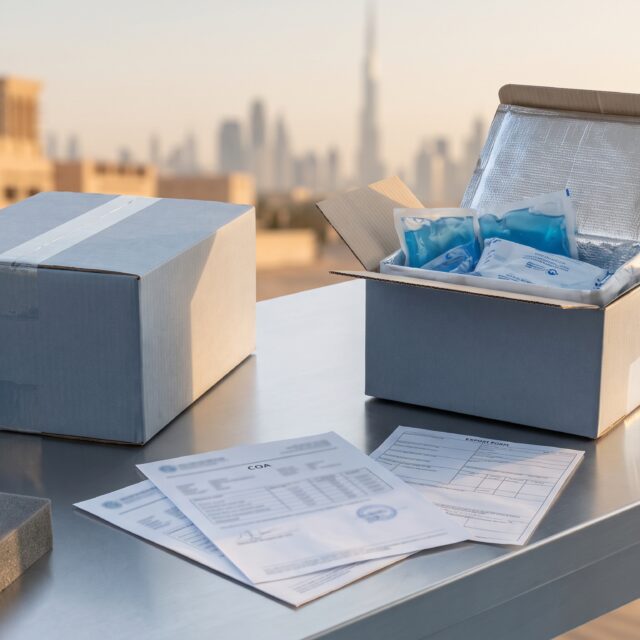
Commercial importers and institutional buyers must link their Commercial Registration (CR) number to the Bayan platform. For high-value consignments or institutional orders exceeding OMR 500, it is a mandatory requirement to electronically authorise a customs clearing agent via your personal or corporate Bayan portal account. Failing to secure this authorisation prior to the shipment’s arrival can result in significant delays, customs holds, and potential degradation of sensitive materials sitting in unconditioned transit facilities.
Analytical Usage vs. Medical Claims
Because the Ministry of Health (MOH) Drug Safety Center and the Directorate General of Pharmaceutical Affairs and Drug Control strictly oversee all medicinal and therapeutic products, research peptides must be clearly documented. A reputable supplier will explicitly supply these compounds for in-vitro laboratory or analytical research purposes only. Procurement documentation should never feature therapeutic claims, dosage instructions, or direct-to-consumer medical branding. This clean, compliant paperwork prevents reclassification friction at the border.
Surviving the Heat: The Oman Cold-Chain Protocol
Oman’s extreme summer climate presents a severe logistical hurdle for sensitive biological compounds. Temperatures easily surpass 45 degrees Celsius, and unshielded delivery of peptides will lead to rapid thermal degradation, rendering the compound useless for precise laboratory applications.
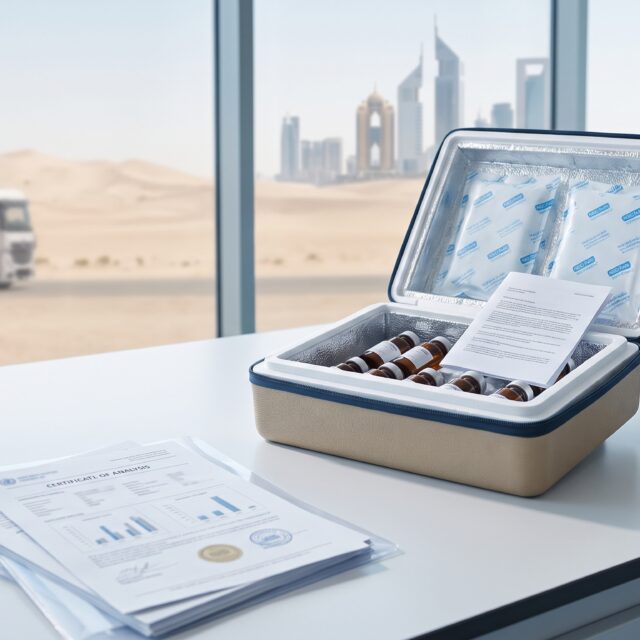
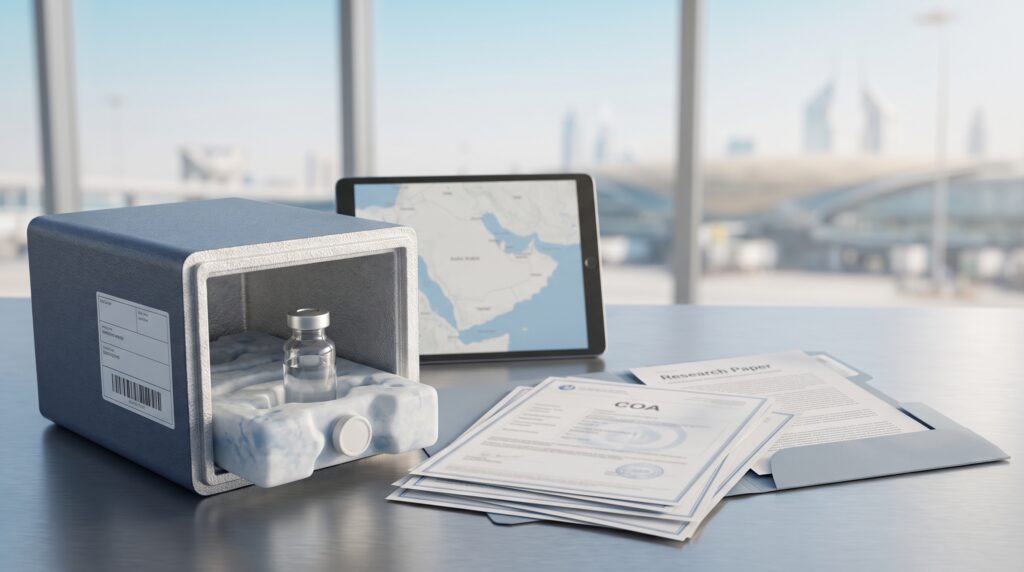
Standard postal services are generally insufficient. The compound must be shielded during transit. Verified regional cold-chain shipping protocols involve the use of heavily insulated packaging and medical-grade cold packs to maintain a stable microclimate around the vials.
Regional proximity plays a massive role in mitigating thermal risk. Suppliers based in the GCC are often vastly superior to overseas vendors because transit time is reduced from weeks to mere days. Buyers can rely on established regional logistics frameworks, such as UAE and regional next-day dispatch protocols, which ensure the peptide spends as little time in transit as possible before reaching the safety of a laboratory freezer in Muscat, Salalah, or Sohar.
Purity Verification: How to Read a BPC-157 Supplier’s COA
Analytical precision requires uncompromised base materials. The most critical document you must request from any supplier is a batch-specific, third-party Certificate of Analysis (COA). If a vendor relies on outdated, internally generated, or heavily redacted testing reports, they introduce an unacceptable level of risk to your research programme.
High-Performance Liquid Chromatography (HPLC)
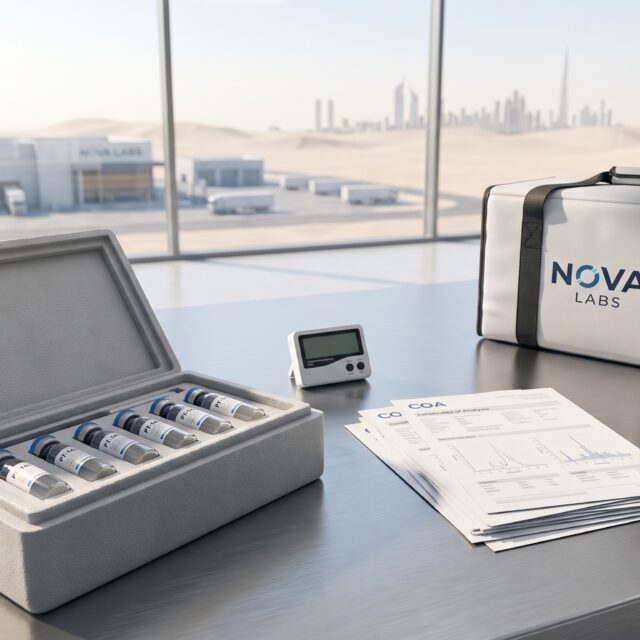
HPLC is the standard analytical technique used to separate, identify, and quantify each component in a mixture. On a valid COA, the HPLC graph (chromatogram) should display a single, sharp, dominant peak representing the BPC-157 compound. The area under this peak determines the purity percentage. For reliable research outcomes, you should only accept materials that register a purity level exceeding 98% to 99%. Anything lower indicates the presence of synthesis by-products, truncated peptide chains, or heavy metal contamination.
Mass Spectrometry (MS)
While HPLC confirms how pure a sample is, Mass Spectrometry (MS) confirms exactly what the sample is. By measuring the mass-to-charge ratio of the ions, MS verifies the molecular weight of the peptide. BPC-157 has a specific molecular weight, and the MS report should explicitly match this expected value. Together, HPLC and MS provide the complete analytical assurance required before any compound enters a local laboratory setting.
Storage and Reconstitution for Laboratory Protocols
Upon successfully clearing customs and arriving via cold-chain transport, BPC-157 must be handled with precise environmental controls. High-quality peptides are shipped in a lyophilised (freeze-dried) state, which dramatically improves their stability compared to pre-mixed liquid formulas.
For long-term storage, unopened lyophilised vials should immediately be placed in a freezer at -20 degrees Celsius or colder. At these temperatures, the structural integrity of the peptide can be maintained for years without degradation.
When preparing the compound for active laboratory research, it must be reconstituted exclusively with sterile research solvents, most commonly bacteriostatic water or sterile saline, depending on the specific in-vitro protocol. Once reconstituted, the solution becomes highly susceptible to bacterial contamination and thermal breakdown; it should be stored in a refrigerator (between 2°C and 8°C) and utilised within the timeframe dictated by the solvent’s sterile limits (typically 20 to 30 days).
Evaluating an Order: Payments, Support, and Supplier Confidence
Procurement staff often encounter friction when executing international payments for research chemicals. Many traditional overseas vendors experience blocked transactions or rely on unregulated cryptocurrency transfers, complicating accounting procedures for Omani institutions.
To ensure a smooth procurement pipeline, seek out regional suppliers that support robust local billing solutions, direct bank transfers, and transparent invoicing that aligns with the documentation required by the Bayan Portal. Furthermore, pre-sale and post-sale support is crucial. Suppliers offering direct communication channels, such as dedicated WhatsApp support, provide immense value when coordinating tracking updates or providing emergency documentation for customs clearing agents.
By sourcing from established, regionally focused entities like NOVA Labs, Omani buyers gain access to transparent batch documentation, rigorous testing standards, and a customer support framework designed specifically to navigate the unique challenges of the GCC logistics network.
Bottom Line: Securing BPC-157
Executing a secure and compliant order for BPC-157 peptide in Oman relies entirely on verifying your supplier’s operational standards. To avoid customs delays and compromised materials, ensure your vendor provides batch-specific HPLC/MS documentation proving >98% purity, operates a verified cold-chain delivery system, and produces documentation compatible with the ROP Bayan Portal for analytical compounds.
By prioritising proximity, analytical transparency, and robust support, researchers can secure their procurement pipelines and maintain the integrity of their scientific endeavours.
For verified, strictly tested, and cold-chain protected supplies, explore our catalogue to secure BPC-157 for your laboratory.
Disclaimer: The products mentioned in this article are for research purposes only and are not intended for human consumption.
References
- Royal Oman Police (ROP) Directorate General of Customs. Bayan Single-Window Portal Guidelines.
- Oman Ministry of Health (MOH) Drug Safety Center (DSC) Guidelines on Pharmaceutical Product Clearances.
- NOVA Labs Logistics Framework: Verifying Regional COAs & Customs for Research Procurement.
- Peptide Purity Guide Oman: Verifying COAs & Customs – NOVA Labs
- Peptide Supplier Checklist Oman: Buyer Guide & Import – NOVA Labs
- Drug Safety Center(DSC)
- Get Approval for Final Customs Release of Pharmaceutical Product – Gov.om
- Directorate General of Customs – Permit to Import Chemical and Cosmetic Products
Frequently asked questions
Is it legal to buy BPC-157 in Oman?
Yes, it is permitted to import BPC-157 into Oman exclusively for in-vitro analytical and laboratory research purposes. It must not be imported, sold, or branded as a medical or therapeutic product for human consumption.
What documentation is required to clear research peptides in Oman?
Commercial shipments typically require integration with the ROP Bayan Portal using a Commercial Registration (CR) number. Orders over OMR 500 require the electronic authorisation of a customs clearing agent.
How is BPC-157 shipped to survive the GCC summer heat?
Reputable regional suppliers utilise cold-chain logistics, shipping the lyophilised peptide in insulated packaging with medical-grade cold packs to prevent thermal degradation during transit.
How do I verify the purity of my BPC-157 supplier in Oman?
Buyers should demand a batch-specific Certificate of Analysis (COA) that includes third-party High-Performance Liquid Chromatography (HPLC) and Mass Spectrometry (MS) results proving purity over 98%.
How should lyophilised BPC-157 be stored upon arrival?
Unopened, lyophilised vials of BPC-157 should be stored long-term in a laboratory freezer at -20 degrees Celsius. Once reconstituted with a sterile research solvent, the liquid must be refrigerated between 2°C and 8°C.
Nova Labs buyer tools
Ready to verify stock, testing and delivery?
Use the product page and lab report section to check availability, documentation, delivery timing and support before placing an order.
- COA / test-report checks
- Oman delivery context
- Cold-chain handling
- COD and card payment options
- WhatsApp support