
Procuring high-quality diluents for laboratory work in the GCC region presents unique environmental challenges. When evaluating sources of bacteriostatic water for peptides, Dubai researchers and informed buyers must prioritise more than just the product itself; they must heavily scrutinise the supply chain. In a climate where summer temperatures frequently soar past 45°C, standard international shipping models fall short, placing temperature-sensitive research compounds at severe risk of degradation.
Whether you are managing procurement for an established laboratory or conducting independent research, ensuring your diluents remain sterile and structurally sound from the point of origin to your bench is critical. This comprehensive guide explores what differentiates verified bacteriostatic water, how to navigate local UAE logistics, and the essential steps required to protect the integrity of your research materials.
Sourcing Bacteriostatic Water For Peptides Dubai
When sourcing bacteriostatic water for peptides, Dubai researchers must prioritize local logistics to avoid thermal degradation. Quality diluents contain 0.9% benzyl alcohol to inhibit bacterial growth for 28 days. Rapid 1-3 day local dispatch within the UAE is essential to protect temperature-sensitive research materials from extreme heat.
When a research protocol requires precise reconstitution, the quality of the diluent dictates the stability of the entire experiment. The most pressing challenge for any buyer in the UAE is verifying that the supplier actively maintains climate-controlled logistics. Without local inventory and robust delivery mechanisms, even the highest-grade bacteriostatic water can be compromised before the package is opened.
Key Checks: A Sourcing Checklist for UAE Buyers
As a definitive bacteriostatic water for peptides guide, Dubai buyers should reference the following verification checklist before placing an order. Not all online suppliers adhere to the same rigorous standards, and differentiating a laboratory-grade supplier from a generic reseller comes down to documentation and logistics.
- Verify the Formulation: Ensure the product explicitly states it contains 0.9% benzyl alcohol. This precise ratio is what prevents bacterial growth over a 28-day period once the vial is punctured.
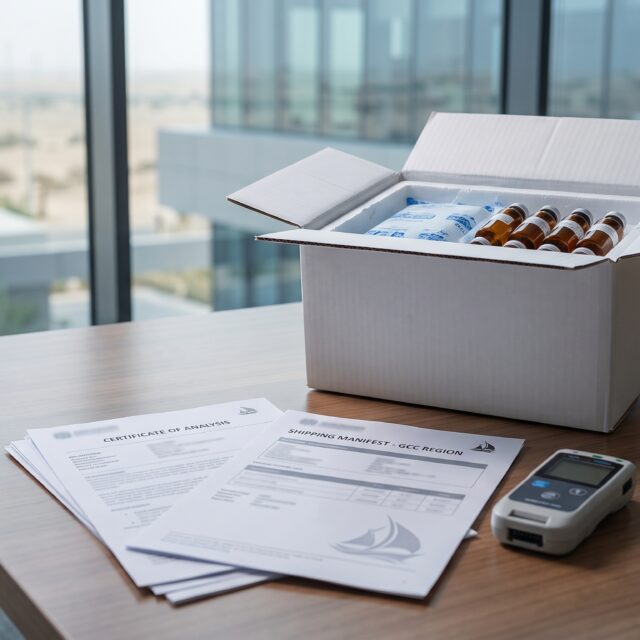
- Assess the Logistics Window: Does the supplier ship internationally or locally? International shipping often entails 7-14 days in transit, exposing packages to hot airport tarmacs and unairconditioned final-mile delivery vans.
- Check for Batch Transparency: Look for suppliers that provide lot-tracked Certificates of Analysis (COAs). While diluents do not require HPLC purity testing in the same manner as complex peptides, batch tracking demonstrates a commitment to quality control.
- Evaluate Local Payment Flexibility: Trustworthy UAE suppliers typically offer regionally preferred payment methods. The availability of Cash on Delivery (COD), Apple Pay, or split-payment options often indicates a supplier with established, verified local operations.
Bacteriostatic Water vs. Sterile Water: Understanding the Technical Difference
A common point of confusion during procurement is the distinction between bacteriostatic water and plain sterile water. While both undergo rigorous sterilisation processes, they serve very different operational purposes in a laboratory setting.
The Role of Benzyl Alcohol
Bacteriostatic water contains exactly 0.9% benzyl alcohol. This additive acts as a preservative, actively inhibiting the reproduction of most bacteria. Because of this bacteriostatic property, a single vial can be subjected to multiple withdrawals (using sterile technique) over a standard 28-day lifespan after the initial puncture. This makes it the standard choice for reconstituting multi-use research peptides.
When is Sterile Water Used?
Conversely, sterile water contains no preservatives. Once the seal on a vial of sterile water is broken, it is immediately susceptible to environmental contamination. Therefore, sterile water is strictly for single-use applications. If sterile water is used to reconstitute a multi-use peptide, any remaining solution must be discarded after the first withdrawal to prevent bacterial proliferation, making it highly inefficient for standard research protocols.
The Thermal Hazard: Protecting Diluents in the 45°C Climate
Dubai’s harsh climate represents the single largest threat to peptide research integrity. Ambient summer heat can easily degrade both the fragile molecular bonds of peptides and the benzyl alcohol preservative in bacteriostatic water if left unmanaged.
Pre-Reconstitution Storage Rules
Unopened, sealed vials of bacteriostatic water should be kept at a controlled room temperature, typically between 15°C and 30°C. Importantly, they must be kept out of direct sunlight and away from localised heat sources. Exposing the diluent to extreme heat can compromise the efficacy of the benzyl alcohol, rendering it unable to protect against bacterial growth once opened.
Post-Reconstitution Storage Protocols
Once a peptide is reconstituted with bacteriostatic water, the rules change entirely. The combined solution must immediately be transferred to refrigeration, maintained consistently between 2°C and 8°C.
It is imperative that reconstituted peptides are never frozen. The formation of ice crystals within the liquid creates mechanical stress that can shear and destroy delicate peptide chains, instantly invalidating the research compound.
The Advantage of Local Dispatch
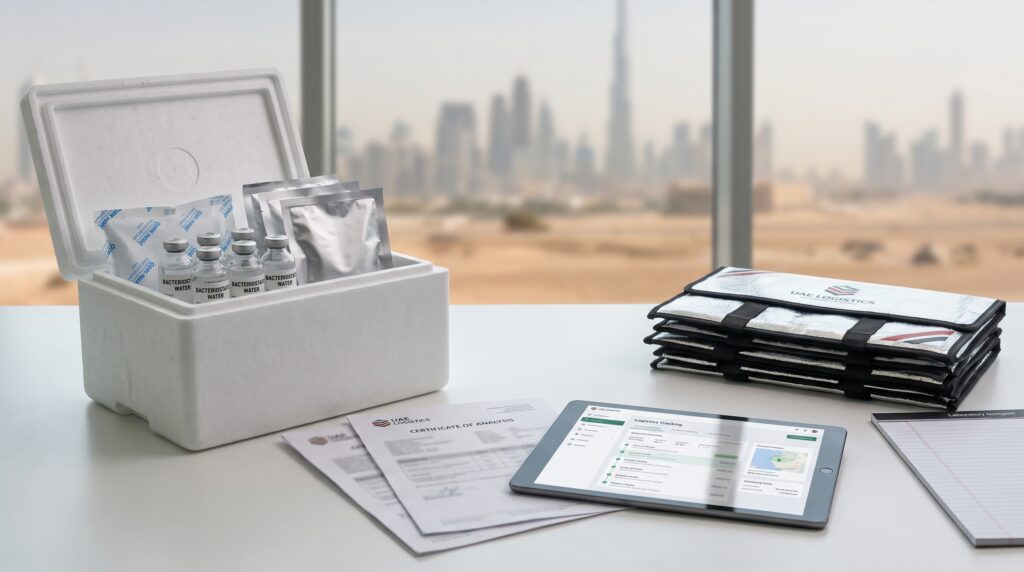
This temperature sensitivity highlights the major weakness of cross-border procurement. When shipments spend days clearing customs or sitting in non-climate-controlled local transit, thermal spikes are inevitable. Procuring locally effectively bypasses this risk. For instance, accessing same-day delivery options for researchers in Dubai ensures that temperature-sensitive liquids move from a controlled warehouse directly to your laboratory bench, completely mitigating the thermal hazards of international freight.
Evaluating UAE Suppliers: Logistics, Documentation, and Support
When standardising your procurement programme for bacteriostatic water for peptides in dubai, evaluating the operational footprint of your supplier is just as crucial as evaluating the product. A supplier’s logistical capabilities directly impact the reliability of your research materials.
1. Transparent Supply Chains
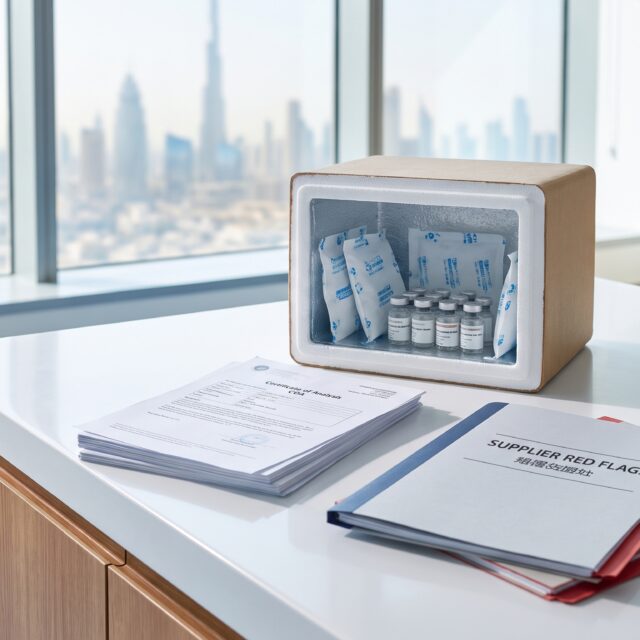
Seek out suppliers who clearly detail their storage and handling procedures. Reputable vendors operating in the GCC will explicitly mention their packaging methods, such as the use of secure, thermal-resistant materials designed to protect liquids from brief temperature fluctuations during transit.
2. Responsive Local Support
Research requires precision, and procurement delays can disrupt highly scheduled protocols. Suppliers who offer direct, local support channels—such as responsive WhatsApp business accounts—provide a distinct advantage over international entities relying on delayed email ticketing systems.
3. Comprehensive Product Ecosystems
It is operationally efficient to source diluents from the same supplier providing your primary research compounds. Vendors that offer a complete suite of verified, COA-backed materials simplify the procurement process. By browsing a unified research supplies and peptide shop, buyers can ensure that all components of their protocol arrive simultaneously, securely, and under the same stringent quality controls.
Best Practices for Clean Handling in the Lab
Even the highest quality bacteriostatic water can become compromised if handled poorly at the bench. To maximise the 28-day window provided by the benzyl alcohol preservative, researchers must adhere to strict clean techniques:
- Always swab the rubber stopper of both the diluent vial and the peptide vial with a fresh 70% isopropyl alcohol wipe before every single puncture.
- Allow the alcohol to evaporate fully before inserting the needle; injecting wet alcohol into the vial can degrade the contents.
- Never re-use drawing equipment.
- Store the punctured vial upright in a dark, refrigerated environment between uses.
Adhering to these standard operating procedures guarantees that the bacteriostatic properties of the diluent are fully leveraged, maintaining a sterile environment for the reconstituted compound.
Conclusion and Next Steps
Sourcing bacteriostatic water for peptides that Dubai researchers can trust is a critical foundational step in any valid laboratory protocol. By understanding the distinct advantages of 0.9% benzyl alcohol, mastering the strict temperature parameters required before and after reconstitution, and recognising the severe thermal risks of international shipping, buyers can make highly informed procurement decisions.
Always prioritise suppliers who back their inventory with local, rapid logistics, clear batch documentation, and secure regional payment methods. Bypassing the international transit window is the single most effective strategy for ensuring your diluents and research compounds arrive uncompromised.
Ready to secure premium, locally dispatched supplies for your next protocol? Explore our complete catalogue of verified research materials at NOVA Labs and take advantage of our climate-controlled GCC logistics today.
Disclaimer: The products mentioned in this article are for research purposes only and are not intended for human consumption or clinical diagnostic use.
References
- United States Pharmacopeia (USP) – Guidelines on Bacteriostatic Water for Injection and benzyl alcohol preservation limits.
- Local UAE Cold Chain Logistics Standards – Protocols for managing temperature-sensitive laboratory reagents in GCC climates.
- National Center for Biotechnology Information (NCBI) – Stability of reconstituted peptide chains under varying temperature and environmental conditions.
- NOVA Labs Storage Guidelines – Internal protocols for temperature stability (2-8°C post-reconstitution) and secure GCC cold-chain handling.
- Peptides Compounding Pharmacy Dubai – CureCell
- Bacteriostatic Water UAE | 3ml & 10ml – VaultLabs
- Bacteriostatic Water – DXB Supps
- BACTERIOSTATIC SOLUTION – 10ml – Limitless Wellness Lab – Syncom
- Peptide Storage Temperature Oman: Cold-Chain & Handling – NOVA Labs
- Peptide Storage Temperature Saudi Arabia: Stability & Cold – NOVA Labs
Frequently asked questions
What is bacteriostatic water used for in peptide research?
Bacteriostatic water is used as a sterile diluent to reconstitute lyophilised (freeze-dried) research peptides. It contains 0.9% benzyl alcohol, which inhibits bacterial growth and allows the solution to remain viable for up to 28 days after the first withdrawal.
Can I use plain sterile water instead of bacteriostatic water?
While sterile water can be used for reconstitution, it does not contain a preservative. This means it is strictly for single-use applications; any multi-use vial reconstituted with plain sterile water is highly susceptible to bacterial contamination after the initial puncture.
How should bacteriostatic water be stored in Dubai before opening?
Unopened vials of bacteriostatic water should be stored at controlled room temperature, typically between 15°C and 30°C. They must be kept away from direct sunlight and extreme localized heat to protect the integrity of the benzyl alcohol preservative.
Why is local UAE delivery important for peptide diluents?
The UAE summer climate frequently exceeds 45°C. International shipments taking 7-14 days expose liquids to extreme thermal stress on tarmacs and in unairconditioned vans, which can degrade the preservative. Local 1-3 day dispatch drastically reduces this thermal hazard.
Nova Labs buyer tools
Ready to verify stock, testing and delivery?
Use the product page and lab report section to check availability, documentation, delivery timing and support before placing an order.
- COA / test-report checks
- Dubai delivery context
- Cold-chain handling
- COD and card payment options
- WhatsApp support