



Procuring stable, high-quality research compounds in the Middle East involves unique logistical and scientific challenges. Between the extreme summer heat, complex customs regulations, and varying supplier documentation standards, laboratory procurement officers and independent researchers cannot rely on generic international advice. Establishing a verifiable baseline for chemical stability and identity is non-negotiable for reproducible research outcomes.
Key Takeaways: Dubai Research Procurement Checklist
- Purity Thresholds: Mandate ≥98% chromatographic purity verified by third-party HPLC.
- Identity Verification: Require Mass Spectrometry (MS) to confirm exact molecular weight.
- Format Requirements: Only purchase lyophilised (freeze-dried) powders to survive the GCC climate.
- Logistics: Prioritise domestic UAE dispatch to avoid customs delays and thermal degradation.
- Vendor Accountability: Insist on Cash on Delivery (COD) and responsive local support channels.
Essential Standards: A Peptide Purity Guide Dubai Can Trust
When following a peptide purity guide in Dubai, laboratory researchers must verify HPLC testing showing ≥98% purity and confirm molecular identity via Mass Spectrometry. To prevent thermal degradation in the GCC climate, always procure lyophilised (freeze-dried) compounds shipped via temperature-controlled, same-day domestic logistics.
Evaluating suppliers requires procurement staff to examine more than just advertised numbers on a website. True verification happens at the intersection of third-party analytical testing and temperature-controlled local shipping.
The Dual Foundation of Peptide Verification: HPLC and MS
The industry gold standard for assessing research compounds relies on a two-step analytical process: High-Performance Liquid Chromatography (HPLC) and Mass Spectrometry (MS). To construct an effective procurement protocol, laboratories must prioritize suppliers that publish transparent, batch-specific results for both of these critical tests.
High-Performance Liquid Chromatography (HPLC)
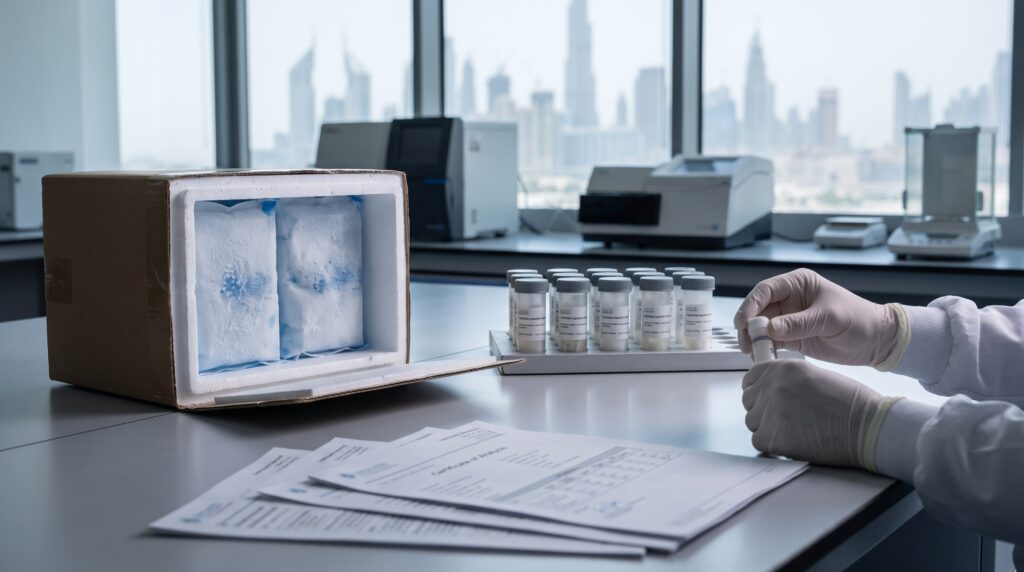
HPLC is a sophisticated analytical technique used to separate, identify, and quantify each component within a mixture. During synthesis, intermediate cleavage byproducts, truncated sequences, and amino acid deletions can occur. HPLC forces the sample through a column at high pressure, separating the target sequence from these unwanted byproducts based on their molecular properties.
For stringent laboratory research, a chromatographic purity threshold of ≥98% is the baseline requirement. Anything lower introduces variables that can skew in vitro assay results. When reviewing an HPLC report on a COA, look for a sharp, distinct primary peak on the chromatogram with minimal baseline noise or secondary peaks.
Mass Spectrometry (MS)
While HPLC confirms that a sample is predominantly one substance, it does not prove what that substance is. This is where Mass Spectrometry—specifically Electrospray Ionisation Mass Spectrometry (ESI-MS)—becomes essential. MS measures the exact molecular mass of the primary compound, confirming that the molecular weight precisely matches the theoretical weight of the targeted amino acid sequence. A complete COA must include both HPLC for purity and MS for absolute identity.
How to Spot Substandard or Forged COAs
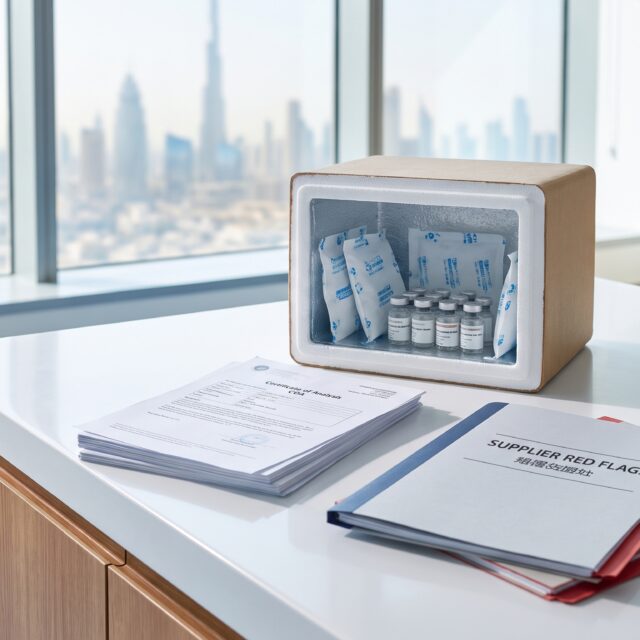
Unfortunately, not all documentation in the research chemical sector is reliable. When verifying a COA in the UAE, look for these red flags:
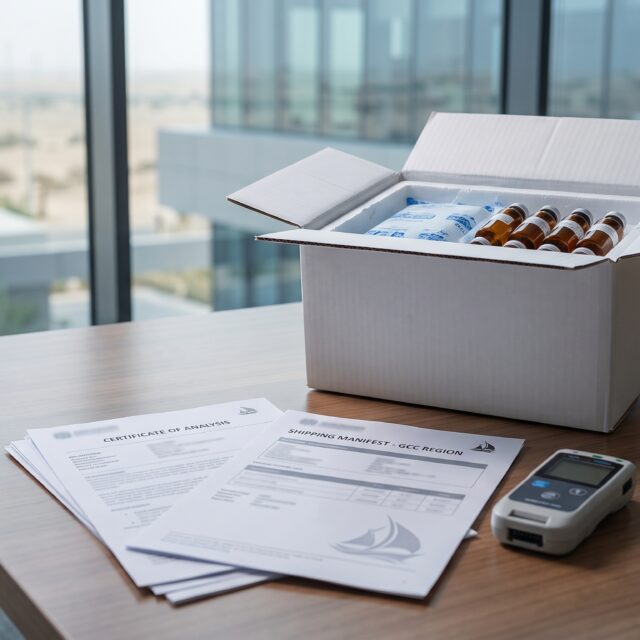
- Missing Batch Numbers: The COA must reference a specific batch or lot number that matches the vial being tested. Generic, unnumbered documents are a major warning sign.
- Outdated Testing: Relying on tests from two years ago does not guarantee the quality of the current inventory.
- Lack of Third-Party Letterhead: In-house testing is less reliable than documentation provided by an independent, verifiable analytical laboratory.
- Missing MS Data: A COA showing only HPLC purity without mass verification is incomplete and fails to confirm molecular identity.
Net Peptide Content (NPC) vs. Chromatographic Purity
A common misunderstanding in biochemical procurement is confusing chromatographic purity with Net Peptide Content (NPC). This distinction is critical for laboratories calculating precise molarities for their in vitro assays.
Chromatographic purity (the ≥98% figure) refers strictly to the absence of structural impurities and synthetic byproducts within the active material itself. However, it does not account for the residual moisture and counter-ions (such as trifluoroacetic acid, or TFA, and acetate salts) that remain bound to the compound during the freeze-drying process.
NPC measures the actual percentage of active peptide mass relative to the total mass of the lyophilised powder inside the vial. It is standard for high-quality lyophilised compounds to have an NPC between 70% and 90%, with the remainder being necessary salts and trace water that stabilise the molecule. Researchers calculating precise molar concentrations must factor in the NPC alongside the HPLC purity to ensure accurate reagent preparation.
Surviving the 45°C Gulf Heat: Lyophilisation and Logistics
The single greatest threat to structural integrity in the UAE and wider GCC is thermal degradation. During the peak summer months, regional temperatures regularly exceed 45°C. When exposed to high heat, aqueous (pre-mixed) peptides rapidly undergo destructive processes such as deamidation, oxidation, and hydrolysis.
Why the Freeze-Dried (Lyophilised) Format is Mandatory
To combat environmental degradation, premium research compounds must be supplied strictly as lyophilised powders. The freeze-drying process removes water under a vacuum, locking the amino acid chain into a stable, solid state. In this format, compounds are significantly more resilient to temperature fluctuations during short transit windows. Researchers must only reconstitute the powder with bacteriostatic water or a sterile saline solution immediately prior to initiating their laboratory protocols. Once reconstituted, the solution must be stored strictly under refrigeration (2°C to 8°C).
Navigating GCC Transit Windows and Customs
Even in a lyophilised state, prolonged exposure to excessive heat during extended international shipping can compromise the material. International orders shipped from overseas can often face 5 to 14 days of transit time. These delays are frequently exacerbated by unpredictable customs clearances at Dubai International Airport or regional borders under the Bayan customs system.
Domestic dispatch is therefore a critical procurement signal. Sourcing from a supplier that offers same-day dispatch within the emirate dramatically reduces thermal exposure. Next-day delivery across the UAE ensures the product transitions swiftly from climate-controlled warehouse storage directly to the laboratory bench, preserving the integrity of sensitive reagents.
Handling Metabolic and Complex Research Sequences
In laboratory settings, long-chain metabolic sequences such as Retatrutide, Tesamorelin, and MOTS-c require rigorous structural verification. Because of their molecular length, these amino acid chains are inherently more susceptible to fragmentation if mishandled during transport or reconstitution.
These compounds are widely utilized in in vitro metabolic research to observe cellular energy pathways, receptor affinities, and metabolic regulation. Because of their complexity, researchers evaluating these materials must strictly enforce the HPLC/MS verification standards mentioned above.
Crucial Note: While these complex sequences are extensively researched for their metabolic interactions, they are supplied by domestic vendors strictly for laboratory testing. They are explicitly not for human consumption, therapeutic application, or consumer weight and body composition use.
Evaluating Suppliers: Payment, Support, and Clearances
Beyond technical documentation, the operational reliability of a supplier dictates the ease of procurement for Dubai researchers. The regulatory landscape in the UAE clearly distinguishes between clinical compounding pharmacies (regulated for prescribed therapies) and research chemical suppliers providing reagents strictly for in vitro study (Research Use Only).
When evaluating a supplier’s credibility, procurement teams should verify their payment processing and local support infrastructure:
- Secure Transactions & COD: Overseas suppliers often restrict buyers to cryptocurrency or irreversible wire transfers, leaving procurement teams with no recourse if shipments are seized at customs or arrive degraded. Reputable local suppliers provide standard credit card processing and Cash on Delivery (COD) options within the UAE. This offers immediate buyer protection and financial transparency.
- Accessible Support (WhatsApp & Direct Lines): Direct access to supplier support—particularly via local WhatsApp channels—allows researchers to quickly request batch-specific COAs, verify current stock levels, and coordinate specific delivery windows. This ensures laboratory personnel are present to receive and immediately refrigerate incoming materials.
- Bypassing Customs Friction: By choosing a domestic supplier like NOVA Labs, researchers bypass the complexities of import restrictions and clearance bottlenecks, ensuring uninterrupted laboratory workflows.
Secure Your Laboratory Pipeline Today
Sourcing high-purity research materials in the Middle East requires vigilance. By prioritising verifiable HPLC and MS data, insisting on lyophilised compounds, and leveraging local cold-aware logistics, researchers can protect their budgets and the integrity of their data. Relying on domestic infrastructure not only guarantees faster transit times but also ensures peace of mind through secure payment gateways and responsive local support.
For procurement officers and researchers ready to upgrade their sourcing protocols, ensure your next batch of reagents meets the highest analytical standards. Browse available research compounds at NOVA Labs to access rigorously tested, lyophilised materials stocked locally for immediate dispatch across the UAE.
*
Disclaimer: NOVA Labs products are strictly for research and laboratory use only. They are not for human consumption, diagnostic, therapeutic, or medical use. All compounds should be handled by qualified professionals in a controlled laboratory environment.
References
- Journal of Chromatography B: Analytical Technologies in the Biomedical and Life Sciences. Evaluating structural impurities and HPLC methodologies.
- The European Journal of Pharmaceutical Sciences. Thermal degradation and lyophilisation of synthetic compounds.
- National Center for Biotechnology Information (NCBI). Mass Spectrometry for Molecular Weight Verification of Synthetic Peptides.
- UAE Ministry of Health and Prevention (MOHAP) Guidelines. Distinctions between Research Use Only (RUO) reagents and regulated therapeutics.
Disclaimer: The products mentioned in this article are for research purposes only and are not intended for human consumption.
- Peptide Purity Guide GCC: Verify COAs, HPLC & Delivery – NOVA Labs
- Peptide Stability in Transit: The Evidence-Based Guide to Shipping Risks and Storage Realities – HackedAlive
- Peptide Supplier Checklist GCC: Vetting Research Sources – NOVA Labs
- Peptides Compounding Pharmacy Dubai – CureCell
- Batch Verification Index — Published Lots and Assay Results | VaultLabs UAE
- Research Peptide Quality Standards | ISO 17025 & HPLC Verified
- How to Register Peptides in the UAE: A Regulatory Guide for Brands and Manufacturers
- Peptide Purity Calculation: Technical Guide
Frequently asked questions
What is a good purity percentage for research peptides?
For reliable in vitro research, the industry gold standard for peptide purity is ≥98%, which should be verified via batch-specific High-Performance Liquid Chromatography (HPLC) testing to ensure reproducible assay results.
Why is local delivery important for research compounds in the UAE?
The UAE's extreme summer heat rapidly degrades temperature-sensitive compounds. Sourcing from a local vendor with same-day or next-day delivery minimizes thermal exposure compared to the unpredictable delays of international transit.
What is the difference between chromatographic purity and Net Peptide Content (NPC)?
Chromatographic purity (HPLC) measures the percentage of the target peptide sequence relative to structural impurities. NPC calculates the actual weight of the active peptide inside the vial, minus the residual salts and trace water necessary for the lyophilisation process.
Can I use Cash on Delivery (COD) for research compounds in Dubai?
Yes, reputable local UAE suppliers offer Cash on Delivery (COD) alongside secure local credit card processing. This ensures safe transactions and eliminates the financial risks associated with overseas crypto-only vendors.
What should I look for on a Certificate of Analysis (COA)?
A verifiable COA should feature a distinct batch or lot number, a recent testing date, independent analytical laboratory branding, High-Performance Liquid Chromatography (HPLC) data proving ≥98% purity, and Mass Spectrometry (MS) data confirming exact molecular weight.
Nova Labs buyer tools
Ready to verify stock, testing and delivery?
Use the product page and lab report section to check availability, documentation, delivery timing and support before placing an order.
- COA / test-report checks
- Dubai delivery context
- Cold-chain handling
- COD and card payment options
- WhatsApp support