
Procuring high-quality research materials in the United Arab Emirates requires strict vigilance from laboratory managers and procurement staff. With extreme summer temperatures, complex import regulations, and a recent influx of unauthorized offshore sellers targeting the GCC, researchers must know exactly how to spot fake peptides abu dhabi.
Recent regulatory shifts have highlighted the immense risks associated with the local grey market. In mid-2024, the Emirates Drug Establishment (EDE) launched a major crackdown on unauthorized peptide sources and social media accounts promoting unverified, mishandled products. This enforcement action underscores a critical reality: purchasing untested or counterfeit peptides compromises laboratory research, skews analytical data, and wastes valuable procurement budgets.
This comprehensive protocol breaks down exactly what buyers need to check before placing an order, how to identify forged analytical documentation, and why the local climate makes proper thermal handling just as important as chemical purity.
Quick Answer: How to Spot Fake Peptides Abu Dhabi
To spot fake peptides in Abu Dhabi, verify the supplier’s Certificate of Analysis (COA) to confirm HPLC purity above 98% and Mass Spectrometry (MS) identity from an independent, verifiable lab. Avoid vendors selling pre-filled liquid pens, which degrade rapidly in UAE heat, and beware of offshore sellers demanding untraceable “customs release fees” via messaging apps.
The Impact of Extreme Heat: When Real Peptides Become Functional Fakes
One of the most overlooked aspects of the UAE research market is thermal degradation. A peptide can leave an overseas manufacturing facility with 99% purity but arrive in an Abu Dhabi laboratory completely degraded—essentially becoming a functional fake—due to improper shipping.
The Danger of Pre-Filled Liquid Pens
Abu Dhabi summers frequently exceed 40°C, and delivery vehicles can reach even higher internal temperatures. Peptides suspended in a liquid solution are highly volatile and prone to rapid degradation when exposed to heat, agitation, and UV light. Vendors offering pre-filled liquid peptide pens shipped via standard, non-insulated couriers are supplying compromised materials. Within days of travelling in a hot delivery van, the molecular structure of liquid peptides breaks down, rendering the compound completely ineffective for research applications.
The Lyophilized Standard
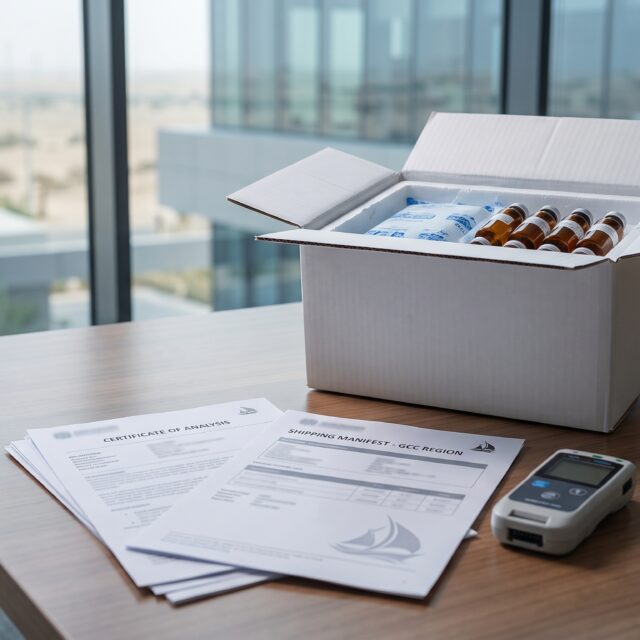
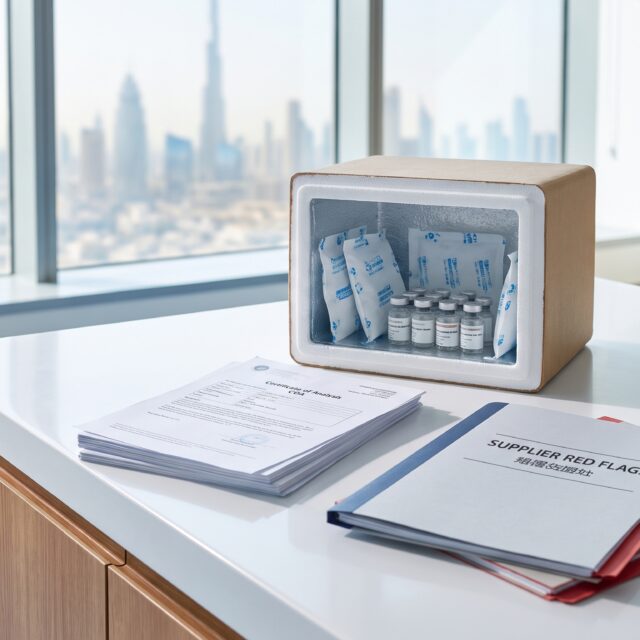
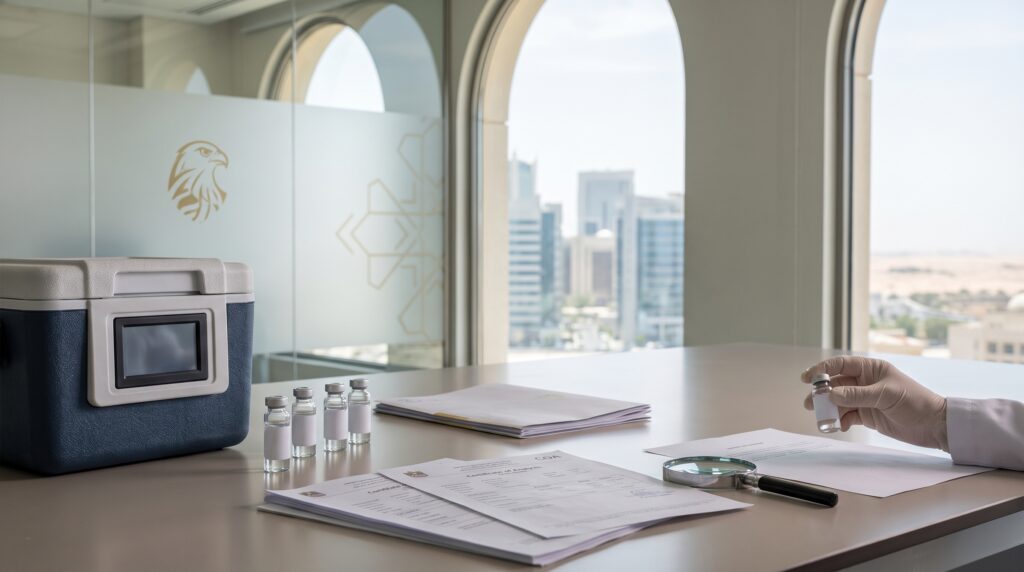
Legitimate research suppliers exclusively provide peptides as lyophilized (freeze-dried) powder. While vastly more stable than liquid forms, lyophilized powder still requires careful temperature management during transit. Professional vendors utilize cold-chain logistics—including insulated packaging, temperature data loggers, and medical-grade ice packs—to protect the structural integrity of the compound until delivery.
For proper storage upon arrival, researchers must keep lyophilized vials at -20°C (in a laboratory freezer) for long-term preservation, or between 2-8°C (refrigerated) for short-term use. Once reconstituted with bacteriostatic water, the solution must never be frozen again, kept strictly refrigerated, and protected from all light exposure.
Decoding the COA: How to Spot Forged Lab Reports
The most critical tool for verifying research materials is the Certificate of Analysis (COA). However, as the market expands, forged COAs have become increasingly common. Here is how to verify a document’s authenticity and ensure you are working with premium materials:
1. Mandate Both HPLC and MS Testing
A valid COA must feature two distinct analytical tests:
- High-Performance Liquid Chromatography (HPLC): This test determines the purity of the compound by separating its components. For rigorous research applications, the purity rating should be 98% or higher.
- Mass Spectrometry (MS): This verifies the precise molecular weight and chemical identity of the peptide, proving that the substance in the vial matches the amino acid sequence on the label.
2. Check for Independent Third-Party Verification
COAs generated “in-house” by the vendor are a major red flag, as they can be easily manipulated. Legitimate suppliers use independent, ISO 17025-accredited third-party laboratories (such as Janoshik or Ethos Analytics). These testing facilities provide a unique verification key, QR code, or URL on the document, allowing buyers to log directly into the laboratory’s secure database and confirm the report has not been altered.
3. Match the Batch Numbers
A common tactic among fraudulent sellers is recycling an old, legitimate COA for new, untested batches of product. Always ensure that the batch number printed on your physical vial exactly matches the batch number listed on the provided COA.
4. Analyze the Chromatogram
Look closely at the HPLC graph (chromatogram). Authentic tests show minor “noise” or small fluctuations along the baseline. If a graph looks perfectly flat with only one surgically precise spike, or if the PDF shows signs of digital tampering (like mismatched fonts, pixelated headers, or misaligned text blocks), it is likely a manually edited forgery.
Identifying Logistical and Payment Scams
Beyond fake products, Abu Dhabi buyers frequently fall victim to logistical scams. Unverified social media vendors and Telegram channels often operate bait-and-switch operations.
The “Customs Release Fee” Extortion Scam
This is highly prevalent among unverified offshore vendors:
- A buyer orders from a seller boasting incredibly low prices.
- A few days later, the buyer receives a WhatsApp message or email claiming to be from “UAE Customs” or a local courier, stating the package has been seized due to regulatory issues.
- The scammers demand an immediate, untraceable digital payment (often cryptocurrency) to “release” the goods.
- If paid, the scammers disappear. No product is ever delivered because it never actually existed.
To avoid this, procurement staff should source from domestic, VAT-registered suppliers who hold inventory within the UAE. Buying locally eliminates cross-border customs friction and the associated risk of extortion.
Red Flags in Payment Processing
Legitimate businesses use standard, traceable B2B payment gateways. If a supplier only accepts cryptocurrency, anonymous wire transfers, or peer-to-peer payment apps, they are likely operating outside of legal frameworks, leaving buyers with zero recourse if fake or degraded products are delivered.
Vendor Vetting Checklist for Abu Dhabi Laboratories
When evaluating a supplier, reliability is the ultimate safeguard. A trustworthy supplier removes the guesswork by providing full transparency upfront. Before placing an order for your laboratory, ensure the supplier offers:
- Verifiable Third-Party Testing: Direct links to independent laboratory results for the exact batch you are purchasing.
- Lyophilized Formats Only: Refusal to sell unstable, pre-mixed liquid formulations.
- Cold-Chain Logistics: Insulated packaging designed specifically to combat UAE summer heat.
- Local Stock and Support: Inventory held within the UAE to guarantee fast transit times. Opt for providers who offer next-day UAE peptide delivery to minimize transit exposure.
- Professional Customer Service: Accessible support via official channels to answer technical, scientific, and logistical queries.
Conclusion
Knowing exactly how to spot fake peptides abu dhabi protects your research integrity, procurement budget, and project timelines. Always demand third-party HPLC and MS testing, verify batch numbers, avoid unstable liquid formulations, and refuse to engage with offshore sellers demanding suspicious customs fees. By insisting on transparent, local suppliers who utilize proper cold-chain handling, UAE researchers can confidently source the high-purity compounds their work requires.
Ready to secure verifiable, temperature-protected research compounds? Browse our full catalogue in the research peptide shop to view our current batch documentation and secure rapid, cold-chain delivery directly to your laboratory.
Disclaimer: The products and information mentioned in this article are for scientific research and laboratory purposes only. They are not intended for human consumption, diagnostic, or therapeutic use.
References
- Gulf News (2024). UAE Cracks Down on Unapproved Peptide Sources and Social Media Sellers.
- International Journal of Pharmaceutics (2021). Thermal Degradation and Stability of Lyophilized Peptides in Extreme Climates.
- ISO/IEC 17025:2017. General requirements for the competence of testing and calibration laboratories.
- Cold Chain Logistics Protocols. Standardized Temperature Management for Biologics and Research Reagents.
Disclaimer: The products mentioned in this article are for research purposes only and are not intended for human consumption.
- UAE Cracks Down on Unapproved Peptide Weight-Loss Drugs: 71 Sources and 14 Influencers Face Action – Gulf News
- Nova Biolabs vs Peptide Tech UAE: Abu Dhabi Buyer Comparison (2026)
- How To Spot Fake Peptides Bahrain & UAE: COAs & Scam Guide – NOVA Labs
- How to Read a Peptide COA (Real vs Fake)
- Peptide Storage Guide | Lyophilized & Reconstituted Storage at -20°C and 2-8°C
- From Manufacturer to End Customer: How AlGenome International Guarantees a Reliable Cold Chain for Your Critical Supplies
- Fake Ozempic warning as UAE patients turn to social media sellers for weight-loss injections
Frequently asked questions
How can I tell if a peptide COA is fake?
A fake COA often lacks independent laboratory verification links, features mismatched batch numbers between the document and the physical vial, or displays an unnaturally perfect, digitally altered HPLC chromatogram graph.
Are liquid peptide pens safe to ship in Abu Dhabi?
No. Pre-filled liquid peptides degrade rapidly when exposed to the high temperatures typical of Abu Dhabi summers. Lyophilized (freeze-dried) powder shipped in temperature-controlled packaging is the only reliable format for maintaining research integrity.
What is the customs release fee scam in the UAE?
This is a common scam where offshore or unverified social media sellers message buyers claiming their shipment was seized by UAE Customs, demanding an untraceable digital payment to 'release' a package that does not actually exist.
Why is mass spectrometry (MS) important for testing peptides?
While HPLC tests the purity percentage of a sample, Mass Spectrometry (MS) verifies the chemical identity, ensuring that the molecular sequence in the vial is exactly the compound listed on the label.
What is the best way to store research peptides in the UAE?
Lyophilized (freeze-dried) peptides should be stored in a laboratory freezer at -20°C for long-term preservation. Once reconstituted with bacteriostatic water, they must be kept strictly refrigerated between 2-8°C and protected from UV light.
Nova Labs buyer tools
Ready to verify stock, testing and delivery?
Use the product page and lab report section to check availability, documentation, delivery timing and support before placing an order.
- COA / test-report checks
- Abu Dhabi delivery context
- Cold-chain handling
- COD and card payment options
- WhatsApp support